Product on sale

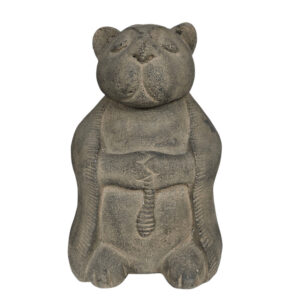
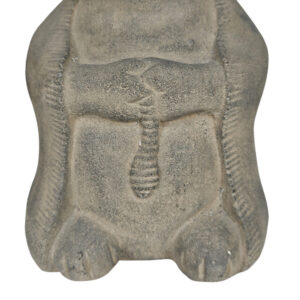
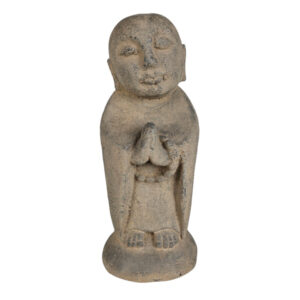
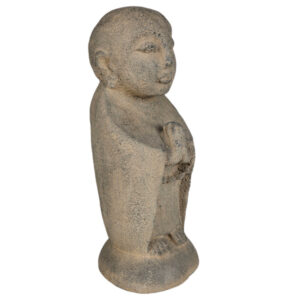
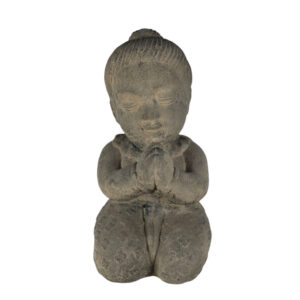
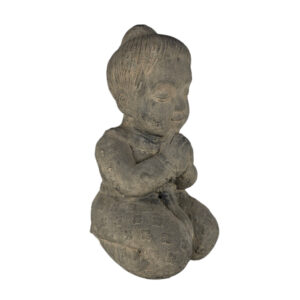
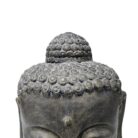
Thai Buddha GRC Head Grey

Original price was: R3995.Current price is: R3395,75.

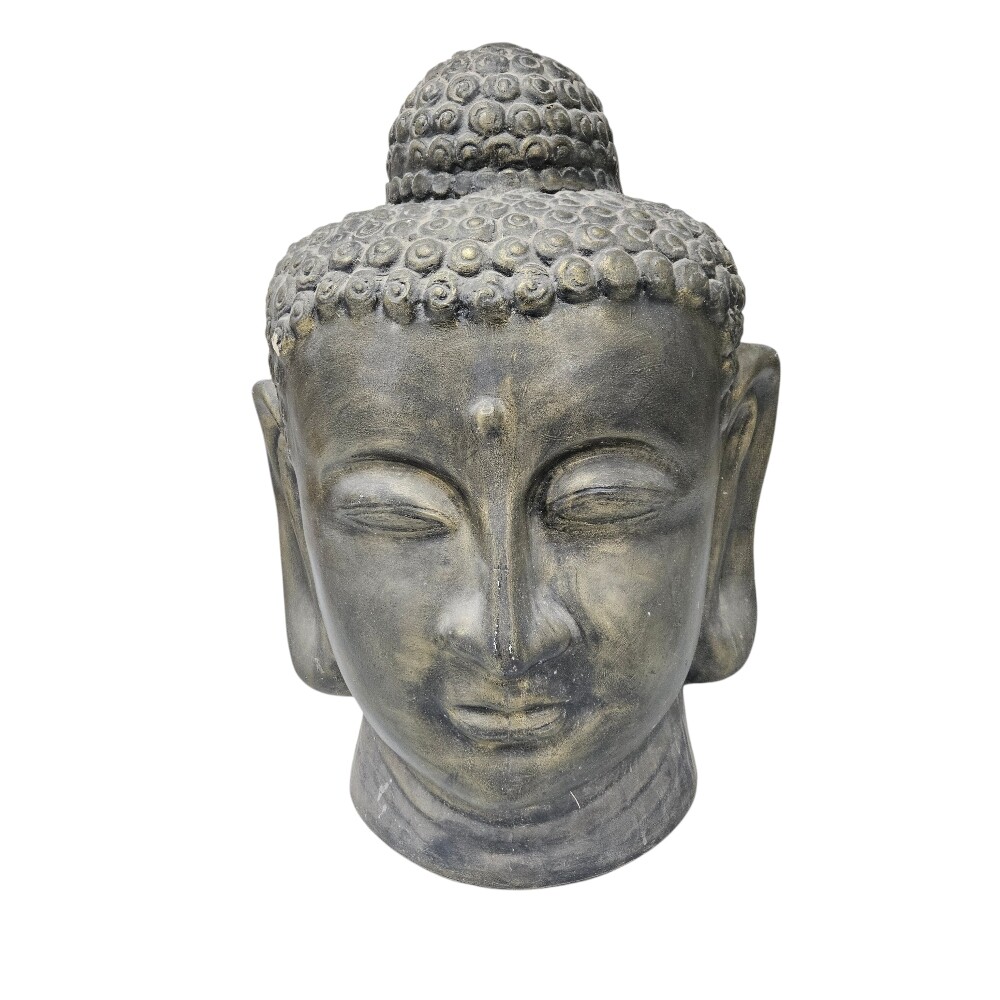
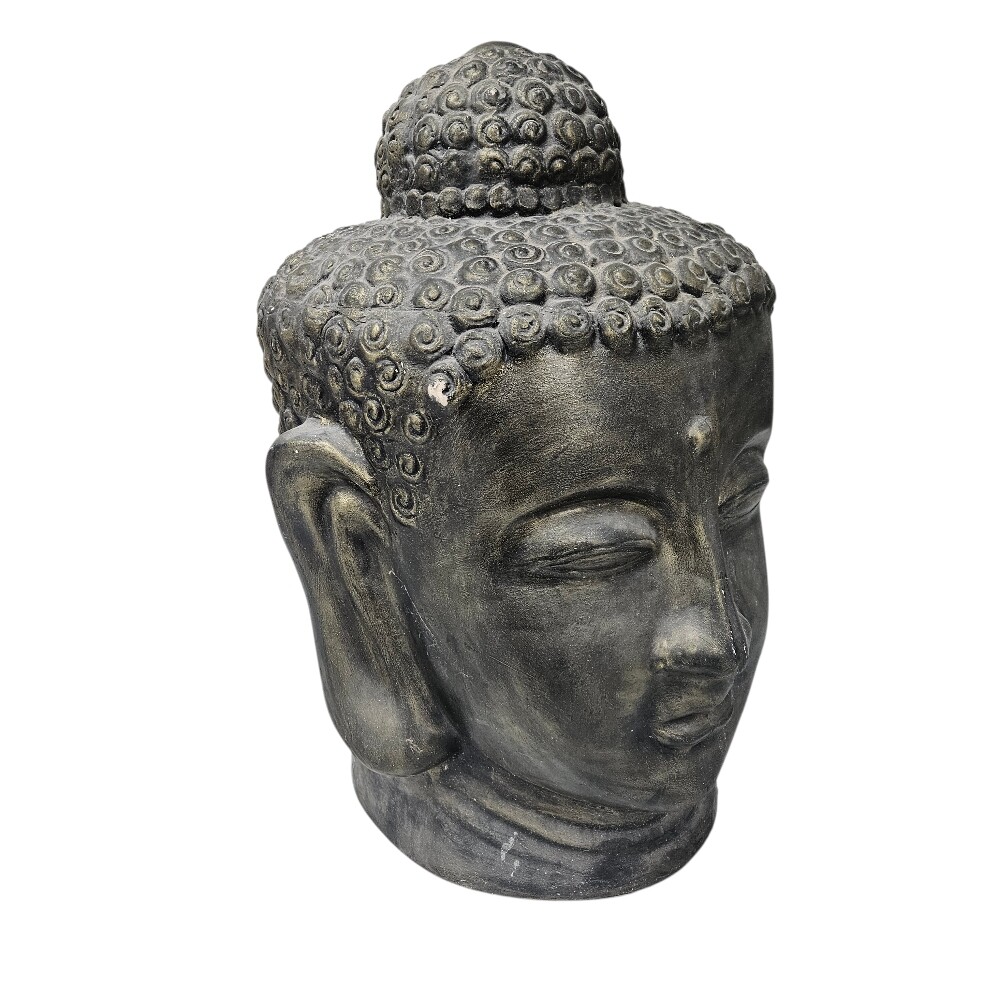
A substantial 80cm Thai Buddha head sculpted in Glass Reinforced Concrete (GRC) with a weathered grey finish — the look of solid temple stone in a piece that’s significantly lighter and engineered to handle the South African climate indoors or outdoors. A floor-standing focal piece with traditional Thai detailing.

– Dimensions: 56 × 56 × 80 cm (W × D × H)

– Sculpted from Glass Reinforced Concrete (GRC) for stone-like character

– Distressed grey finish with weathered, “temple-find” aesthetic

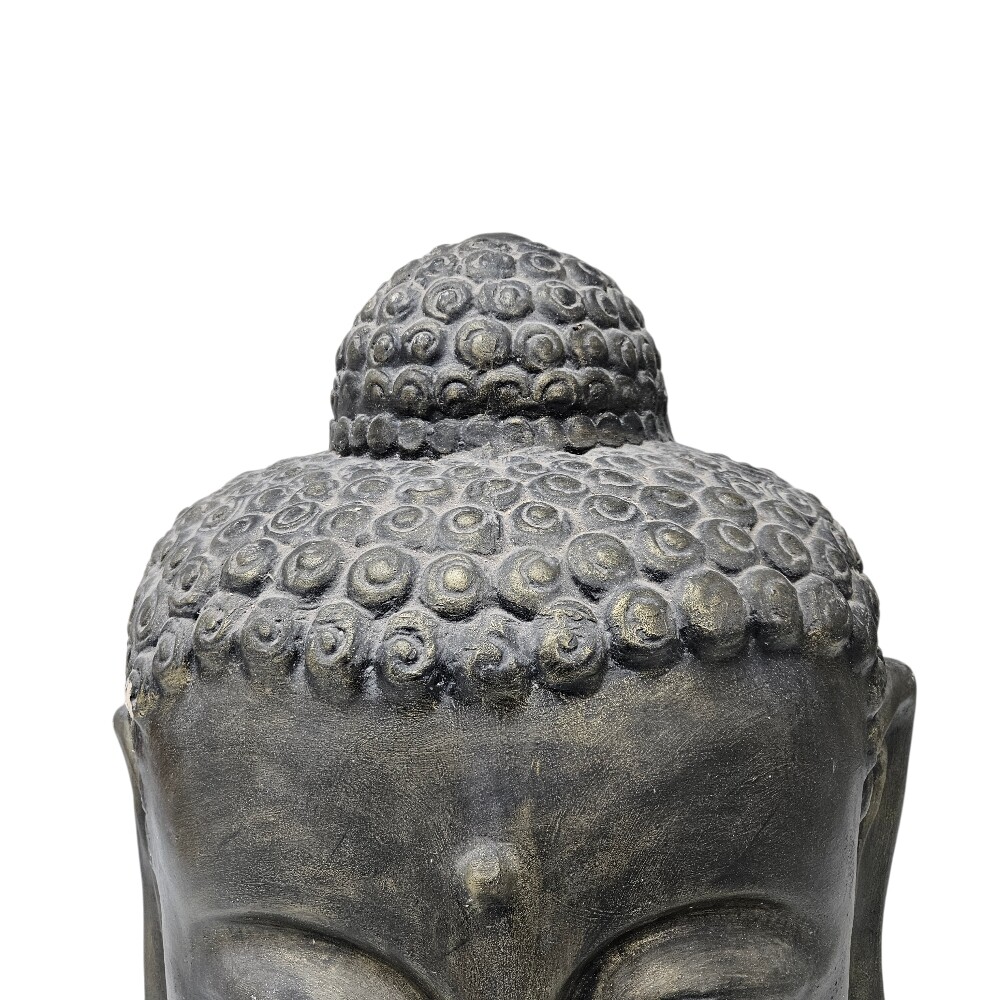
– Traditional Thai iconography: ushnisha topknot, elongated earlobes, serene expression

– Suitable for indoor and outdoor placement

– A substantial sculptural piece — sized to anchor a foyer, garden corner or wellness space

1 in stock
  • Check Mark Estimated Delivery : 4 to 10 business days
  • Visa Card
  • MasterCard
  • American Express
Guaranteed Safe And Secure Checkout

An 80cm Thai Buddha head sculpted in Glass Reinforced Concrete with a weathered grey “temple-find” finish

A Buddha head is one of the more demanding decor pieces to get right. The traditional iconography is hundreds of years old and deeply specific, including the ushnisha (topknot), the elongated earlobes, the gently downcast eyes, and the meditative half-smile. Pieces that handle these elements clumsily look generic at best and culturally tone-deaf at worst. A well-made Buddha head, by contrast, carries genuine sculptural weight and treats the form with the respect it deserves.

The Thai Buddha GRC Head sits in the second category. Modelled on the traditional Sukhothai-period style and sized at 80cm tall on a 56 × 56cm base, the piece is built as a floor-standing sculpture rather than a tabletop ornament. The construction is Glass Reinforced Concrete (GRC) throughout, finished in a distressed and weathered grey that gives the piece a temple-find character, as if it has stood quietly for decades rather than arrived new from a factory. Traditional Thai detailing is preserved across the form: the gently closed eyes signalling meditation, the elongated earlobes signalling wisdom, the topknot signalling enlightenment, and the soft serene expression that defines classical Thai Buddhist sculpture.

This is a piece for spaces designed around contemplative quiet, including foyers, meditation rooms, yoga studios, garden corners, and wellness interiors where the sculpture sets a tone that supports rather than distracts. It suits Modern Tropical and Modern Boho styles particularly well, and works equally as an indoor focal piece or as a sheltered garden anchor.

Why GRC works where solid stone or resin do not

The material choice on this piece matters more than it might seem. Three things about GRC are worth understanding.

It looks and feels like genuine stone. GRC is a composite of fine aggregate, cement, and alkali-resistant glass fibres, the same chemistry as traditional cast stone but with a stronger and more consistent finish. The surface texture, the weight distribution, and the visual depth of GRC are essentially indistinguishable from solid stone in finished form. A casual visitor would not know, and should not need to know, that the piece is not carved from a quarried block.

It handles the South African climate properly. Solid stone is vulnerable to thermal cycling, since the high summer sun and cool winter nights of much of South Africa cause expansion and contraction that eventually leads to surface cracking. GRC is engineered for exactly these conditions, with the glass-fibre reinforcement giving the piece structural flexibility that resists weather-induced damage. For an outdoor garden piece in a Highveld or Cape climate, GRC is a more durable long-term choice than traditional cast stone or unfired terracotta.

It is significantly lighter than solid stone of the same size. A solid-stone piece at 80cm tall would weigh in the region of 80 to 100kg, requiring two people and ideally a trolley to move. GRC of the same scale typically weighs 30 to 50kg, still heavy but moveable by one strong adult or two of average strength. For buyers who may want to reposition the piece between rooms, between indoor and outdoor placements, or seasonally, that handling difference matters in practice.

Understanding the Sukhothai-style iconography

The traditional details on this Buddha head carry specific meaning that distinguishes the piece from generic Buddha sculpture. A few things worth understanding.

The ushnisha is the topknot signalling enlightenment. The raised cranial protrusion at the crown of the head is the ushnisha, one of the 32 marks of a Buddha in traditional iconography. It represents transcendent wisdom and the awakened state, and is consistently rendered across Buddhist sculpture from India through Thailand and beyond.

The elongated earlobes signal wisdom and royal background. The traditionally elongated earlobes reference both the heavy ear-jewellery worn by Siddhartha Gautama before his renunciation of royal life, and the symbolic stretching of the ears to receive all sounds and teachings with compassion. The detail appears across Thai, Burmese, Cambodian, and Sri Lankan Buddhist sculpture.

The downcast eyes signal meditation. Rather than the open eyes of devotional Hindu sculpture or the closed eyes of strict meditation, Thai Buddha sculpture typically shows the eyes gently downcast, signalling the meditative state of inward attention while remaining present to the world. The half-smile reinforces the same balance of inward calm and outward presence.

Sukhothai is one of the high points of classical Thai sculpture. The Sukhothai period (13th to 14th century) produced some of the most refined Buddha sculpture in Thai art history, characterised by softer facial features, more graceful proportions, and a particular serenity in the expression. This piece references that tradition rather than the more elaborate later styles or the more austere earlier ones.

Where the Thai Buddha head sits best

The 80cm height and serene presence suit specific placements both indoors and out. A few settings work particularly well.

In a foyer or entrance hall as a calming focal point. The most natural indoor placement. Positioned in an entrance hall, particularly one with a high ceiling or generous proportions, the piece introduces a moment of stillness and calm before the rest of the home unfolds. Many buyers position the head on a low plinth, at floor level beside a console table, or on the floor itself in a quiet corner where it becomes the visual anchor of the entry experience.

In a garden as a Zen sanctuary piece. Outdoor placement is one of GRC’s genuine strengths. Position the head among foliage in a garden corner, beside a water feature, in a meditation garden, or at the end of a garden path as a sight-line piece. The weathered grey finish softens further with exposure to the elements over time, and many owners genuinely prefer the look after a year or two outdoors as moss and patina begin to develop on the surface. Particularly effective in wabi-sabi, Zen, Japanese-inspired, or Modern Tropical garden schemes.

In a yoga studio, wellness space, or meditation room. The piece is built for spaces dedicated to contemplative practice. In a yoga studio, meditation room, or a quiet corner of a home set aside for stillness, the Buddha head provides a focal point that supports rather than distracts from the practice itself. The serene expression and traditional iconography make the piece appropriate for genuinely contemplative use, not just decoration.

In a spa, wellness centre, or boutique hotel. Commercial wellness spaces such as spas, day-retreat centres, and boutique hotels with wellness offerings often invest in substantial sculptural pieces that signal the spirit of the space. The Thai Buddha head is exactly the kind of piece that anchors a treatment-room corridor, a relaxation lounge, or a reception area. The 80cm scale ensures it reads as considered installation rather than off-the-shelf decor.

Beside a water feature or garden pool. The traditional pairing of Buddhist sculpture with water is well established in temple architecture across South-East Asia. Position the head beside a small water feature, fountain, or garden pool, since the reflection of the sculpture in the water doubles its visual presence and reinforces the meditative quality of the corner. Particularly effective in tropical garden schemes with lush surrounding planting.

What to pair the Buddha head with

The 80cm scale and weathered grey palette set up specific pairings across the Sotran range.

With other World Icons and spiritual pieces. Browse our World Icons collection for additional meditative or culturally rich pieces. A curated grouping builds a coherent corner rather than leaving the sculpture as a single isolated piece.

With Garden Decor for outdoor placement. Browse our Garden Decor collection for complementary sculptural pieces, statues, and substantial outdoor decor. The weathered grey GRC finish ties naturally to other cast-stone or weathered-finish pieces in the broader outdoor range.

Alongside Fountains for a meditative water-and-stone moment. Browse our Fountains range for water features that pair with the sculpture. The combination of contemplative sculpture and gently moving water is one of the most established meditative pairings in garden design across South-East Asia.

In a Modern Tropical style. Browse our Modern Tropical range for furniture and decor that share the warm-natural-meets-spiritual aesthetic. The Buddha head fits naturally within Modern Tropical styling, particularly with rattan, weathered wood, lush planting, and natural-fibre textiles around the room or garden.

With softer textiles for an indoor wellness corner. Browse our Textiles collection for cushions, throws, and soft natural-fibre pieces that build a grounded corner around the sculpture, supporting the contemplative quality rather than competing with it.

Caring for a GRC sculpture

One of the practical advantages of GRC is how easily it stays looking its best for the long term. The Thai Buddha head is built for years of display indoors or outdoors and only asks for the lightest care to keep its character intact.

For indoor display, dust the surface regularly with a soft, dry cloth or a soft-bristle brush. The brush works particularly well for reaching into the carved detailing of the topknot, ears, and facial features. For deeper indoor cleaning, wipe the surface with a barely damp cloth and a small amount of mild soap if needed, then allow to air-dry naturally.

For outdoor display, the piece is genuinely low-maintenance. Rinse with a hose or soft brush periodically to clear leaf debris, dust, and surface dirt. The weathered grey finish only deepens and gains character with exposure to the elements, and many owners welcome the natural development of moss, lichen, or surface patina that comes with time outdoors. If you prefer to maintain the original cleaner look, an annual gentle wash with mild soapy water and a soft brush keeps the surface fresh.

For pieces positioned outdoors in colder winter regions such as Highveld frost areas, the piece handles standard South African winter conditions comfortably without protection. Position the head out of consistent direct contact with sprinkler systems where possible, since the piece handles rain naturally but constant water saturation accelerates the development of surface algae. With this minimal care, a GRC sculpture becomes a permanent feature of the indoor or outdoor space it lives in, ageing with quiet dignity over the years.

Dimensions 56 × 56 × 80 cm

FAQ

Is each Thai Buddha head identical?
The base form, dimensions, and Sukhothai-style proportions are consistent across pieces, but the individual character varies. Small differences in the weathered grey finish depth, the surface texture, and the patina detail appear between hand-finished units, since GRC pieces are individually cast and finished by hand.

Is GRC the same as solid concrete or stone?
No. GRC is concrete reinforced with glass fibres, which makes it stronger than solid concrete at the same weight and significantly lighter than solid stone of equivalent size. It also handles outdoor weather exposure better than plain concrete, with less surface chipping and thermal cracking over time.

Will the patina change if I leave it outside?
Yes, gradually. Outdoor placement allows moss, lichen, and surface patina to develop over months and years, deepening the temple-find character. Many owners actively prefer this natural ageing. If you want to maintain the original cleaner finish, periodic gentle washing with mild soapy water keeps the surface fresh.

Can I use it in winter outdoors? Will it crack in frost?
The piece handles standard South African winter conditions comfortably without protection, including occasional Highveld overnight frost. The glass-fibre reinforcement gives GRC structural flexibility that resists thermal cracking better than solid stone or unfired terracotta.

Can I position it directly in soil or water?
The piece can sit on soil or beside water without difficulty. For positioning directly in water (such as a fountain basin), avoid sustained submersion of the base, which can accelerate algae growth. Beside a water feature is the ideal placement rather than in the water itself.