Wooden Abstract Thinking Statue
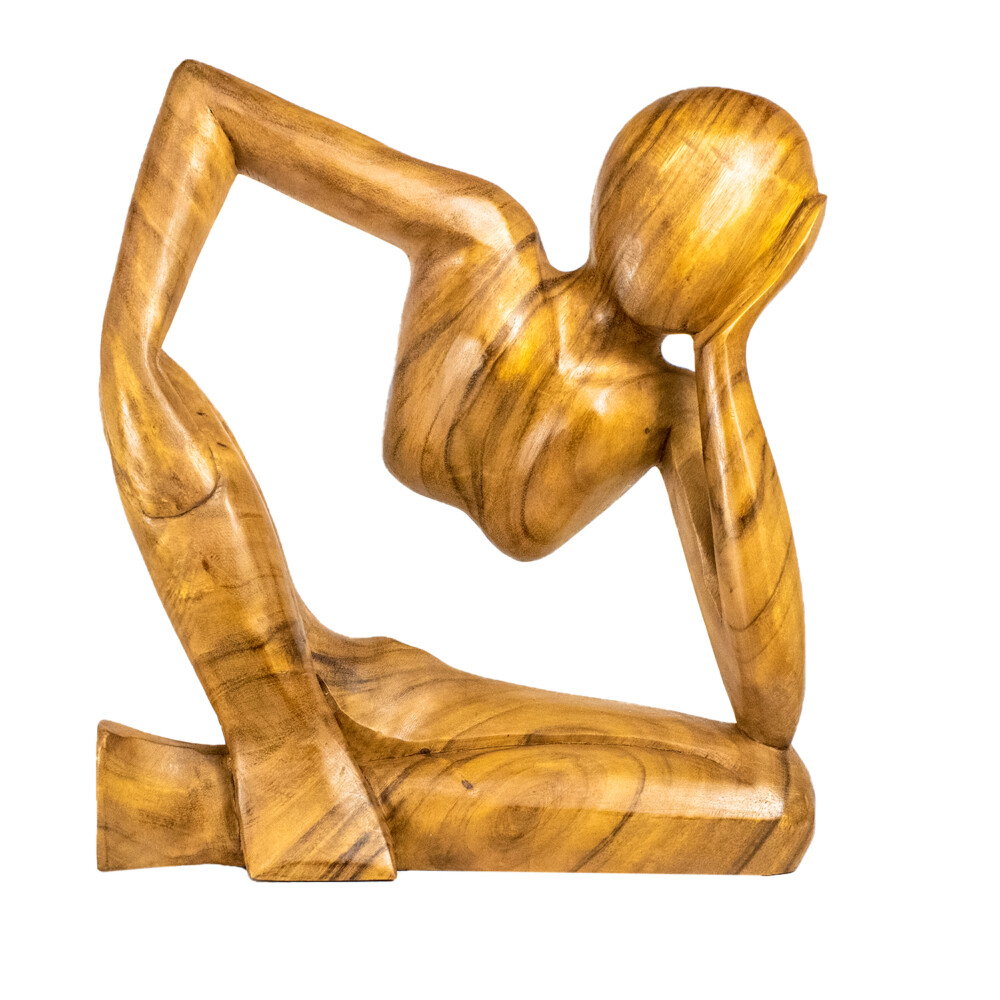
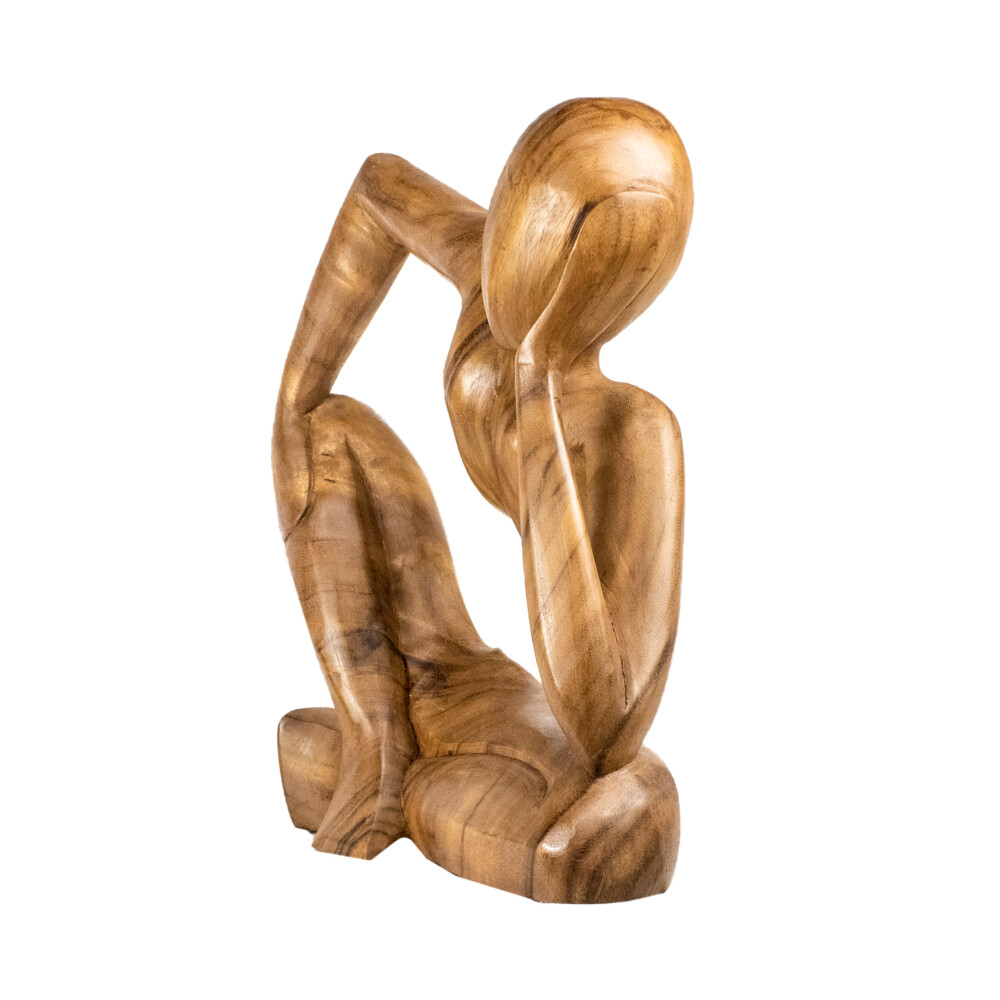
A hand-carved wooden sculpture of an abstract contemplative figure — vertical, slim, and unmistakably modernist in form. Carved from sustainably sourced hardwood, with the rich natural grain and meticulous detailing of a piece intended as accessible studio sculpture rather than mass-produced ornament.
– Dimensions: 36 × 7 × 40 cm (W × D × H)
– Hand-carved from sustainably sourced hardwood
– Abstract contemplative “thinking” figure form
– Vertical sculptural profile with slim 7cm depth
– Each piece is unique — natural grain and carving variation
– Suited to art-led, modernist, contemporary and considered interiors
- Estimated Delivery : 4 to 10 business days
A hand-carved wooden sculpture of an abstract contemplative figure
Most figurative decor is realistic — recognisable people, animals, recognisable forms rendered with detail. Abstract figurative sculpture is a different register entirely. Where realistic pieces try to look exactly like their subject, abstract figurative work strips the form down to its essential gesture, its emotional core. The Thinker by Rodin is the most famous example — a figure reduced to the pose of contemplation itself, the specific person dissolved into a universal moment. Brancusi’s pared-back figures, Henry Moore’s reclining forms, Barbara Hepworth’s vertical sculptures all work the same way: form reduced until only the essential gesture remains. For homes that lean toward art-led decor rather than conventional ornament, this kind of sculpture is the right register.
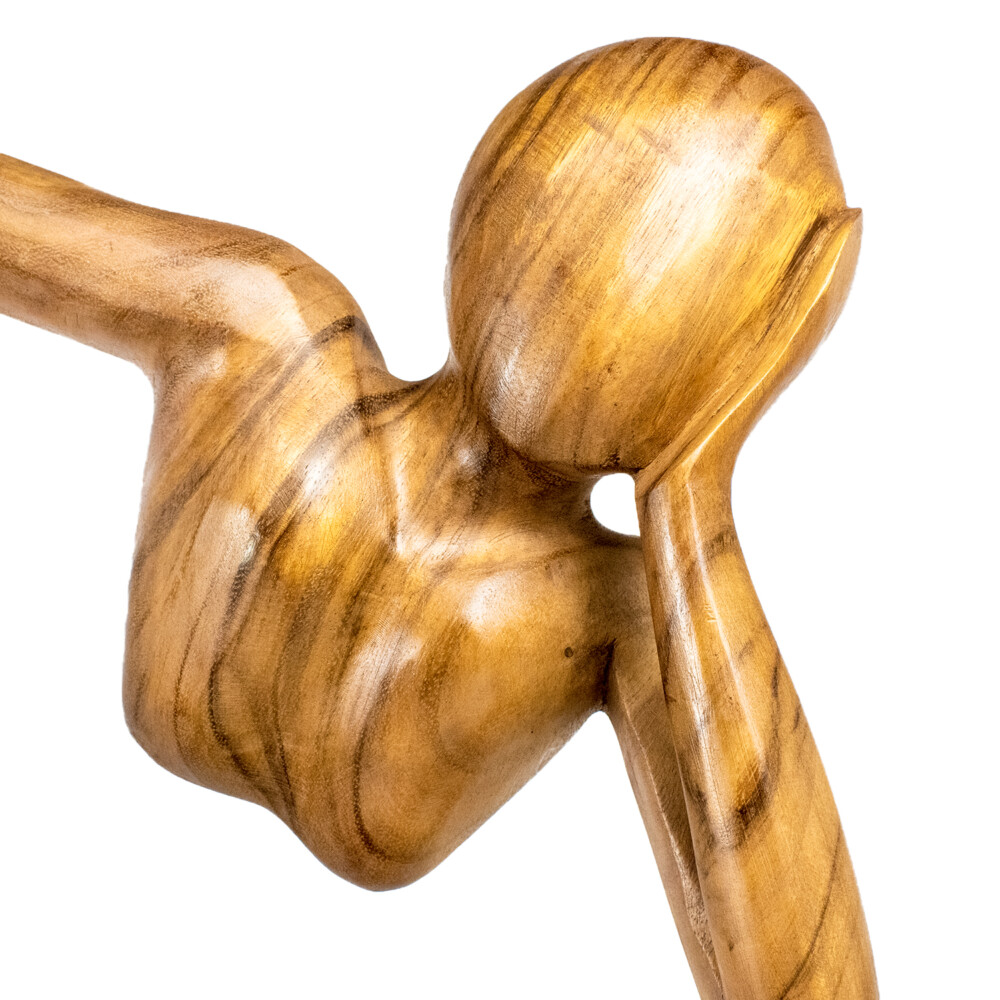
The Wooden Abstract Thinking Statue captures that contemplative-figure tradition in a slim vertical form, hand-carved from sustainably sourced hardwood. Standing 40 cm tall on a 36 × 7 cm base, the piece reads as a stylised figure caught mid-thought — the gesture present, the specific identity dissolved. The slim 7 cm depth gives the silhouette its distinctive vertical character: present and sculptural from the front, narrow and unobtrusive from the side. The sustainably sourced hardwood is finished to allow the natural grain to remain visible, and like all hand-carved pieces, each one carries small variations in the wood pattern and the precise carving — no two are exactly identical.
Why an abstract thinking figure works as decor
Abstract figurative sculpture does specific visual and emotional work that realistic pieces cannot. Three things about the form are worth understanding.
It invites looking rather than glancing. A realistic statue tells you everything in the first second — the subject is identified, the pose is recognised, the eye moves on. An abstract figure works slowly. The viewer has to read the form, interpret the gesture, find their own meaning in the pose. Pieces like this reward returning to look at them — visitors comment on them, household members notice them in different lights and at different angles. They become permanent parts of how a room is experienced rather than passive decoration.
It signals considered taste without being declarative about it. Realistic figurative decor — busts, classical figures, animal sculptures — makes a statement about what the buyer admires. Abstract figurative work makes a quieter, more sophisticated statement: about how the buyer thinks about form itself. A single abstract sculpture in a styled room signals an art-led sensibility in a way no amount of conventionally pretty decor can.
The “thinking” pose carries cross-cultural weight. The contemplative figure is one of the most universal forms in sculpture across cultures. Rodin’s The Thinker in Western art, the meditative Buddha of Asian Buddhist sculpture, the seated thinker forms across African traditional carving, even the Mesoamerican Olmec figures — every culture has its version of the figure in thought. An abstract thinking statue draws on that broader human tradition rather than referencing any single cultural source, which makes it a genuinely portable and adaptable piece across very different rooms and styling schemes.
The character of sustainably sourced hardwood
The material credentials on this piece are worth pausing on. “Sustainably sourced hardwood” is a specific claim, and it matters more than it might seem in a decorative context.
Hardwood holds carved detail beautifully and lasts for generations. Sustainably sourced hardwoods — typically managed-plantation teak, mango, suar, mahogany or similar tropical hardwoods — are the right material for serious carved sculpture. They take fine detail without splintering, hold their shape across decades of display, and develop a soft patina with handling that improves their character over time. Properly cared for, a hardwood sculpture lasts not just for years but for generations.
Sustainable sourcing protects the long-term supply of these woods. The traditional carving woods of South-East Asia and tropical Africa have come under significant pressure from unsustainable harvesting over recent decades. Pieces sourced from managed plantations or certified sustainable suppliers preserve both the immediate craft tradition and the long-term ecosystem the woods come from. For buyers who care about the environmental footprint of the decor they purchase, this matters genuinely.
The natural grain is part of the design. Mass-produced decor typically conceals grain variation behind paint, stain or laminate. A piece designed to display its natural grain — as this one is — treats the wood itself as part of the sculptural composition. The flow of grain across the figure, the subtle colour variations, the small natural features of each individual piece all contribute to the finished character. Two pieces from the same workshop will share the same form but differ in the precise grain pattern, making each piece genuinely unique.
Where an abstract sculpture sits best
The vertical 40 cm form and slim 7 cm depth suit specific placements within a styled home.
On a console, sideboard or mantel as a sculptural focal piece. The most natural placement. The slim depth means the sculpture sits comfortably on even narrow surfaces without crowding nearby decor. Position centrally or slightly off-centre on a console, sideboard or mantelpiece, with surrounding decor — books, candles, smaller objects — kept deliberately quieter so the sculpture reads as the focal piece.
On open shelving or in a bookcase as part of a curated display. The vertical form fits comfortably on a standard book shelf, where it provides a sculptural counterpoint to the rectangular line of book spines. Position alongside grouped books and a few smaller objects for a styled-shelf moment that reads as deliberately curated rather than randomly accumulated.
In an office, study or library as an art-led personal piece. The thinking-figure motif is particularly suited to spaces dedicated to thought — studies, home offices, libraries, reading rooms. The piece quietly reinforces the intellectual character of the space without becoming distracting. Position on a desk, a low shelf, or a bookcase in eye-line of the working area.
In a meditation corner, yoga studio or wellness space. The contemplative pose suits dedicated spaces for stillness and reflection. The piece pairs well with other quiet, considered objects — candles, ceramics, soft textiles — building a corner of the home that supports rather than distracts from contemplative practice.
In a bedroom as a quiet styled accent. Position on a chest of drawers, a tall bedside table or a styled dresser. The vertical form provides height that balances the wider rectangular surface of bedroom furniture, and the contemplative quality of the figure suits the restful character of a bedroom.
What to pair the abstract thinking statue with
The natural wood character and modernist sculptural form set up specific pairings across the Sotran range.
With other handcrafted statues and sculptural pieces. The piece works as part of a curated grouping with other items in the Statues tag and the broader Decorative range. A small collection of figurative pieces at varying scales — a vertical thinking figure, a horizontal reclining piece, a smaller bust or abstract form — reads as deliberately curated, the way a small private art collection might be arranged.
With books and considered personal objects. The piece works particularly well in a styled display with books, framed photographs, and other personal items. Position on or near a bookshelf from the Bookshelf range, where the sculpture reads as part of the literary, art-led character of the space.
On a Sotran sideboard, console or coffee table. The sculpture sits beautifully on pieces from the Sideboards & Consoles and Coffee Tables ranges. The combination of substantial timber furniture and vertical carved sculpture is a classic styling pairing — the wood of the furniture grounds the sculpture, the sculpture provides the vertical accent.
With other natural wood and warm-toned decor. The hardwood finish ties naturally to other timber pieces in the catalogue. Pair with pieces from the Baskets, Pots & Vases and broader Home Decor ranges to build a layered natural-material scheme around it.
Beneath warm directional lighting. Carved wood sculpture rewards being lit. Position the piece where it can catch light from a window during the day, or near pieces from the Table Lamps or Floor Lamps ranges in the evening. Directional lighting picks up the depth of the carving and the texture of the wood grain in a way ambient ceiling lighting cannot.
In a Modern Tropical or art-led contemporary scheme. Browse the Modern Tropical tag for pieces that share the warm, organic, hand-crafted aesthetic. The thinking figure sits comfortably as part of that broader styling vocabulary, particularly with rattan, weathered wood and other natural-material pieces that share its considered, hand-crafted character.
In a meditation, wellness or yoga space alongside soft textiles. If positioned in a wellness or contemplative space, pair with pieces from the Cushions and Rugs ranges to build a soft, grounded corner that the sculpture anchors. The combination of contemplative figure and soft textiles supports the meditative quality of the space.
Caring for a hand-carved wooden sculpture
One of the genuine pleasures of solid hardwood decor is how easily it stays looking beautiful for the long term. The Wooden Abstract Thinking Statue is built for years of display and only asks for the lightest care to keep its character intact. Dust the surface regularly with a soft microfibre cloth or a soft-bristle brush — the brush works particularly well for reaching into the more intricately carved sections where a flat cloth cannot easily reach.
For occasional deeper cleaning, wipe gently with a barely damp cloth — a tiny amount of mild soap can be added if needed. Allow the piece to air-dry naturally before returning it to display. The hardwood holds up beautifully to this kind of routine care, and gentle handling only deepens the soft patina that develops on hand-carved wood over time.
Position the statue out of prolonged direct sunlight to preserve the depth of the wood tones over the years. A light application of natural furniture wax once a year nourishes the wood and deepens the warmth of the finish — Woodoc Antique Wax is widely available in South Africa and works well on small carved pieces. With this minimal care, a hand-carved hardwood sculpture becomes one of those quietly characterful pieces that holds its presence in a home for decades — settling into its place as a small piece of considered art that ages with quiet dignity over the years.
| Dimensions | 36 × 7 × 40 cm |
|---|