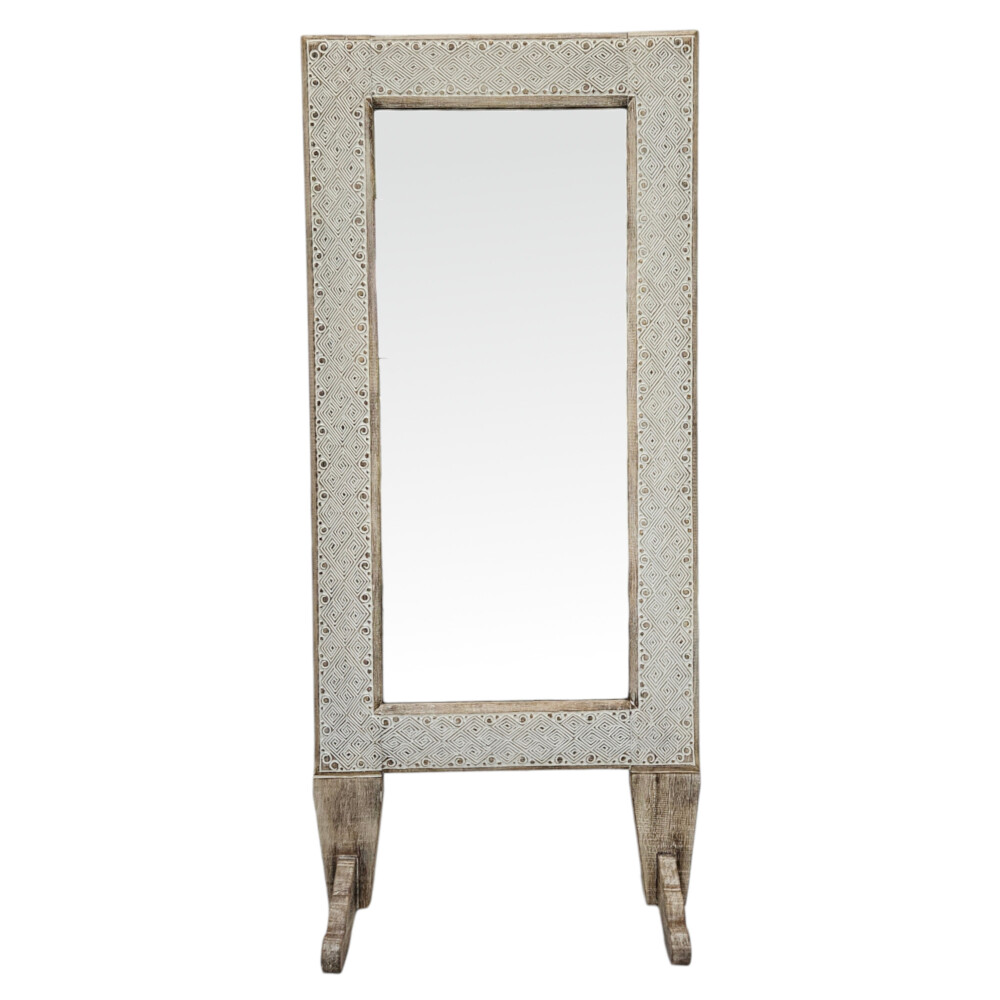
Diamond Carved Standing Mirror
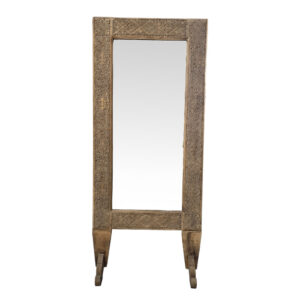
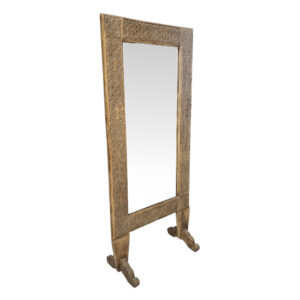
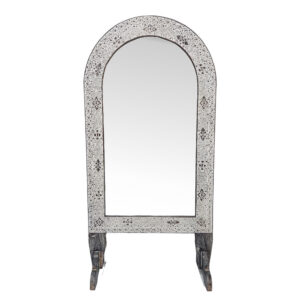
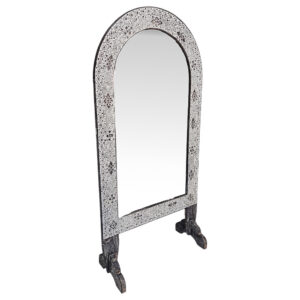
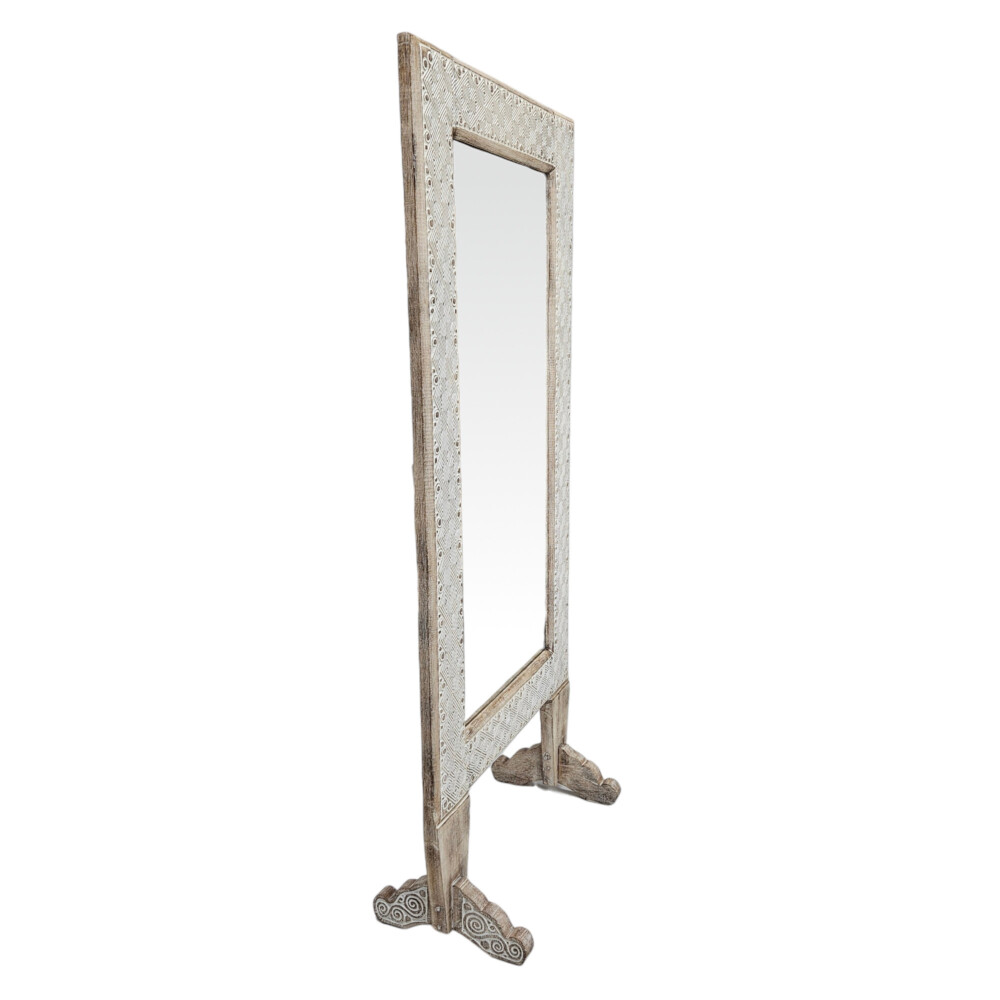
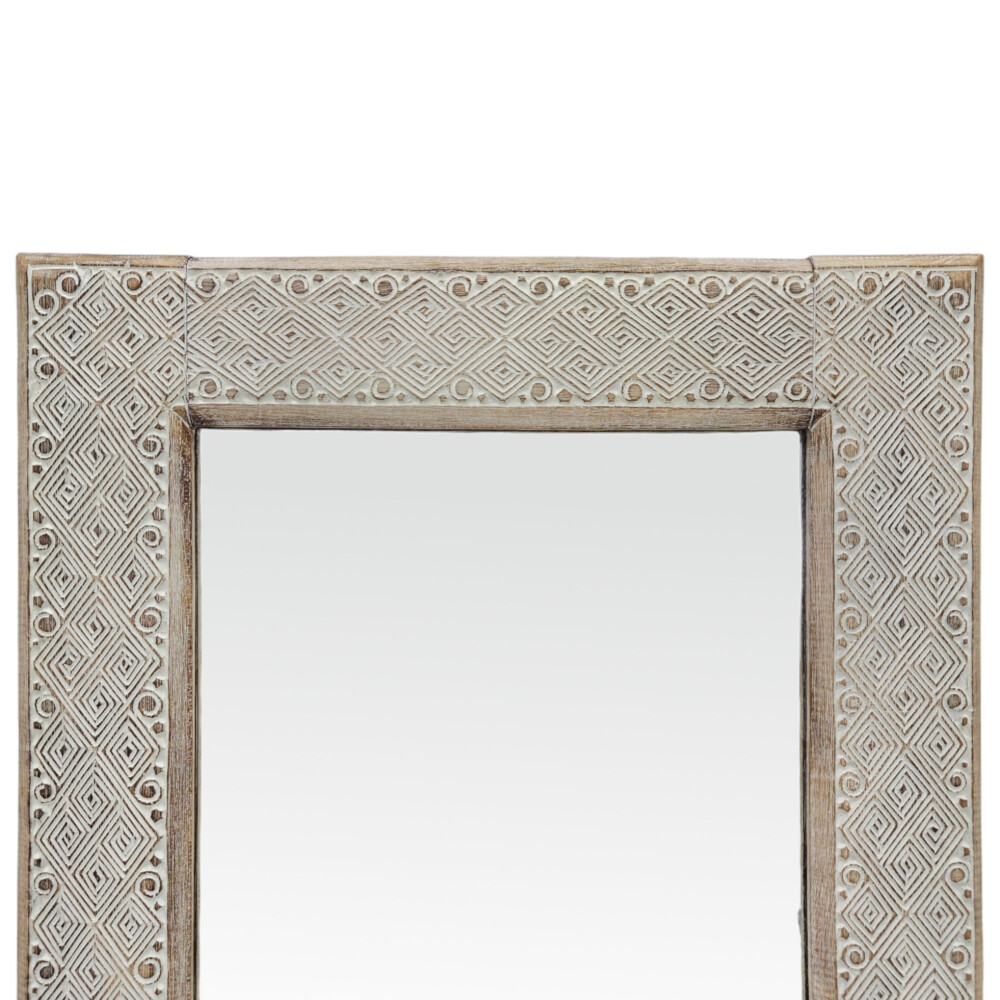
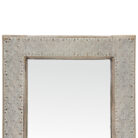
A 180cm full-length floor-standing mirror with intricate hand-carved geometric diamond patterning along the frame, finished in soft white-wash. Built around the cheval-mirror tradition — substantial enough for proper head-to-toe dressing use, characterful enough to anchor a bedroom or dressing room as a sculptural piece in its own right.
– Dimensions: 180 × 80 cm (H × W)
– Hand-carved solid wooden frame with geometric diamond pattern
– Soft white-wash finish lets the carving detail show through
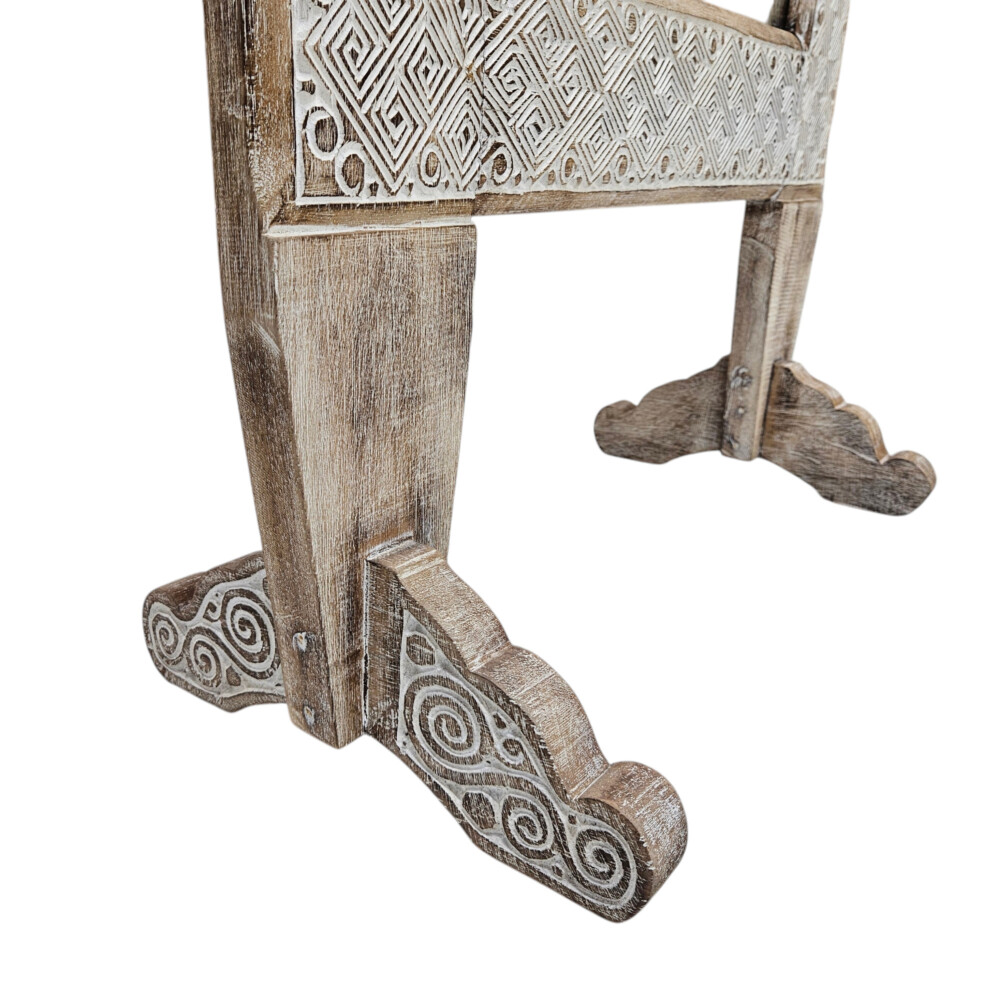
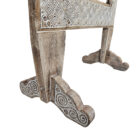
– Integrated stand — freestanding, no wall installation required
– Full-length head-to-toe reflective surface
– Suited to bedrooms, dressing areas, walk-in closets, entryways
– Each piece is unique — natural variation in carved detail and finish
- Estimated Delivery : 4 to 10 business days
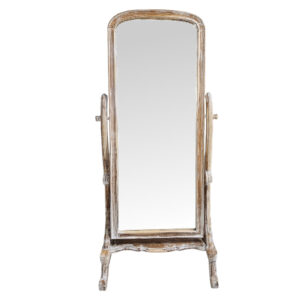
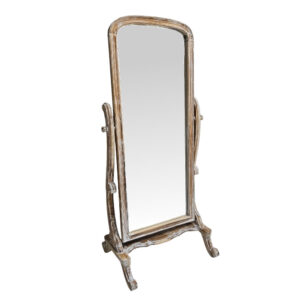
A 180cm hand-carved standing mirror with diamond-pattern wooden frame
The standing mirror is a fundamentally different category of object from a wall mirror. A wall mirror is bolted to a vertical surface and committed to that position, usually for years; a standing mirror is freestanding, mobile, and reads as an independent piece of furniture rather than as wall fixture. The functional differences matter too. A wall mirror reflects whatever happens to be in front of it from a fixed angle; a standing mirror can be tilted, repositioned, and angled to suit specific use — primarily proper head-to-toe dressing use, which a wall mirror at standard hanging height genuinely cannot provide. For dressing rooms, bedroom corners, walk-in closets and entryways, a substantial standing mirror does what no wall mirror can.
The Diamond Carved Standing Mirror is built around exactly that kind of considered standing-mirror role. The piece measures 180 cm tall × 80 cm wide — full-length proportions that give a complete head-to-toe view for adults of any standard height. The frame is constructed from solid wood with intricate hand-carved geometric diamond patterning running along the borders, finished in a soft white-wash that lets the depth and detail of the carving remain clearly visible rather than concealed by a heavy paint finish. The integrated stand at the base provides genuine stability — the piece stands freely without leaning against a wall — while keeping the overall silhouette clean and architectural rather than bulky. The white-wash palette ties to coastal, Modern Boho, Scandinavian and Modern Tropical interiors, while the substantial scale and hand-carved detail give the piece presence in more formal or traditional settings as well.
Why a standing mirror works where a wall mirror doesn’t
The choice between a standing mirror and a wall mirror isn’t aesthetic preference — they serve different functional roles. A few things about why a substantial standing mirror earns its specific place are worth understanding.
It provides a proper head-to-toe view. Wall mirrors hung at standard eye level (centre at 145–155 cm from the floor) show the upper body and head clearly, but typically cut off below the knees. A 180 cm standing mirror with the bottom edge close to the floor delivers genuine full-length reflection, allowing buyers to see how an outfit actually works as a complete look rather than guessing at the lower half.
It needs no wall installation. For renters, for buyers in homes with masonry walls, for households that move furniture frequently, or for anyone who wants the option to reposition the mirror seasonally, a freestanding piece eliminates the entire installation question. Out of the box, into position, ready to use.
It anchors a corner without committing to a wall. Most homes have corners that don’t quite fit furniture but feel unfinished without something occupying them. A substantial standing mirror is built specifically for this kind of in-between architectural space — substantial enough to hold the eye, vertical enough to make use of the corner’s vertical volume, decorative enough to feel intentional.
It moves with the household. Wall mirrors are essentially permanent installations. A standing mirror moves easily, both around a single home as room arrangements change and between homes when households move. For households in a phase of life where furniture configurations change regularly, this matters.
Why hand-carved diamond patterning works on a standing mirror
The frame design on a substantial standing mirror is what determines whether the piece reads as a generic dressing mirror or as a considered piece of decor in its own right. A few things about the diamond-carving choice are worth understanding.
Geometric carving carries genuine craft credibility. The diamond pattern is visibly hand-carved rather than printed, applied or moulded — meaning the variations in line depth, the small differences between repeated diamonds, and the subtle variations across the frame are all evidence of actual human craft. For buyers committed to handmade and considered decor, this is the difference between a mirror that looks generic and a mirror that looks curated.
The geometric form ties to multiple aesthetic traditions. Diamond patterning appears in Moroccan craft, Indian woodwork, Indonesian carving, contemporary Geometric Modern design, and Art Deco — meaning the frame doesn’t commit to any single regional or period reference. The piece works equally well in Modern Tropical, Beach Cottage, Boho, Scandinavian and contemporary Mediterranean schemes, because the geometric vocabulary is foundational to all of them.
The white-wash finish enhances the carving rather than competing with it. A heavy paint finish would conceal the depth of the carved work; a dark stain would obscure the line detail. The white-wash treatment is the right middle ground — a soft colour that allows the shadows and depth of the diamond pattern to remain clearly visible from any viewing distance while keeping the overall palette neutral enough to fit most rooms.
Where a 180cm standing mirror sits best
The substantial vertical scale and freestanding form suit specific placements within a styled home.
In a bedroom corner as the primary dressing mirror. The most natural placement. Position in the corner of the master bedroom, ideally near a window for natural light during dressing. The full-length reflection makes proper outfit-checking easy. The carved frame and white-wash finish bring sculptural character to a corner that would otherwise sit empty.
In a walk-in closet or dressing room. The proper full-length scale is essential in dedicated dressing spaces — anywhere clothes are tried on or outfits assembled. Position centrally on a wall (or in a corner) where the mirror is the visual anchor of the dressing routine. Particularly effective in closets with built-in drawers and hanging space, where the mirror becomes the styling station.
In an entryway or hallway as a final-check piece. Position near the front door for a quick full-length check before leaving the house — outfit, hair, posture all visible at a glance. The substantial scale also makes the mirror a meaningful welcome moment for arriving visitors, doubling the perceived depth of what is often a tight entrance space.
In a corner of a generous master bedroom or bedroom seating area. Some larger bedrooms include a small seating zone (a couple of armchairs, a small reading corner). Position the standing mirror in the corner of this zone to anchor the seating area visually and add functional dressing capacity beyond the closet’s built-in mirrors.
Beside a wardrobe or chest of drawers. Position alongside substantial bedroom furniture as a complementary vertical element. The mirror reflects light across the bedroom and provides the full-length view that built-in wardrobe mirrors often don’t deliver.
Leaning gently against a wall for a softer, casual aesthetic. While the integrated stand allows the mirror to stand fully freestanding, many buyers prefer the soft Boho-style of leaning the mirror gently against a wall — the slight angle catches different light and the casual posture works particularly well in coastal, Boho and Modern Tropical schemes.
What this mirror pairs with
The substantial scale, white-wash carving and standing form set up specific pairings across the Sotran range. The piece works naturally alongside other items in the broader Mirrors range — combining a standing dressing mirror with smaller wall mirrors from the Wall Mirrors category builds a coordinated reflective scheme across multiple rooms. For bedroom placement, position alongside pieces from the broader Bedroom Furniture range — particularly Dressers & Drawers, Nightstands / Pedestals and Headboards in complementary tones. The hand-carved white-wash character ties to other items in the broader Beach Cottage and Modern Tropical styling clusters. For complete dressing-corner styling, add an occasional chair from the Occasional Chairs range as the dressing seat, soft lighting from the Bedside/Table Lamps range, and natural-fibre baskets from the Baskets range for soft styling. A hand-knotted rug from the Rugs range underneath anchors the dressing zone and softens the floor surface for bare-feet morning dressing.
Caring for a hand-carved white-wash mirror
The piece needs minimal care to look its best for many years. Two surfaces matter — the wooden frame and the mirror itself — and each needs slightly different attention.
For the carved wooden frame: Dust the frame periodically with a soft, dry microfibre cloth — the smooth surfaces wipe clean easily, and a soft-bristle brush works well for reaching into the carved diamond detailing where dust tends to settle. For occasional deeper cleaning, wipe gently with a barely damp cloth and a small amount of mild soap if needed, then dry immediately with a soft cloth. The white-wash finish is designed to show the natural wood grain and small variations in the carving — small marks from daily use settle into the existing patina rather than reading as damage. Position the mirror out of consistent direct sunlight to preserve the depth of the white-wash tone over the years.
For the mirror surface: Use standard glass cleaner sparingly — apply to the cleaning cloth rather than spraying directly onto the mirror, which prevents liquid running down the surface and pooling at the frame edge. A soft microfibre cloth gives a streak-free finish. For stubborn marks, a small amount of vinegar diluted in water works well as a gentler alternative to commercial glass cleaners.
With this minimal care, a quality hand-carved standing mirror becomes one of those long-term decor pieces that holds its character for many years — settling into its place in a bedroom or dressing room as a permanent considered piece.
| Dimensions | 180 × 80 cm |
|---|


Decorative Wooden Whale Tail