Product on sale

Green And Blue Mosaic Floor Vase

Original price was: R3295.Current price is: R2800,75.

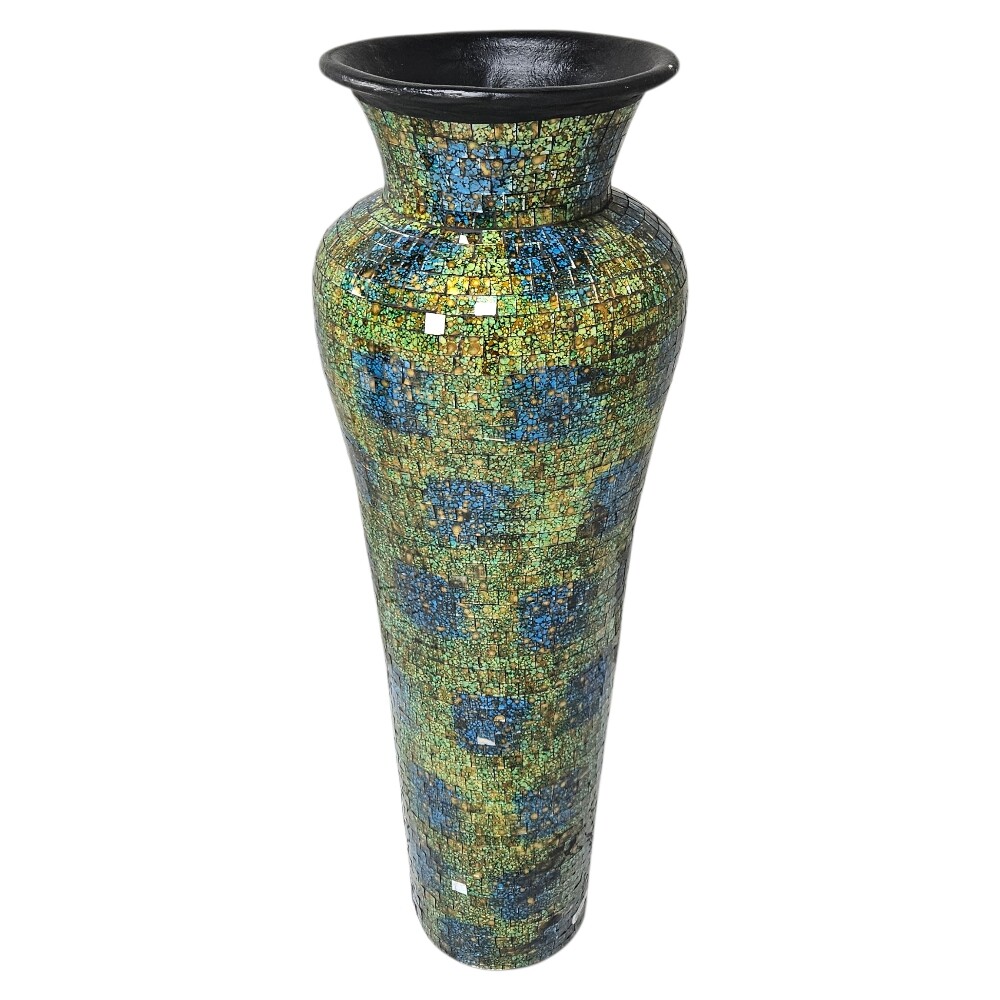
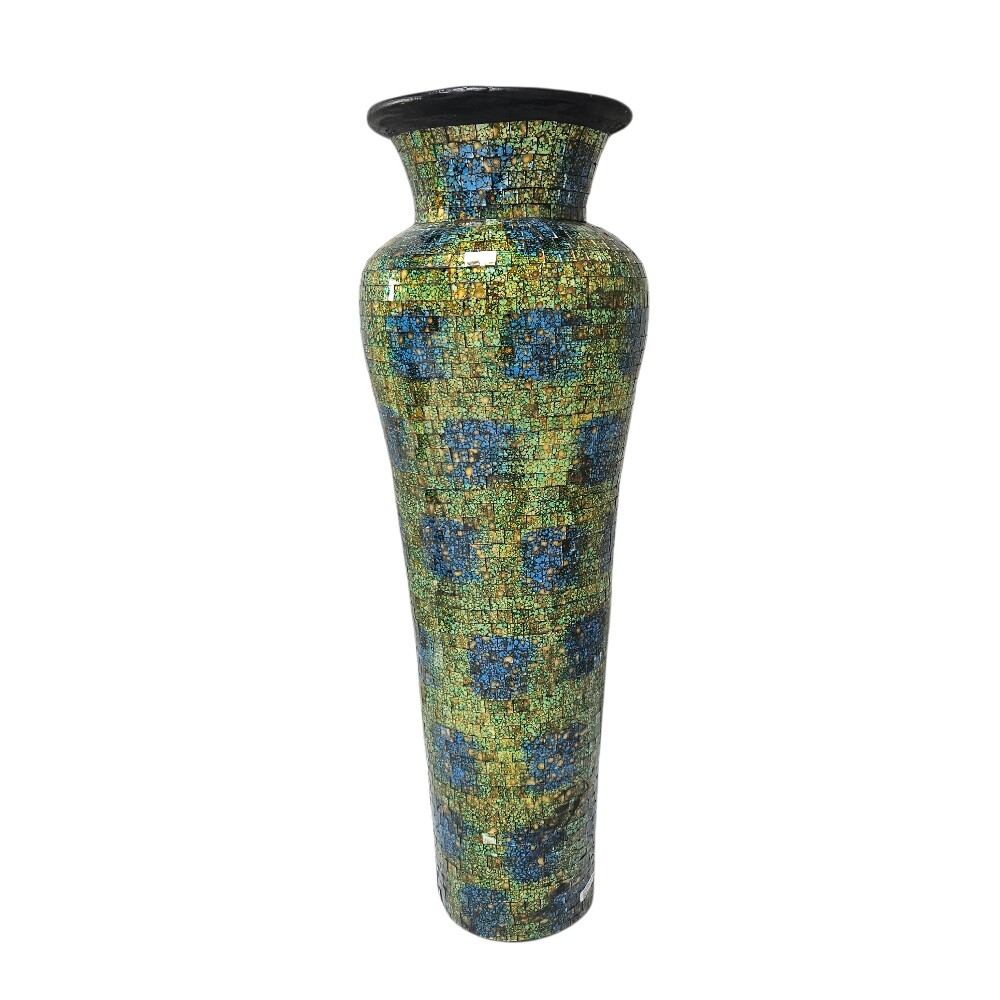
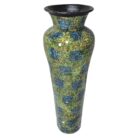
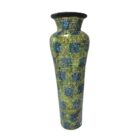
A 1-metre tall floor vase covered in hundreds of hand-applied glass mosaic tiles in emerald green, azure blue and amber gold — finished with a matt black rim that anchors the vibrant body. A genuine architectural floor piece, designed to fill space at floor level rather than to sit on a surface.

– Dimensions: 35 × 35 × 100 cm (W × D × H)

– 100cm tall floor-standing vase

– Hundreds of hand-applied glass mosaic tiles

– Emerald green, azure blue and amber gold leopard-like pattern

– Matt black rim for contemporary architectural contrast

– Each piece is unique — no two mosaics are identical

– Suited to Mediterranean, modern tropical and bold contemporary interiors

1 in stock
  • Check Mark Estimated Delivery : 4 to 10 business days
  • Visa Card
  • MasterCard
  • American Express
Guaranteed Safe And Secure Checkout

A 1-metre tall floor vase in hand-applied glass mosaic with green, blue and gold tiles

A floor vase is a different kind of decor object from a tabletop vase. Tabletop vases need a surface beneath them, a console, a coffee table, a shelf, and they sit within the visual cluster of other objects on that surface. A floor vase stands alone at human-leg height, occupying floor space the way a piece of small sculpture does. It is architectural in a way tabletop pieces never are. Done well, a floor vase fills an awkward corner, anchors a transitional space between rooms, or becomes the focal point of an entryway. Done badly, it becomes a stumbling hazard that nobody notices is there. The difference comes down to scale, palette and placement, and at a full metre tall in vivid hand-applied mosaic, this piece is unmistakably the kind of floor vase that earns its place in a room.

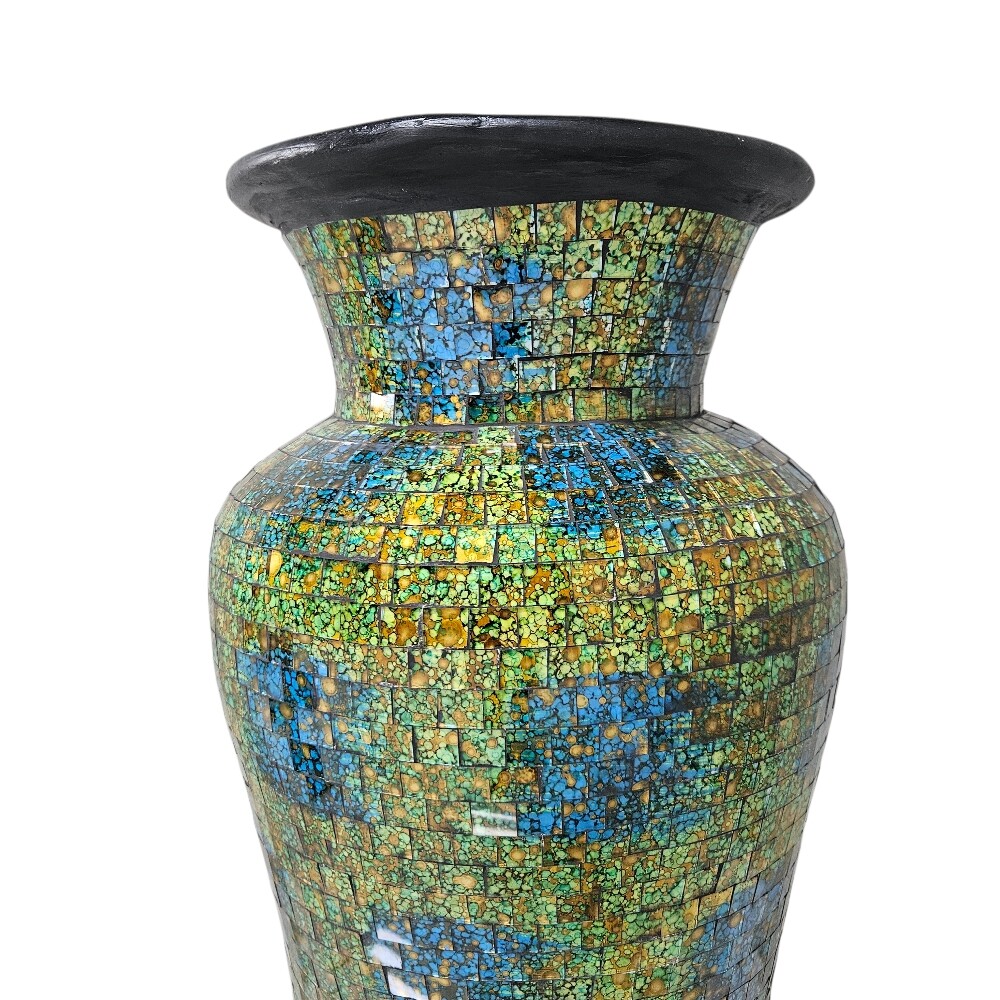
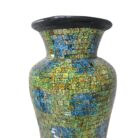
The Green And Blue Mosaic Floor Vase stands 100cm tall on a 35 × 35cm base, with a slender tapering silhouette designed to occupy vertical space without crowding the floor area around it. The body is meticulously covered in hundreds of small glass mosaic tiles in shades of emerald green, azure blue and amber gold, hand-applied tile by tile to create a vibrant leopard-like pattern across the surface. The tapering form is finished at the top with a matt black rim, a deliberate modern counterpoint to the warmth and intricacy of the mosaic body. Like all hand-applied mosaic work, each piece is genuinely unique. The precise placement of individual tiles, the rhythm of colour distribution, and the way the leopard pattern resolves are all variations specific to your piece.

Why a floor vase silhouette works architecturally

The vertical floor-standing form does specific visual work in a room that no tabletop piece can replicate. Three things about why a 1-metre floor vase works are worth understanding.

It fills vertical space without taking up usable floor area. Most decor sits on surfaces, which means it takes up surface area that could otherwise be used for working, eating, displaying smaller objects, or simply remaining clean. A floor vase fills the equivalent vertical space of a small piece of sculpture but only occupies a 35cm-square footprint at floor level, usually in corners or transitional zones that wouldn’t be used for anything else. It adds a major decorative element without subtracting from functional space.

It anchors corners and architectural transitions. Most homes have awkward in-between spaces, including corners that don’t quite fit furniture, transitions between hall and lounge, the floor space beside a doorway, and the area at the top or bottom of a staircase. These spaces look unfinished without something occupying them, but they’re rarely large enough for proper furniture. A floor vase is built specifically to fill these spaces, large enough to hold the eye, vertical enough to not crowd the floor, and decorative enough to feel intentional rather than accidental.

It introduces colour and pattern at human eye level for seated viewers. The 100cm height places the body of the vase squarely at eye level for someone seated on a couch, dining chair or armchair. Most decor sits either much lower (coffee tables) or much higher (wall art, shelving). The middle band, between roughly 75 and 130cm from the floor, is the most visible decorative zone in a seated room and one of the least filled in most homes. A floor vase fills exactly that visual gap.

The character of hand-applied glass mosaic

The mosaic technique on this piece is the same one used across the broader mosaic range, the hand-applied glass-on-pottery tradition with roots in Mediterranean, Moroccan and Mexican craft. Three things about the technique are worth understanding for buyers considering a floor-scale piece.

The light play is what makes mosaic earn its place at floor scale. A flat-painted floor vase reads the same all day. A mosaic-tiled vase shimmers and changes character through the day as natural light moves across the room, since the small glass tiles each reflect light at slightly different angles, creating a continuously shifting surface. In strong morning light, the green tones come forward; in softer evening light, the blues dominate; under directional lamp light at night, the gold accents catch the warm bulb tones. It is one of the few floor-decor pieces that genuinely changes mood with the light through the day.

The leopard-like pattern reads as organic rather than geometric. Where the mosaic bowl in the broader range uses a deliberate geometric swirl, this floor vase uses a more organic distribution, with the colours flowing into each other in irregular patches that read as natural rather than mechanical. This makes the piece pair well with both highly architectural rooms (where the organic pattern provides relief) and natural-material rooms (where it ties to the broader organic vocabulary).

The matt black rim is a deliberate contemporary anchor. Without the matt black rim, the piece would read purely as Mediterranean-traditional mosaic. The black rim introduces an explicit contemporary architectural element that grounds the vibrant body in modern design. The contrast between the vivid mosaic and the restrained black top is what allows this piece to work in genuinely contemporary South African interiors as well as in more traditional Mediterranean-inspired schemes.

Where a 1-metre floor vase sits best

The 100cm height and substantial sculptural presence suit specific placements within a styled home.

In an entryway corner as the welcome piece. The most natural placement. Position the vase in a corner of the entrance hall, beside the front door, or against the wall at the end of an entry passage. The vibrant pattern catches the eye on arrival, both for residents coming home and for visitors stepping inside, and sets a confident, considered tone for the rest of the home. Particularly effective where the entryway has tile or stone flooring that picks up the same organic-craft vocabulary as the mosaic.

In a lounge corner beside a sofa or armchair. Position the vase in the corner of a lounge, particularly the corner beside a sofa where there’s often awkward floor space that a side table doesn’t quite fit. The 100cm height places the body of the vase at eye level for seated viewers, which is exactly where it does most visual work. Group with floor lamps from the broader range for a fully styled corner.

Beside a console table or sideboard. Where most people position decor on top of a console, a floor vase positioned beside it creates a vertical companion piece that extends the styled vignette downward to the floor and out into the room. The combination of console-with-decor-above and floor vase beside reads as a complete styled moment rather than as an isolated console.

At the foot of a staircase or in a stairwell corner. Stairwells and the floor space at the bottom of stairs are often the most visually neglected zones in a home, too narrow for furniture and too important for empty space. A vertical floor vase fills exactly this kind of in-between architectural space, drawing the eye from the entrance toward the stairwell or upward into the staircase volume.

In a dining room corner as a complementary piece to the table. Dining rooms typically have a table-and-chairs cluster in the centre and bare wall corners around them. A floor vase in one of those corners draws the eye outward from the table, breaking up the visual dominance of the dining setup and adding a piece of decorative interest to the broader room.

In a sun-room, conservatory or covered patio. The vibrant Mediterranean-inspired palette comes alive in strong natural light, which makes this piece particularly effective in sun-rooms, conservatories or covered outdoor entertainment spaces. Pair with warm-toned furniture and lush planting for a Mediterranean garden-room aesthetic.

What to fill the vase with, and what not to

A floor vase of this scale is genuinely flexible in how it can be used or styled. A few practical notes on what suits the piece.

Tall dried botanicals and pampas grass. The most natural pairing. Long dried stems such as pampas grass, eucalyptus, palm fronds, dried wheat or seasonal branches extend the vertical presence of the vase upward to roughly 130 to 160cm total height, transforming the piece from floor sculpture into a complete sculptural arrangement. Choose stems with neutral or warm tones that complement the vibrant mosaic rather than competing with it.

A single dramatic sculptural branch. A single dramatic branch, bare or with sparse foliage, reads as more architectural than a full bouquet, allowing the mosaic pattern to remain the focal point while the branch adds height and organic line.

Fresh flowers in moderation. The vase can hold fresh stems, but the larger scale means it suits long-stemmed flowers such as sunflowers, lilies, or hydrangea on long stems rather than delicate small-stemmed bouquets that would look lost in the proportions. Change water every two to three days and rinse thoroughly when refilling.

Empty as standalone sculpture. Worth considering: this piece is fully complete as a standalone object. The mosaic pattern, vertical form and matt black rim are deliberately styled to read as finished sculpture without anything inside. For minimalist interiors or rooms where the surrounding decor is already developed, leaving the vase empty allows it to be appreciated as a piece in its own right.

What to pair the floor vase with

The vibrant mosaic palette and 1-metre scale set up specific pairings across the Sotran range.

With other Pots & Vases pieces. Browse our Pots & Vases collection for items that tie naturally to the broader mosaic range. A grouping with one floor vase as the anchor and smaller mosaic pieces on a nearby surface reads as a deliberately curated craft-forward display.

With Stone & Pottery pieces. Browse our Stone & Pottery collection for hand-applied craft pieces that share the same organic-craft vocabulary, building a coherent handmade aesthetic across the room.

With Modern Tropical-tagged decor. Browse our Modern Tropical style for pieces that share the warm, vibrant aesthetic. The vase sits comfortably within that broader styling vocabulary, particularly with rattan, weathered wood, lush planting and other handcrafted decor.

With Floor Lamps for directional lighting. Browse our Floor Standing Lamps collection for directional lighting that picks up the depth and shimmer of the glass tiles. Mosaic surfaces reward being lit, and ambient ceiling light alone does not show the piece at its best.

Caring for a hand-applied glass mosaic vase

One of the practical advantages of glass mosaic on a pottery base is how easily it stays looking pristine for the long term. The smooth glass tile surface wipes clean effortlessly. A quick weekly dust with a soft, dry cloth keeps both the tiles and the grout lines between them looking sharp. The sealed glass surface doesn’t absorb dust or stains the way porous unglazed ceramic might.

Position the vase out of consistent direct sunlight to preserve the depth of the green, blue and gold tones over the years. Given the floor-standing position and weight, the vase is generally stable on flat surfaces, but worth being aware of in households with young children or active pets where impact knocks could damage the mosaic surface. If using fresh flowers, change the water every two to three days and rinse the inside thoroughly when refilling. With this minimal care, a hand-applied mosaic floor vase becomes one of those quietly remarkable pieces that holds its character for decades, settling into its place as a permanent piece of architectural decor rather than a styling accessory that gets replaced.

Dimensions 35 × 35 × 100 cm

FAQ

Is the mosaic pattern identical on every vase?
No. Each piece is hand-applied tile by tile, so the placement of individual tiles, the rhythm of the colour distribution, and the way the leopard pattern resolves vary between pieces. The base form, height, and colour palette stay consistent, while the individual character carries genuine variation between pieces.

Will the colour fade in sunlight?
The glass tiles hold their colour well, but the depth of the green, blue and gold tones may gradually soften under sustained UV exposure over years. Indoor positioning away from direct windows preserves the colour depth for longer.

Is the mosaic durable, or will tiles fall off?
The tiles are individually hand-applied with proper adhesive and grouted into place, so they hold securely under normal use. Avoid sharp impacts or heavy objects knocking against the surface, since the glass tiles can chip or crack under direct impact. Once placed and styled, the vase is stable for years of normal display use.

Can I use it outdoors or on a covered patio?
The vase is designed for indoor use. The pottery base and grout lines can be affected by outdoor weather exposure, particularly rain and freezing temperatures, which risk the integrity of the mosaic over time. Sheltered covered patios and sun-rooms work well, but fully exposed outdoor positions are not recommended.
You may also like…