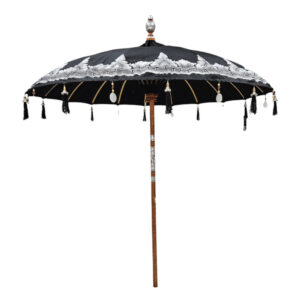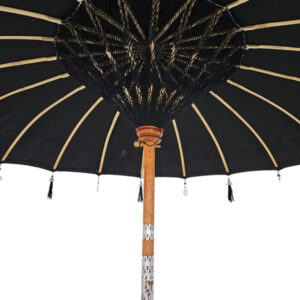
Cotton Macrame Umbrella
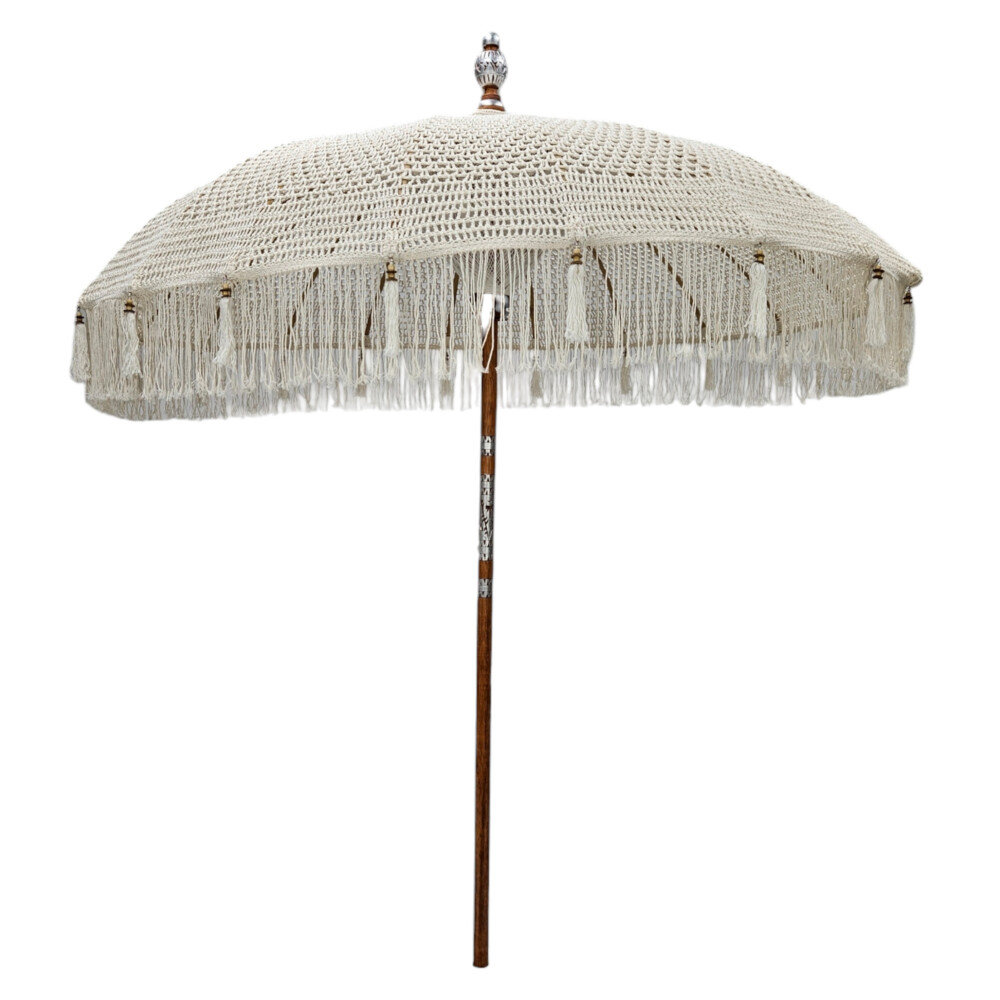
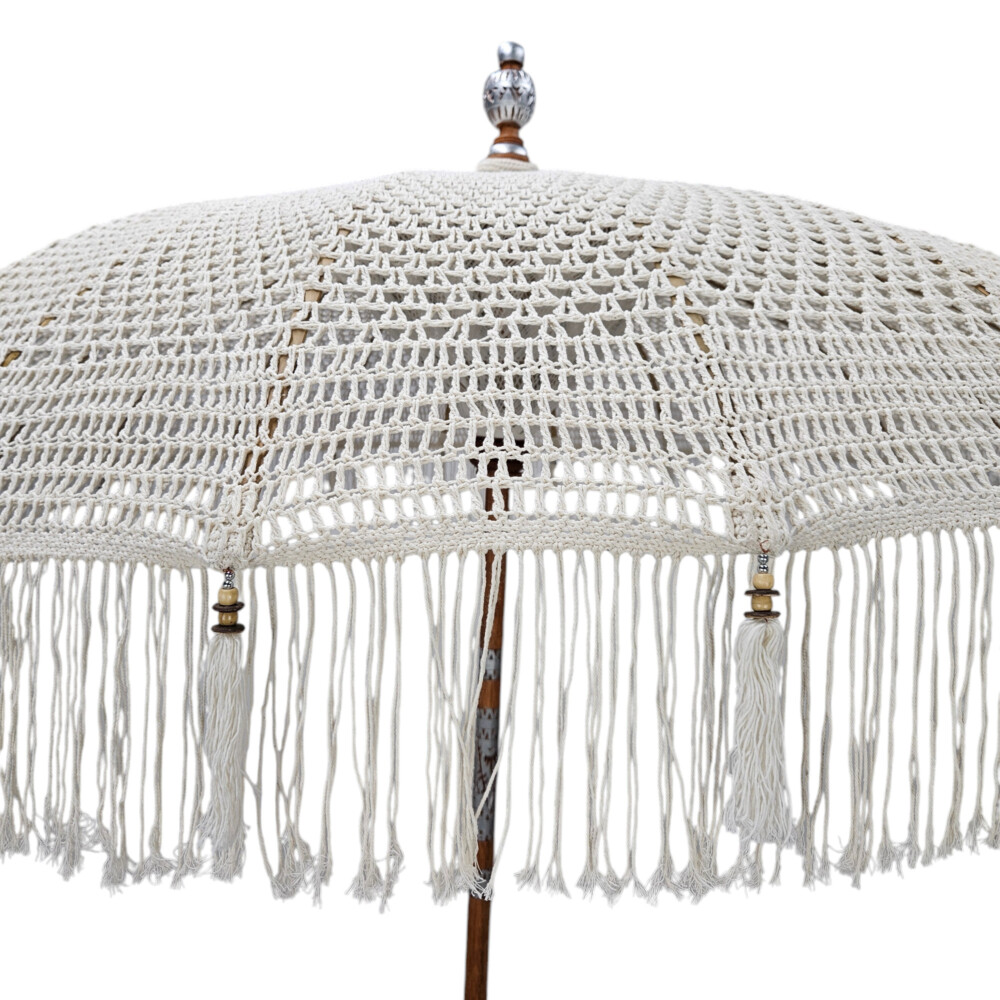
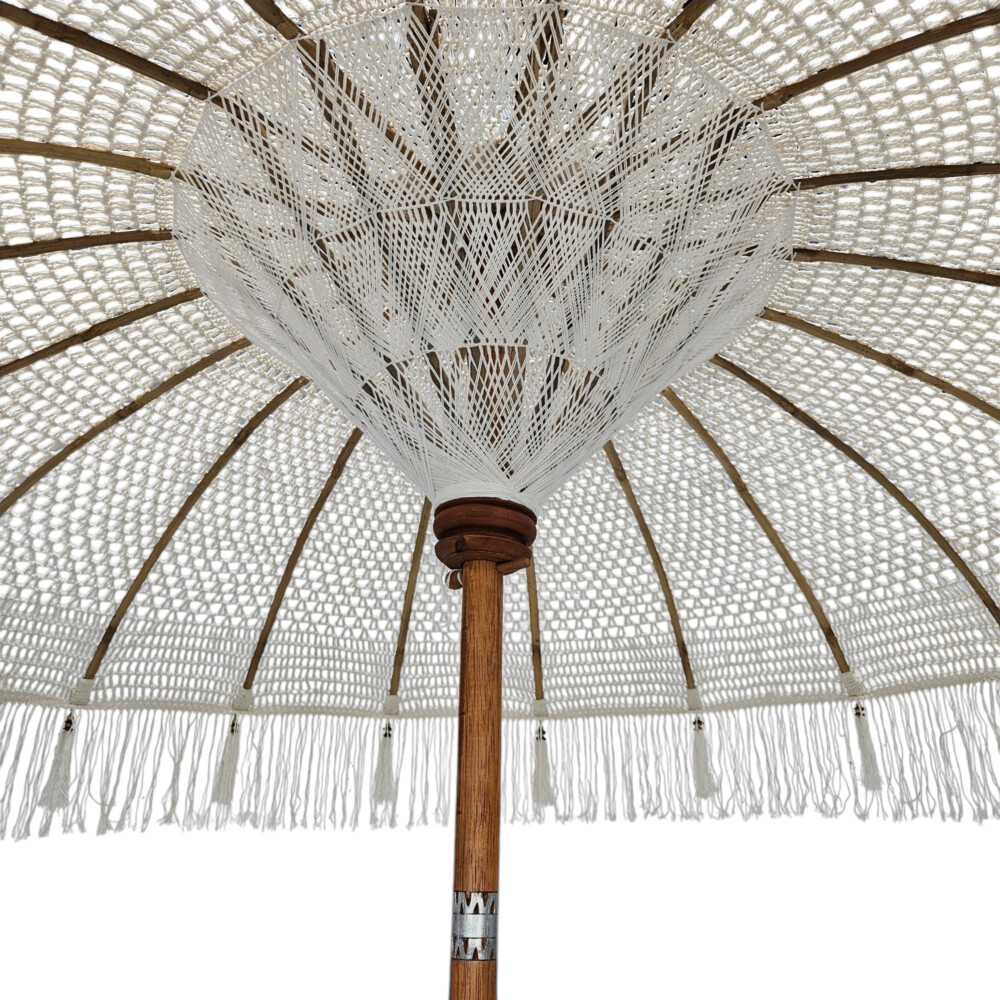
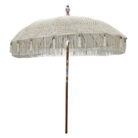
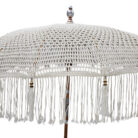
A handcrafted cotton garden umbrella with a fully hand-woven macramé canopy. Instead of solid fabric, the entire canopy is knotted by hand, creating a filtered, dappled shade and an artisanal textural presence that a traditional umbrella cannot match.
– Dimensions: 200 × 250 cm (L × H)
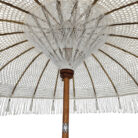
– Fully hand-woven macramé canopy in natural cotton
– Detailed knot work with flowing fringe
– Sturdy wooden pole with subtle decorative accents
– A piece of artisanal craft rather than a functional patio umbrella
Get Notified When Back In Stock
- Estimated Delivery : 4 to 10 business days
A fully hand-woven cotton macramé umbrella with filtered, dappled shade
Most umbrellas are built around solid fabric. The canopy’s purpose is to block the sun entirely, and the design language is about how that fabric looks and drapes. A macramé umbrella works on an entirely different principle. The canopy is not solid — it is a network of hand-tied knots, with gaps between them. Light passes through rather than being blocked. Shadows on the ground below become dappled and textured rather than a flat shade. It is closer in feel to standing under a tree than under a traditional umbrella.
The Macramé Cotton Umbrella is built around exactly that principle. The entire 200 cm canopy is hand-woven from high-quality cotton, with detailed knot work across the full surface and a flowing fringe along the edge. Standing 250 cm tall on a sturdy wooden pole with subtle decorative accents, it is handcrafted rather than manufactured — closer to an artisanal piece than to a conventional patio umbrella.
Why a hand-woven macramé canopy works differently
This is not just a visual choice. The openwork design genuinely changes the experience of sitting beneath it.
The shade is filtered, not flat. Where a solid umbrella creates a hard circle of shadow, a macramé canopy breaks the light into soft, dappled patterns on the ground, on faces and on the furniture below. It feels cooler in a subjective sense — less like hiding from the sun, more like being in a natural covered space. For bohemian and beach-style gardens, that quality is often the whole point.
The texture reads in a way solid fabric cannot. Knots catch light differently from fabric. The shadows on the canopy itself shift through the day as the sun moves. Viewed from above — from a second-floor balcony, a bedroom window, or a hill beyond a pool — the macramé reads as sculptural rather than functional. It becomes part of the garden’s visual composition.
Airflow moves through rather than around. A solid umbrella traps warm air underneath it, which is why the space beneath can feel stuffy on still days. An openwork macramé canopy lets warm air rise through the gaps, keeping the space underneath feeling more ventilated. In a South African summer, that difference is noticeable.
Caring for a cotton macramé umbrella
A fully hand-woven macramé umbrella is more delicate than a solid-fabric one and benefits from careful handling. Always close and store the umbrella when it is not in use — the open knot structure is more vulnerable to wind damage and snagging than a solid canopy. Never leave it open in strong wind, during storms, or overnight.
Dust builds up more visibly in the knot work than it does on solid fabric, so brush the canopy regularly with a soft brush — a soft-bristle dusting brush works well. For any marks or discolouration, spot-clean gently with a damp cloth and a mild, non-abrasive detergent. Do not soak or machine-wash the canopy; the knot structure can distort if saturated. Allow to dry fully in a shaded, ventilated spot before closing — never in direct sun, which can yellow natural cotton over time.
The wooden pole can be wiped clean with a soft, damp cloth. Avoid harsh cleaners on any of the hand-painted accents. Stored closed in a dry location during winter and handled with a little care through the summer, a cotton macramé umbrella can remain the centrepiece of an outdoor space for many seasons.
| Dimensions | 200 × 250 cm |
|---|
You may also like…
-
Cotton Black And Silver Bonita Umbrella
Original price was: R2995.R2396Current price is: R2396.7 in stock