Blue in the home
Blue in the home: the quietest way to bring a room back to life. One blue piece, sitting somewhere quiet, doing the job of carrying a colour the rest of the room has been missing. Why blue is the most reliable colour to commit to — and where to start. There is a particular kind…
There is a particular kind of room that decorators see all the time. Everything in it works on paper. The pieces are good, the layout is right, the light is fine. But the room reads as careful rather than alive.
The owner can’t quite say what is missing, and most of the obvious answers — more furniture, a bigger rug, a different light fitting — wouldn’t fix it. Nine times out of ten, the answer is blue. Not a blue wall. Not a blue couch. One blue piece, sitting somewhere quiet, doing the job of carrying a colour the rest of the room has been missing without anyone noticing.
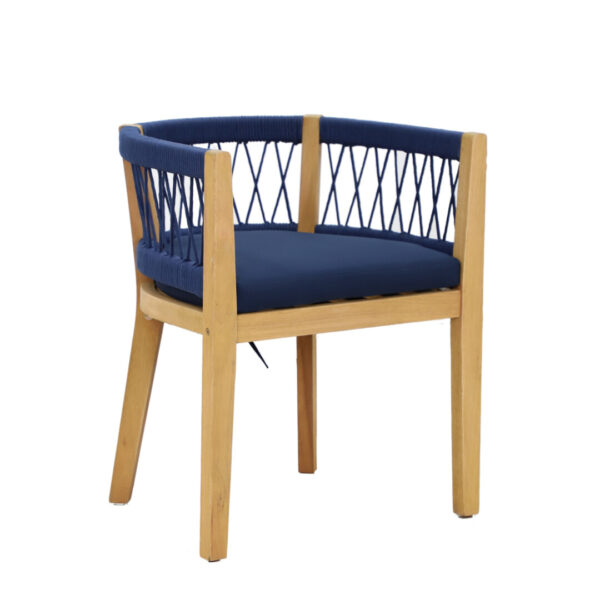
It sounds too simple, which is part of why it works. Blue is the only strong colour borrowed from nature rather than imposed on a room. Sky, water, ocean, dusk. A blue piece never reads as a statement the way red, green or yellow can. It reads as something that was probably already supposed to be there. That’s why blue is the most reliable colour to commit to in a home, and it’s why the Sotran blue furniture and decor range is one of the categories clients return to most.
Why blue does what other colours cannot.
Most colours in a home are doing work the room has to react to. A red cushion changes the temperature. A green chair pulls everything around it into a vegetal conversation. Yellow either lifts a room or sits awkwardly in it, with very little middle ground. Blue does none of this. It calms, but it doesn’t flatten. It cools, but it doesn’t freeze. It reads as restful without announcing itself. That’s why blue has held its place in interior design for centuries while other colours have come and gone. It’s the colour most people can live with for a long time without getting tired of it — a useful thing in a category as long-lived as furniture.
The other quiet advantage is scale. A small touch of red in a neutral room feels like a deliberate dot. A small touch of blue feels like the colour was already there. That makes it one of the easiest colours to introduce in stages — starting with one piece and adding others over time as the room earns them.
“Blue is the only strong colour borrowed from nature rather than imposed on a room.”
Where to put the first piece.
The mistake most people make with colour is to add too much at once. A blue cushion, a blue throw, a blue lamp, a blue piece of art, and the room reads as themed rather than considered. The better approach is the opposite. Start with one piece, large enough to carry the colour by itself, in a position where it has space to breathe.
The temptation will be to add a second piece quickly. Resist it. If the room takes the first piece well, a second one can be added later — and the colour starts to feel collected rather than decorated. That patience is the difference between a home with blue in it and a home that has been blued.
Hand-blown glass, and why it matters here.
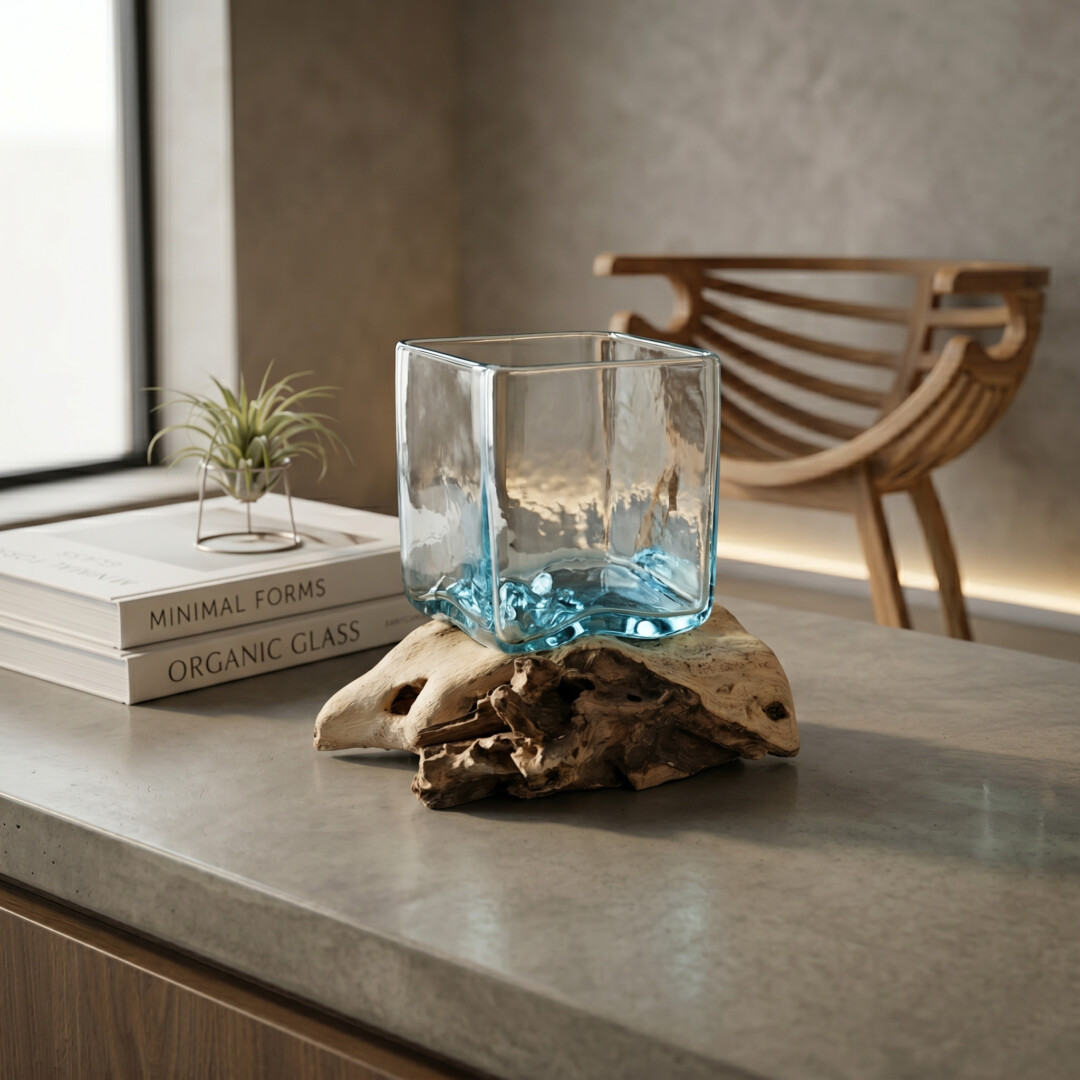
Worth pausing on, because it’s the part of the blue range most buyers don’t realise they’re getting. Many of the glass vases and glass-on-wood pieces in the range are genuinely hand-blown rather than machine-pressed. The cobalt and blue-tinted glass carries variations that pressed glass doesn’t, and the glass-on-wood category goes further. The glass bowl is blown while hot to fit and flow over a specific piece of teak root or driftwood, meaning every piece is one-of-a-kind. The wood is sourced individually, the glass is shaped specifically to that piece, and no two finished sculptures share the same form.
That’s a different category of object to buy from a standard vase. It’s closer to small-scale sculpture, and it explains why these pieces work harder in a room than their size suggests. A 16cm hand-blown vase carries more presence than a 40cm pressed-glass piece, because the eye can read that it has been made rather than manufactured. In a colour category where one well-chosen piece can quietly shift the balance of a whole room, that craftsmanship matters.
When the room is ready for a statement piece.
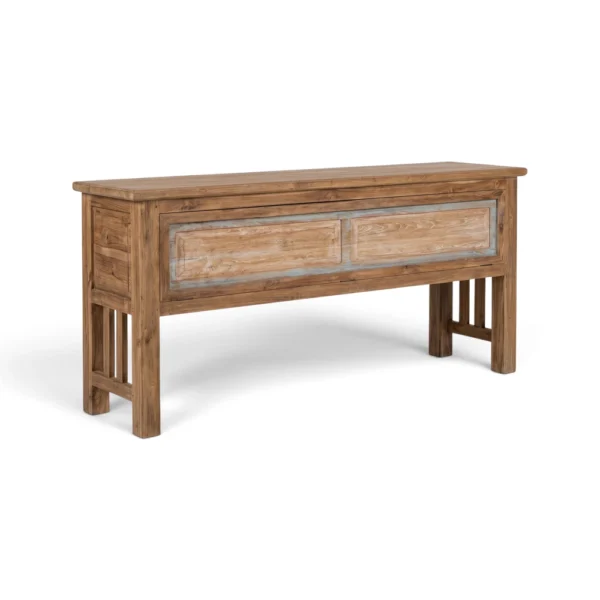
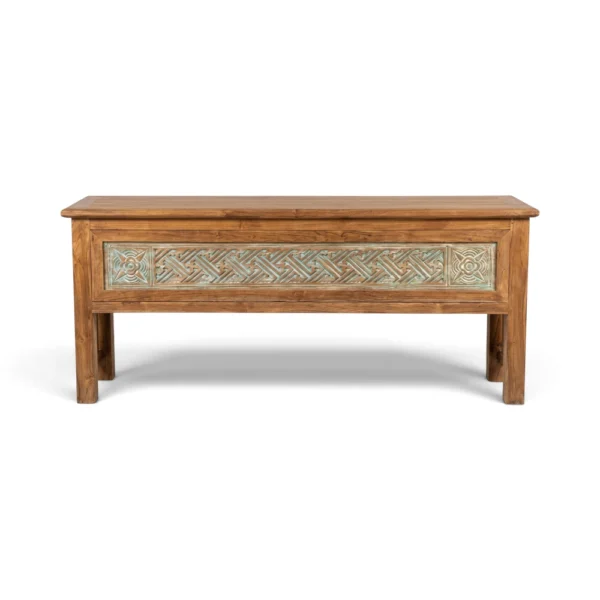
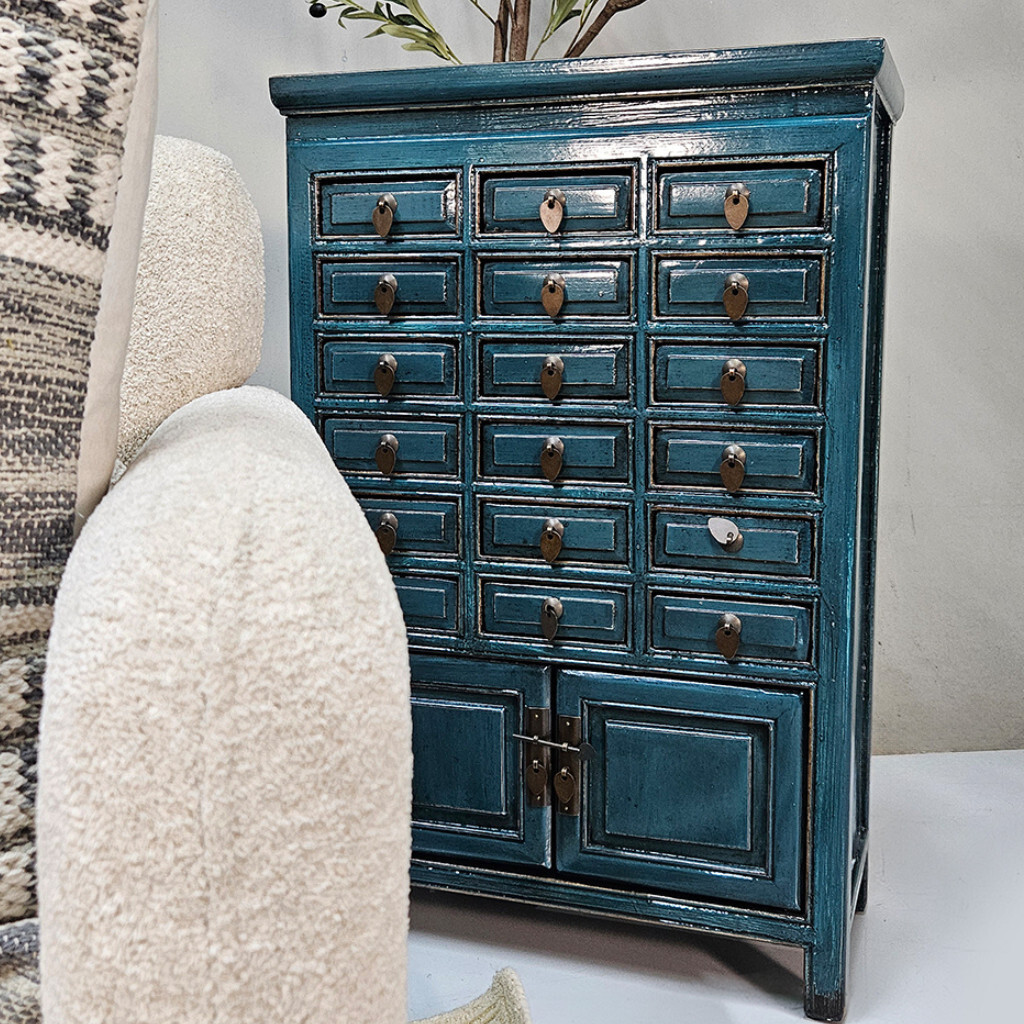
For homes ready to commit further, a piece of blue statement furniture does the work that ten blue accents would never manage. A reclaimed-door sideboard in distressed turquoise — with the door panels carrying their own irregularities and history — is the kind of piece that anchors a dining room or a generous hallway by itself. The colour isn’t asking permission, but it’s also not shouting. That’s the balance the best blue pieces strike.
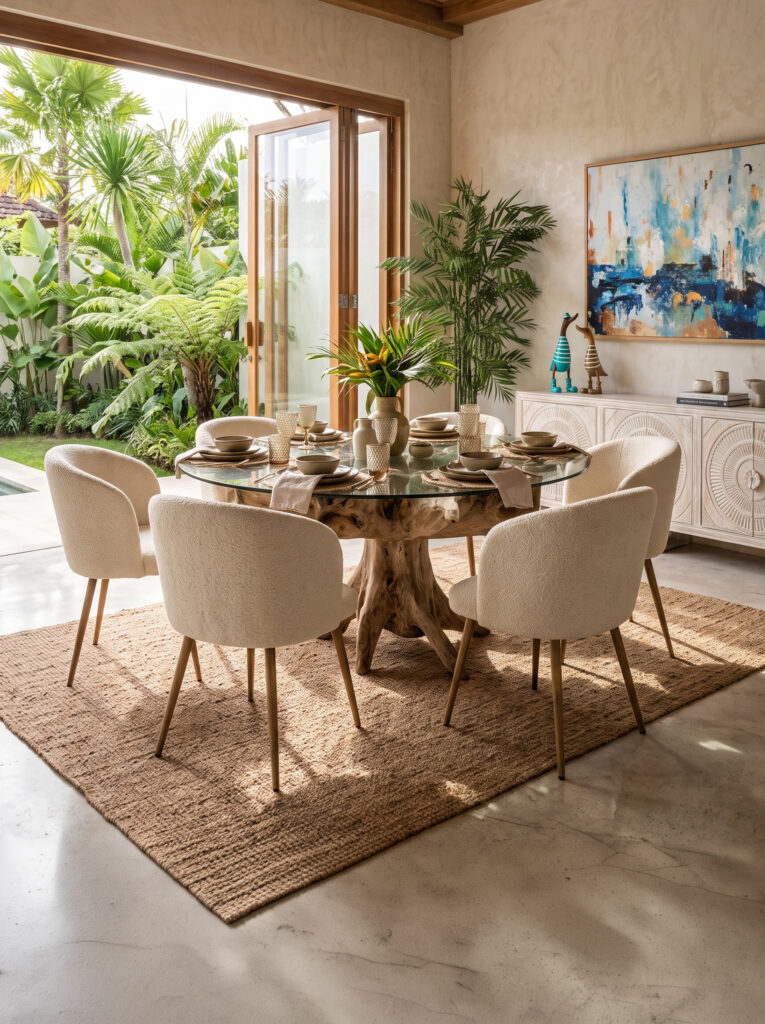
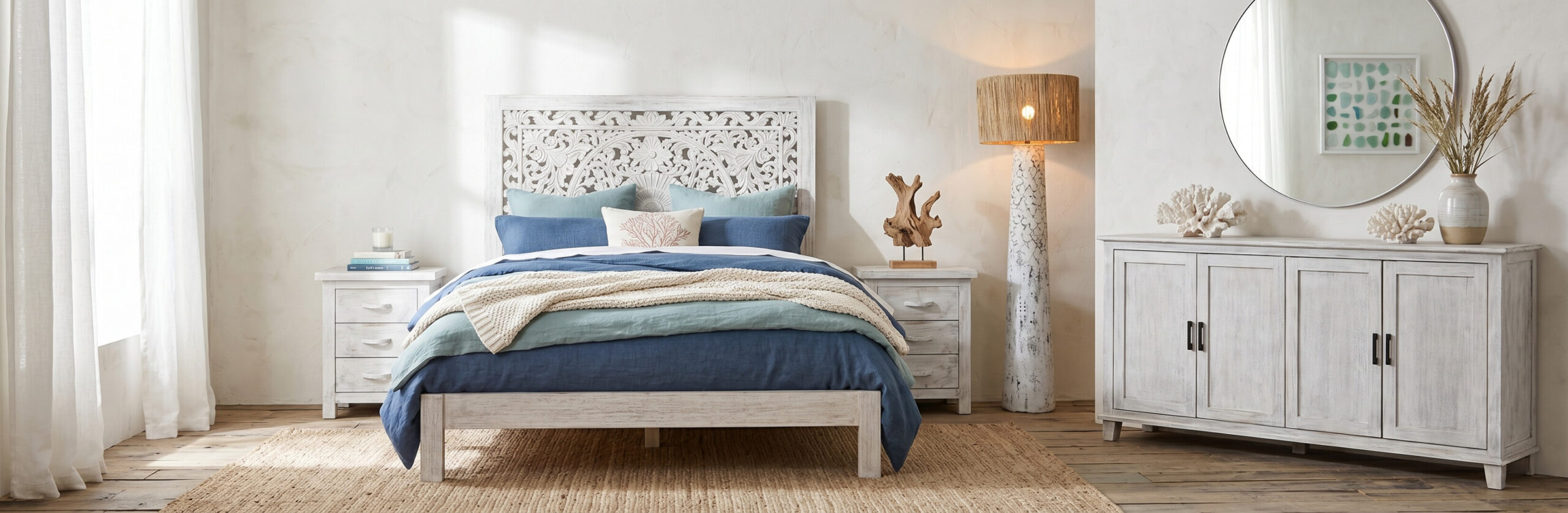
The other quiet rule worth knowing is what blue likes to sit next to. Natural timber is the strongest partner — particularly mango, teak, suar and reclaimed boat wood — since the warm tones balance the cool of the blue without competing with it. Whitewashed and lighter natural finishes work well as a softer background. Metal accents in brass, copper or aged iron add interest in small doses. Soft furnishings should respond to the blue rather than match it. The room should feel built around the colour, not around a paint chart.
Why coastal is not the whole story.
Coastal homes are an obvious fit, and the range carries plenty for that brief. But the more interesting application is in homes that are nothing like the coast. A single hand-blown cobalt vase on a console in a Johannesburg apartment. A turquoise reclaimed-door sideboard in a contemporary Pretoria dining room. A piece of crackle-glazed sea-life wall art in an inland hallway that has never seen the sea. The colour reads as deliberate and grown-up in those settings — not as a reference to somewhere else. That’s one of the quiet pleasures of working with blue. It doesn’t need a theme to do its job.
Online or in-store.
Blue is a category where seeing pieces in person genuinely helps, because the colour reads very differently in different lights and against different walls. Cobalt looks bolder under daylight than under warm interior lighting. Turquoise reads cooler against cool walls and warmer against terracotta or natural plaster. The Sotran showrooms in Boksburg, Fourways and Somerset West all carry the blue range in styled room settings, and the team can talk you through how a specific piece will sit in your light.
The range also orders well online. Product pages include detailed photography in natural light, full dimensions and material information, and the team is available by WhatsApp, phone or email to confirm scale and finish before ordering. Combined with nationwide delivery, this makes it straightforward to bring one well-chosen blue piece into a home from anywhere in South Africa. Many of the hand-blown glass and reclaimed-door pieces are one-of-a-kind — so if a specific piece speaks to you, it’s worth acting on it.
A few quick questions.
Why is blue easier to live with than other strong colours?
Because it’s borrowed from nature rather than imposed on a room. Sky and water are already part of the visual language of a home, so blue reads as something that belongs rather than as a deliberate statement. Red, green and yellow tend to ask the room to react. Blue tends to settle into it.
Does blue only work in coastal homes?
No. Blue is at its most interesting in homes that are nothing like the coast, where it reads as a considered design choice rather than a theme. Contemporary apartments, inland city homes and traditional family houses all respond to it well. Coastal homes are the obvious fit, but they aren’t the whole story.
What is special about the hand-blown glass pieces?
The glass-on-wood pieces in particular are made by blowing hot glass directly to fit a unique piece of teak root or driftwood. The wood is sourced individually, the glass is shaped specifically to that piece, and no two sculptures share the same form. The hand-blown vases also carry variations in colour and surface pattern that machine-pressed glass cannot reproduce.
What is the safest place to start with blue in a home?
A single piece on a console, a sideboard or a coffee table, in a position with enough room to breathe. A hand-blown vase or a glass-on-wood sculpture tends to be the easiest first move, since it carries colour and craft in a small footprint. Larger statement pieces are worth considering once the room has lived with the first piece for a while.
Can I shop the Sotran blue range online?
Yes. The full blue furniture and decor range is available to browse and shop online, with nationwide delivery across South Africa. Many of the hand-blown glass and reclaimed-door pieces are one-of-a-kind, so stock can move quickly. The range is also on display in our Boksburg, Fourways and Somerset West showrooms.