


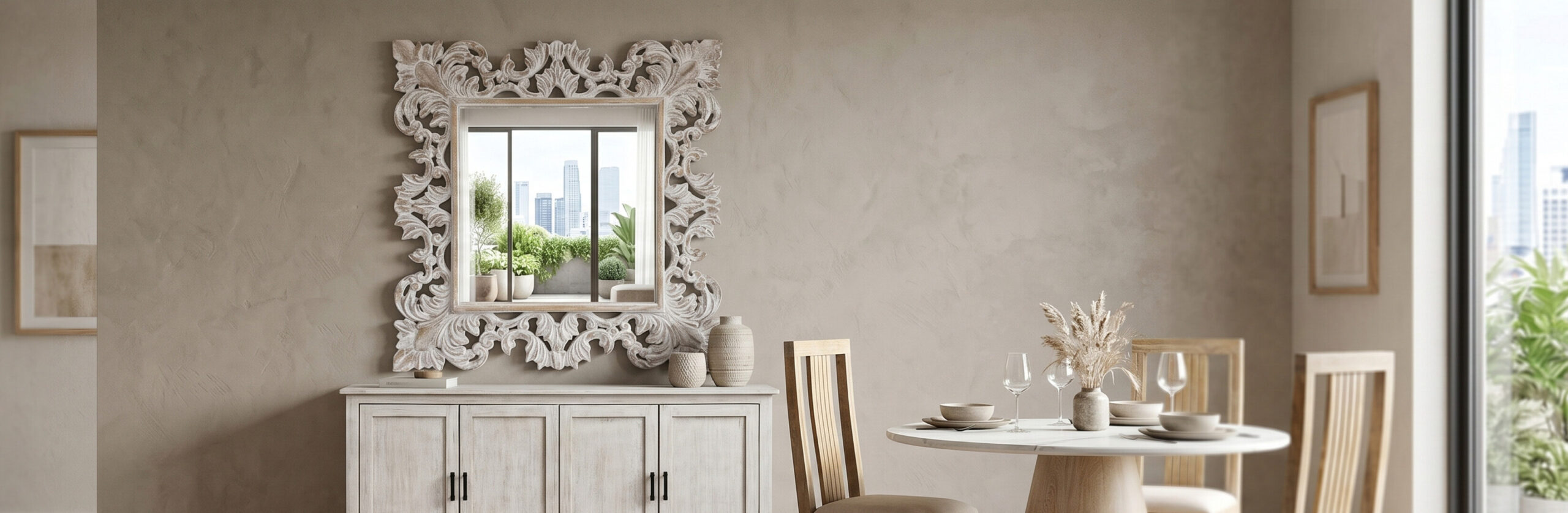
Choosing a mirror
Choosing a mirror with intent: scale, shape, frame and where to hang it. A well-chosen mirror does work that almost nothing else in a home can do — expands a room, carries light, anchors a wall. A guide to choosing one well, and getting the placement right. Mirrors are one of the most underestimated pieces…
Mirrors are one of the most underestimated pieces in a home. They are often treated as the last decision in a room, picked up at the end of a renovation because the wall above the console looks empty. That is the wrong way around.
A well-chosen mirror does work that almost nothing else can do. It expands a room. It carries light into corners that would otherwise stay flat. It anchors a wall the way a strong painting does, but with the added gift of reflecting the room back at itself. Done well, a single mirror can lift the entire feeling of a space. Done casually, it can flatten a room in a way that is hard to put your finger on, but you feel every time you walk past it. That is why choosing a mirror with real intent is worth more time than most people give it. It is also why our mirror range is one of the categories clients return to most often.
At Sotran, the conversation about mirrors usually starts with one of two questions. Either the client knows exactly which wall they’re working with and needs help choosing the right piece for it, or they have fallen for a specific mirror in the showroom and need to think through where it can actually live. Both are good starting points. The answer in both cases comes down to the same things — scale, shape, frame, finish and placement. Get those right and the mirror does its work quietly for years.
Why mirrors do more for a room than people expect.
A mirror is the only piece in a home that gives back what is in the room. A painting brings its own image. A sideboard brings its own weight. A mirror takes whatever is around it and returns it, often with more light and more depth than the eye reads on its own. That is why a well-placed mirror can transform a narrow hallway, a dark entrance, a flat dining wall or a bedroom that struggles for daylight. It is also why a poorly placed mirror — one that reflects an unflattering corner or a cluttered shelf — can make a room feel smaller rather than larger. Mirrors amplify whatever they face. That is the part most people forget. The first design question is not what the mirror looks like. It is what it will be looking at.
Scale matters more than almost anything else.
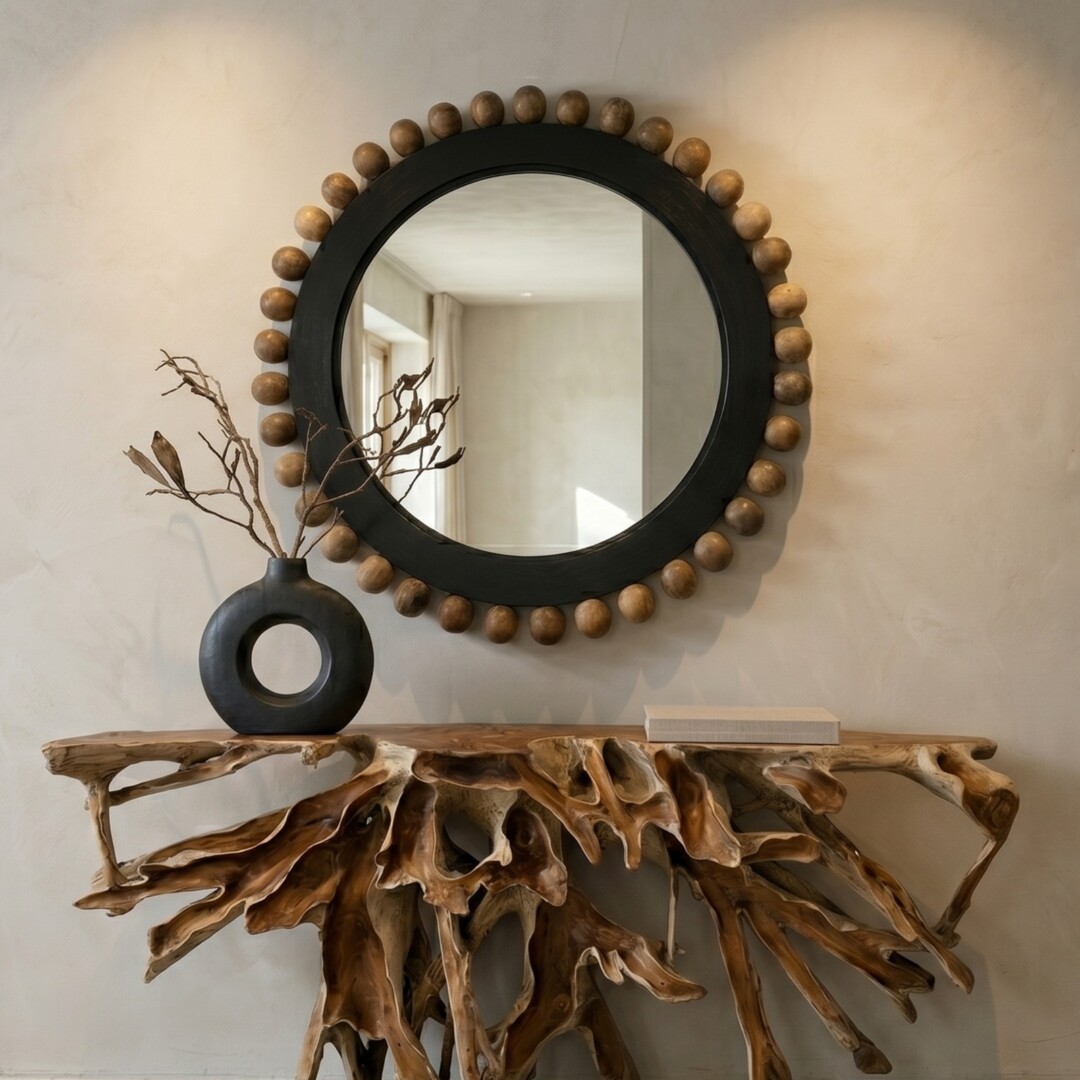
The single most common mistake with mirrors is choosing one that is too small for the wall it’s going on. A modest mirror above a generously sized sideboard reads as an apology. A small round above a long couch looks lost. The piece doesn’t have to fill the wall, but it has to hold its own against the furniture beneath it. As a general rule, a wall mirror above a piece of furniture should be roughly two thirds the width of that piece. Sometimes more, rarely less. For empty walls, the mirror needs to be substantial enough to carry the space on its own. A small mirror on a four metre wall will disappear. A larger round will anchor it.
Standing mirrors are a different conversation. At 180cm and two metres in height, the larger floor-standing pieces are sculptural objects as much as they are functional. They need their own corner or wall to live against, and they need enough breathing room around them to be read properly. Crammed into a tight space, even the most beautiful standing mirror will feel apologetic. Given room, it becomes one of the strongest pieces in the home.
Shape tells you more than you might think.
The shape of a mirror has a quiet effect on the rest of the room. Round mirrors soften a space. In rooms full of straight lines, hard furniture and rectangular windows, a round mirror brings relief. The geometry releases the room rather than reinforcing it.
Arched mirrors do something different. They bring an architectural element into the room, almost as though a window has been added to the wall. They suit entryways, vanities and dining walls particularly well. Arched standing mirrors take the same shape and turn it into a sculptural floor piece.
Rectangular mirrors are the workhorses of the category. They sit comfortably above sideboards, consoles and beds, and they read as quietly architectural rather than decorative. Square mirrors are less common, but worth considering for symmetrical walls — particularly above a fireplace or a centred console.
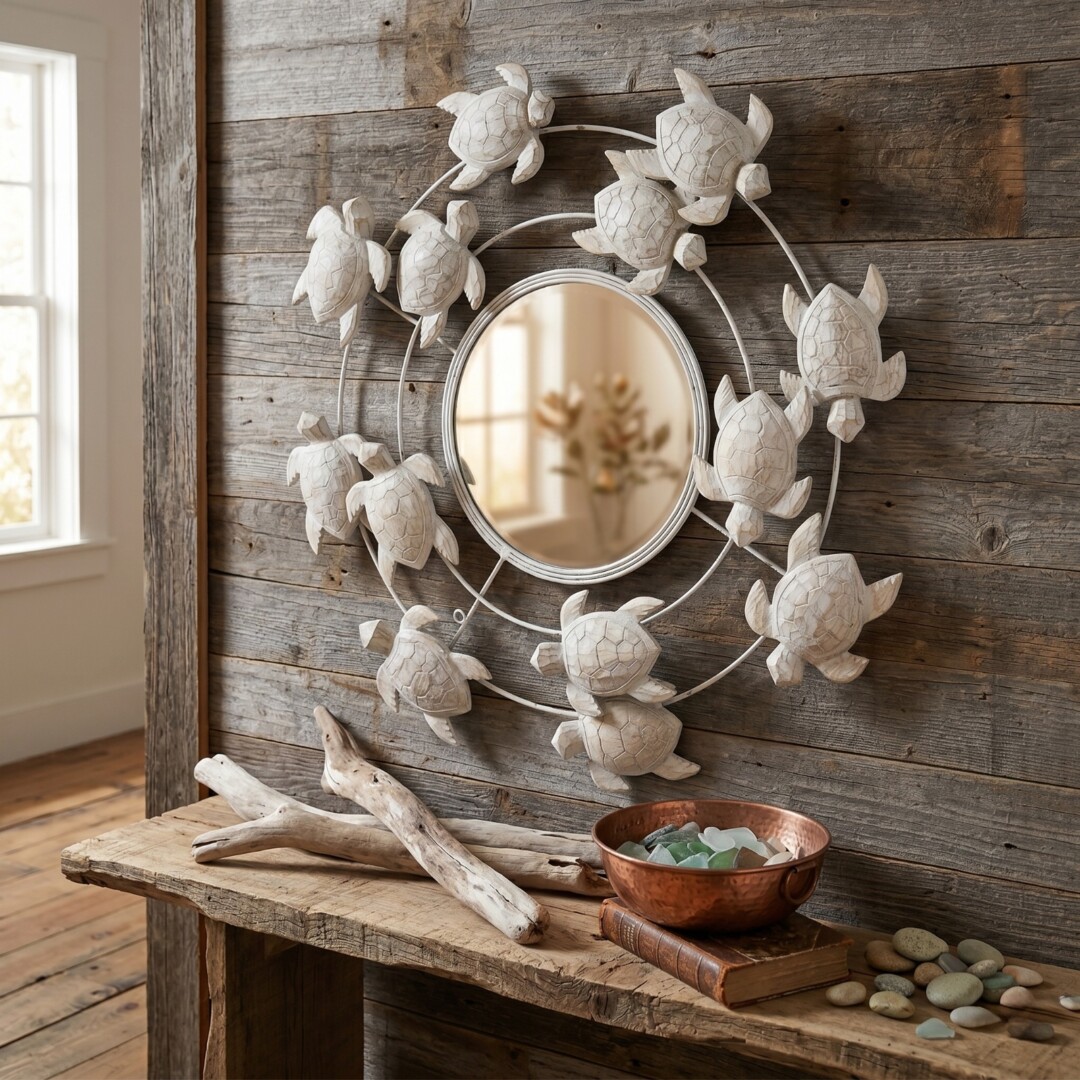
Then there are the more sculptural shapes — sunburst frames, irregular silhouettes, scalloped borders, hand-carved tiered designs. These work as art pieces in their own right. They are not really mirrors that fade into the wall. They are the centrepiece of whatever wall they hang on. Choose them with that in mind.
The frame is doing half the work.
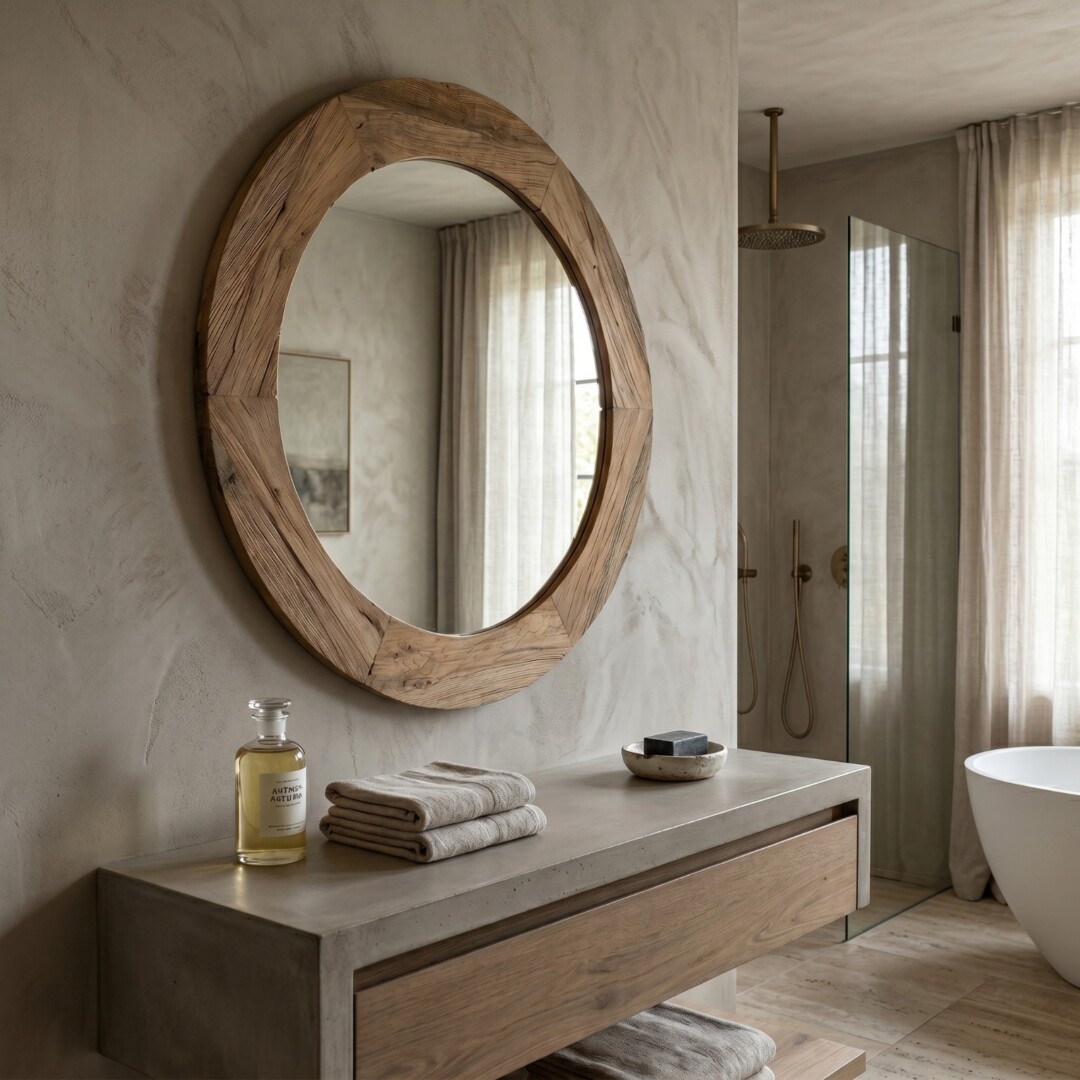
It’s worth pausing on the frame, because it carries more of the design weight than the glass does. A hand-carved timber frame with a whitewash finish reads completely differently to a polished gold-leaf metal frame, even at the same dimensions and shape. The frame is what tells the room which style direction the mirror belongs to.
The Sotran range covers each of these. Hand-carved timber mirrors with whitewashed and darker finishes, gold-leaf and silver-leaf metal frames in ornate and sunburst silhouettes, black metal frames in irregular and contemporary shapes, and clean minimalist timber pieces for rooms that want less ornament. Choosing the right frame is often the single decision that determines whether the mirror belongs in the room or not.
Wall mirrors and standing mirrors do different jobs.
This is worth being explicit about, because the two are often conflated. Wall mirrors are an architectural element. They anchor a wall, complete a furniture grouping and bring light into the room. Standing mirrors are something else. They are functional pieces in their own right, used for dressing — but they are also one of the strongest sculptural objects you can put into a bedroom, dressing room or generous hallway. A full-length carved standing mirror in a bedroom corner changes the whole feeling of the room, both because of what it reflects and because of what it is.
For master suites, dressing rooms and walk-in closets, a standing mirror is almost essential. For lounges, dining rooms, entryways, bathrooms and powder rooms, a wall mirror is usually the right answer. The mistake to avoid is using a wall mirror where a standing mirror is needed, or trying to compensate for the absence of a full-length dressing mirror by hanging a wall mirror lower than it should be. Use the right piece for the right job.
Where to hang a mirror, and what it should reflect.
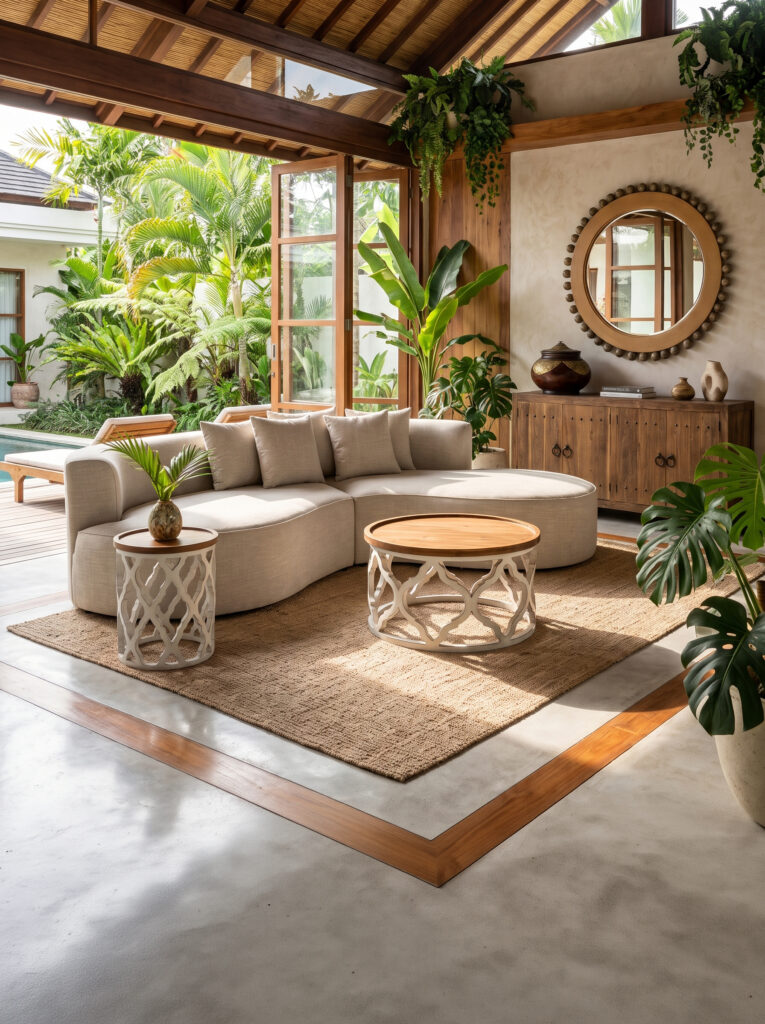
Placement is half the decision. A few quiet principles worth holding onto. Hang a wall mirror so its centre is at roughly eye level — which usually means the bottom edge sits around 15 to 25 centimetres above the piece of furniture beneath it. Hang it where it will reflect light, ideally opposite or adjacent to a window, so it bounces daylight further into the room. Hang it where it will reflect something worth looking at — a piece of art, a garden view, a beautiful piece of furniture, a layered shelf. Try not to hang a mirror where it reflects a cluttered corner, a doorway into a bathroom, or the back of a television. Mirrors amplify, and amplifying the wrong thing is worse than not hanging a mirror at all.
“The first design question is not what the mirror looks like — it is what it will be looking at.”
Entryways, dining walls, fireplace walls and the space above sideboards or consoles are some of the strongest placements. Bathrooms and powder rooms benefit from mirrors that are larger than the strict functional minimum, since the additional reflective surface opens up rooms that often have little natural light. Bedrooms benefit from a generous wall mirror above the dresser or against the dressing area, and from a standing mirror if there is room for one.
How to layer a mirror with the rest of the room.
A mirror should never feel like the only decision in a room. It works best when it sits in conversation with the pieces around it. A heavy carved mirror over a similarly carved sideboard can feel overdone, while the same mirror over a quieter sideboard or console reads as balanced. A gold-framed mirror in a room with no other warm metals can feel isolated, while the same mirror in a room with brass lighting or gold accents feels resolved. The mirror is a layer in the room, not an interruption.
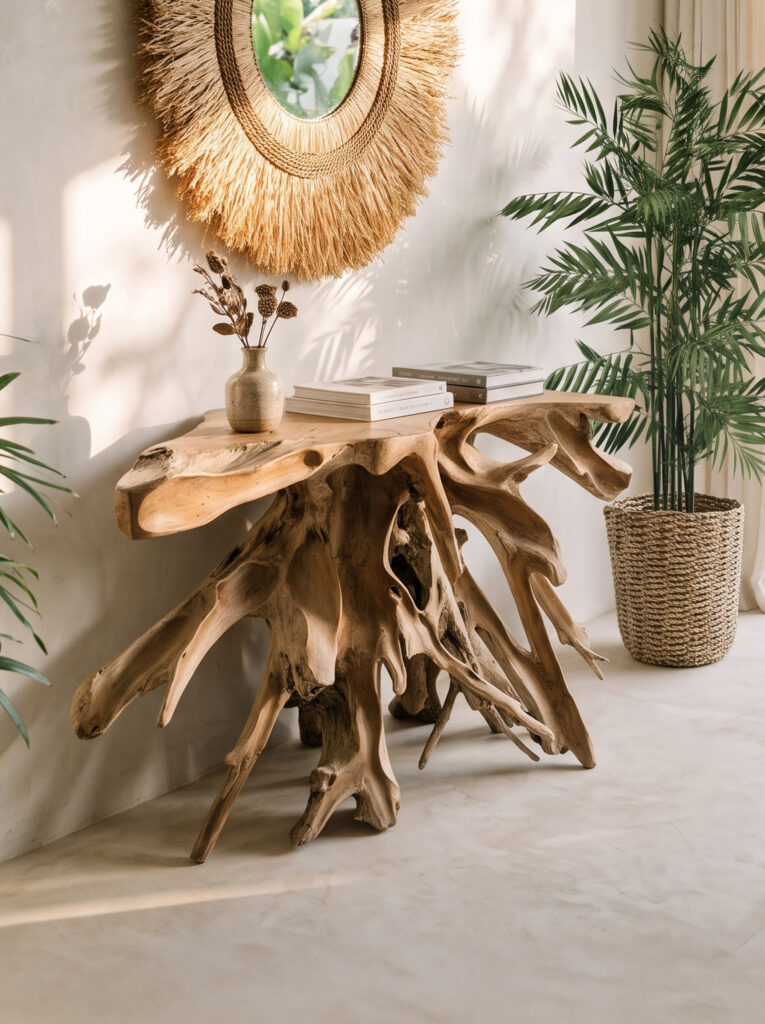
The same principle applies to scent, textiles and décor. A well-placed mirror in an entryway, paired with a Mockana diffuser on the console beneath it and a considered ceiling lamp overhead, becomes a small atmospheric moment in its own right. That is the kind of layered thinking that turns a hallway from a transit space into a part of the home.
Choosing well, online or in-store.
Mirrors are one of the categories where the showroom genuinely helps. Standing in front of a full-length Timor-style mirror gives a clearer sense of its presence than any photograph can, and the difference between a 60cm and a 100cm wall mirror is much easier to read in person. The Sotran showrooms in Boksburg, Fourways and Somerset West all carry a wide selection of the mirror range, including the larger standing pieces, and the team is happy to talk through scale, frame and placement for the specific wall you’re working with.
That said, mirrors also order well online. Product pages include full dimensions, detailed photography and frame information, and the team is available by WhatsApp, phone or email if you’d like to confirm scale or finish before ordering. Combined with nationwide delivery, this makes it straightforward to order from anywhere in South Africa. The mirror range is available to browse online, split clearly between wall mirrors and standing mirrors for easier filtering. Because many of the pieces are one-of-a-kind hand-carved or hand-finished work, stock moves quickly. If a specific mirror has caught your eye, it’s worth acting on it sooner rather than later — or speaking to the team about similar pieces in the range.
The piece that quietly lifts the whole room.
A mirror, chosen well, does more for a room than its size suggests. It brings light, depth, atmosphere and architectural weight, often in a single decision. It is also one of the few pieces in a home that genuinely improves the rooms around it, by reflecting and amplifying what is already working. That is the quiet reason mirrors deserve more thought than they usually get — and it is why the Sotran range is built around real character, real craftsmanship and real variety, rather than a single safe shape repeated in different sizes.
A few quick questions.
How big should a mirror be over a sideboard or console?
As a general rule, the mirror should be roughly two thirds the width of the piece of furniture beneath it. Going slightly larger usually reads better than going smaller. A mirror that is too small for the furniture beneath it tends to look apologetic, while a mirror at proper scale anchors the grouping.
Round, arched, or rectangular — how do I choose?
Round mirrors soften rooms full of straight lines and hard furniture. Arched mirrors bring an architectural element into the wall, almost like adding a window. Rectangular mirrors are quietly architectural and sit comfortably above most furniture. Sculptural shapes — like sunbursts and irregular silhouettes — work as art pieces in their own right and need a wall that can hold their character.
Where is the best place to hang a wall mirror?
Hang a mirror so its centre is at roughly eye level. Aim for placements where it reflects light, such as opposite or adjacent to a window, and where it reflects something worth looking at, such as art, a garden view or a beautiful piece of furniture. Avoid placements where it reflects cluttered corners or the back of a television, since mirrors amplify whatever they face.
Do I need a standing mirror as well as a wall mirror?
It depends on the room. Master suites, dressing rooms and walk-in closets benefit from a full-length standing mirror for proper head-to-toe dressing use, and standing pieces also work as sculptural objects in generous bedrooms or hallways. Lounges, dining rooms, entryways and bathrooms are usually best served by wall mirrors.
How do I match the mirror frame to my interior style?
Whitewashed and natural timber frames suit Beach Cottage and lighter Modern Tropical interiors. Hand-carved darker timber frames anchor Safari Lodge and heritage-inspired rooms. Gold and silver leaf finishes carry Classical Antique rooms and add formality to contemporary spaces. Black metal frames suit Industrial Farmhouse and contemporary interiors. The frame is doing more design work than the glass — so it’s worth matching carefully to the room.
Can I shop the Sotran mirror range online?
Yes. The mirror range is available to browse and shop online, split between wall mirrors and standing mirrors, with nationwide delivery across South Africa. Many pieces are one-of-a-kind hand-carved or hand-finished work, so stock can move quickly. The team is available by WhatsApp, phone or email if you’d like to talk through scale, frame or placement before ordering — or to ask about similar pieces if something has just sold out. The selection is also on display in our Boksburg, Fourways and Somerset West showrooms.