Reclaimed wood furniture
Reclaimed wood furniture: old timber, new life, better furniture. Pieces with a previous life — and the quietest sustainability story in the timber category. A guide to teak, boat wood, salvaged Indian doors and the corners worth knowing about. There is a particular kind of object that arrives in your home looking like it has…
There is a particular kind of object that arrives in your home looking like it has been there before. Not antique. Not vintage. Something quieter and harder to place.
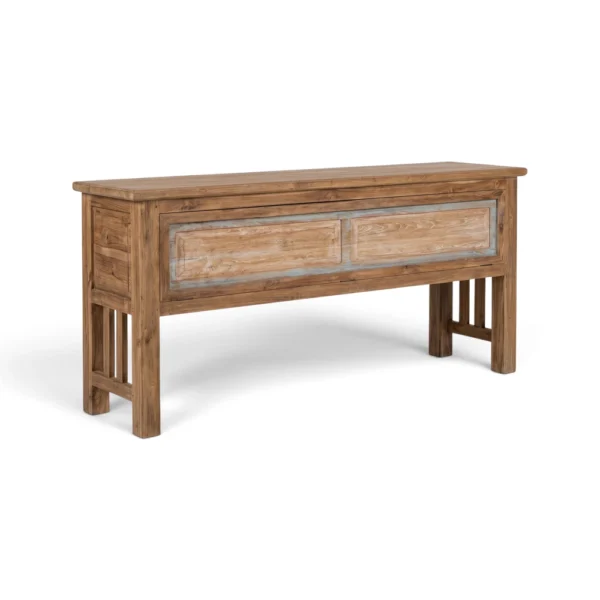
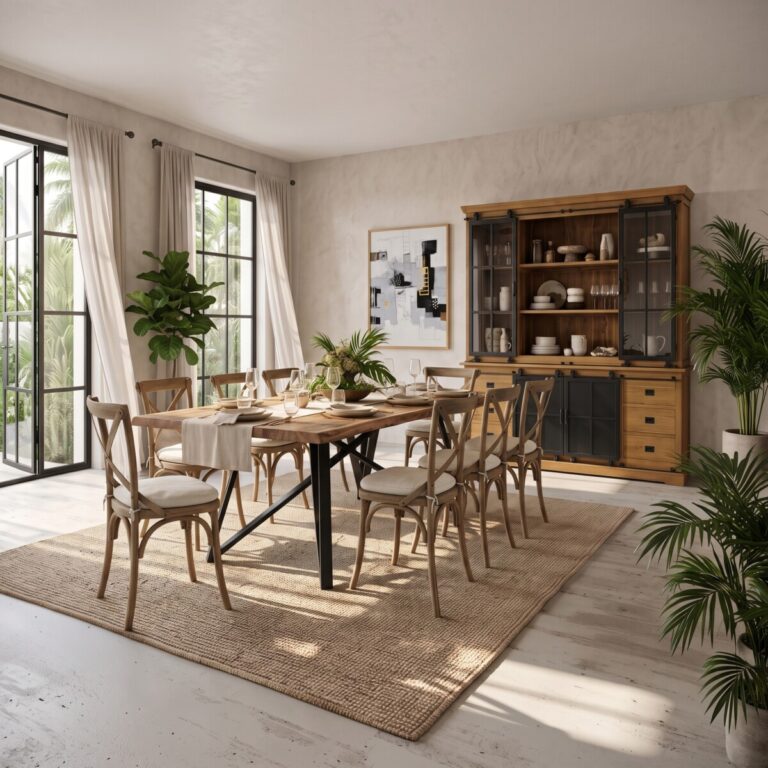
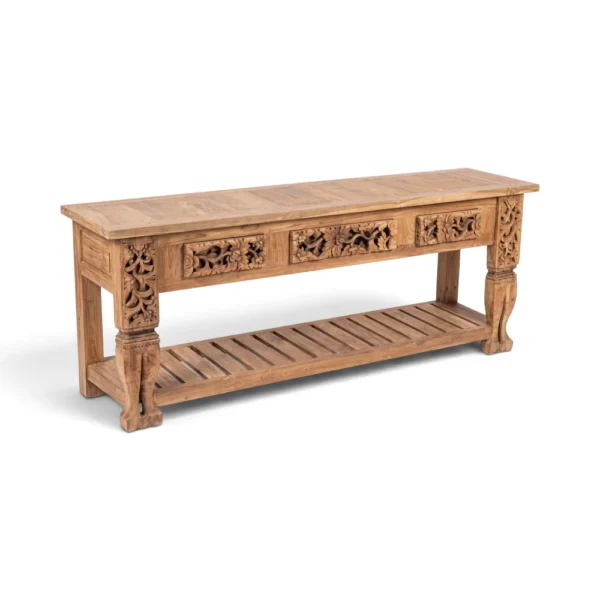
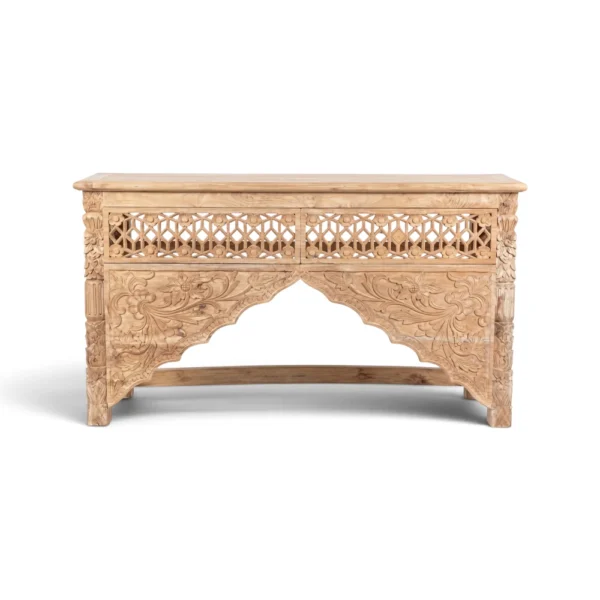
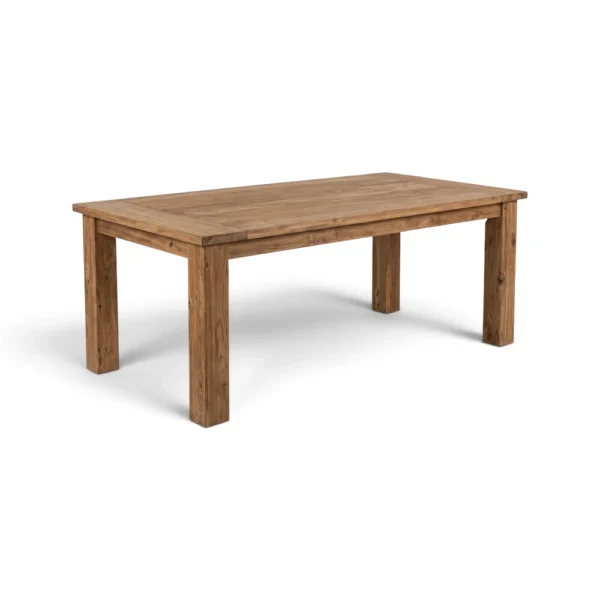
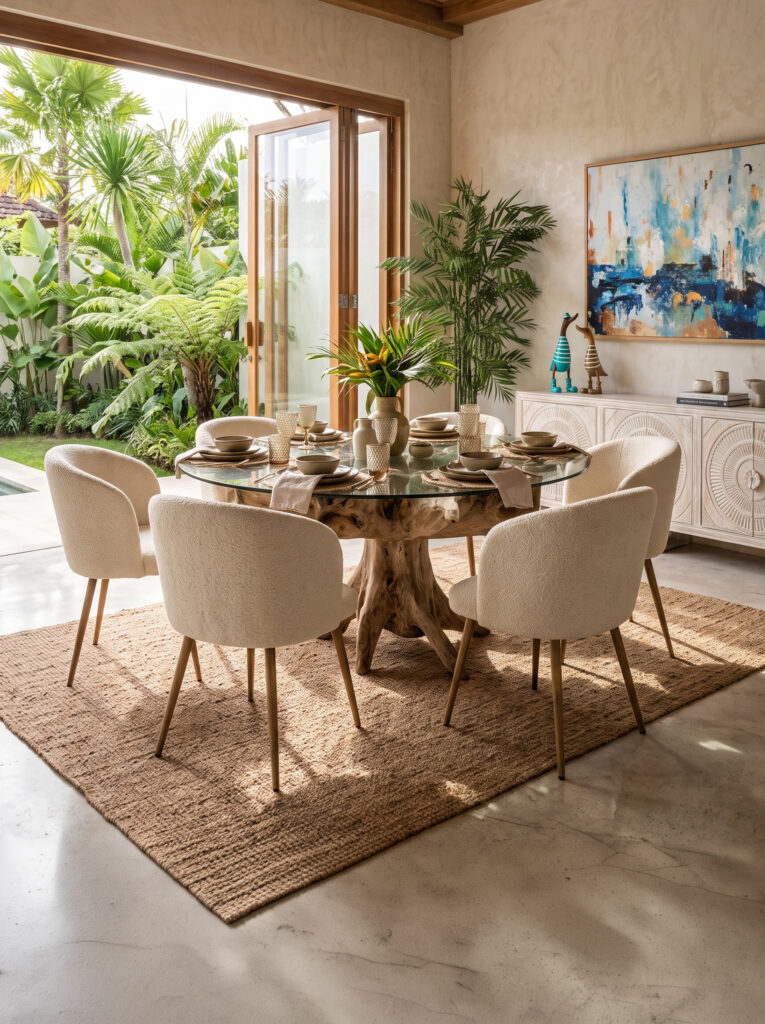
A dining table whose surface has the depth and softness of timber that has lived through years of weather and use, but built into a piece that is functionally new. A sideboard whose door panels carry small irregularities no machine would ever reproduce, because the panels themselves are decades older than the cabinet they have been built into. That kind of piece is what reclaimed wood furniture really is. The timber has had a previous life. Sometimes in older buildings, sometimes in fishing boats, sometimes in old industrial structures or barrels or pieces of architecture that no longer exist. Skilled workshops then rebuild that timber into furniture for a second life. The result is a piece that arrives with character already in the wood, and quietly carries the sustainability story most other furniture categories have to argue harder for.
That is part of why reclaimed wood has held its place in the most considered South African homes for years. The aesthetic is the first thing people notice. Patina, weathering, the visible history in the grain, the small marks of pieces that have been somewhere before. But the substance is in the structure. Reclaimed timber is more stable than new timber. It ages with more depth. It often performs better in the long run. And because no new tree is harvested for the piece, the carbon side of the conversation is unusually clean compared to other timber categories, even the responsibly-sourced ones.
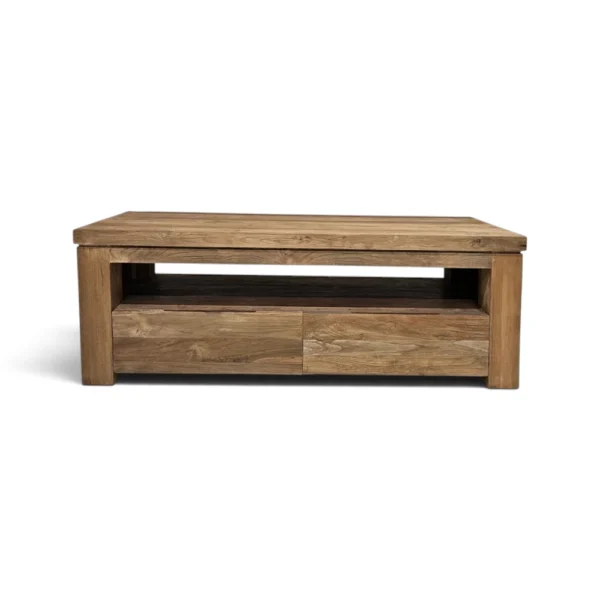
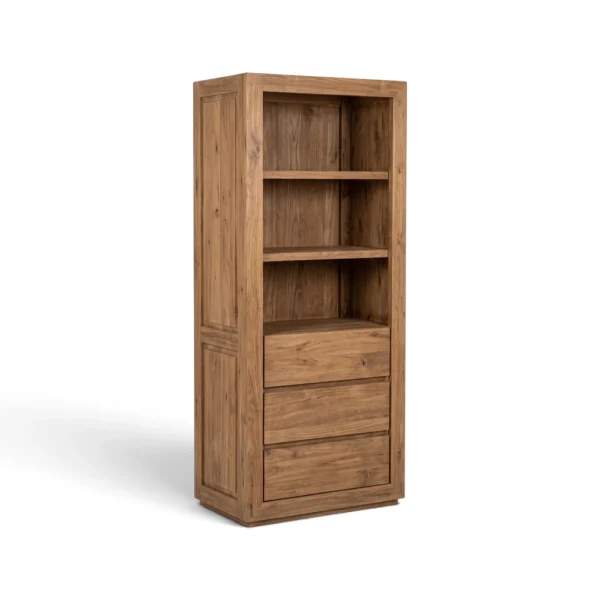
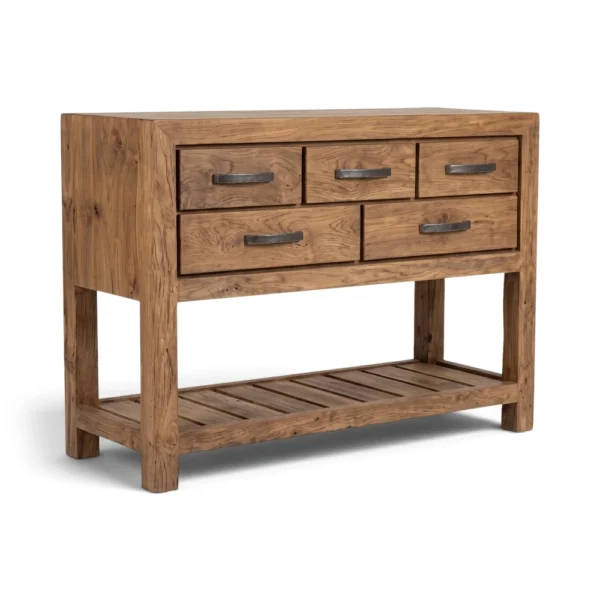
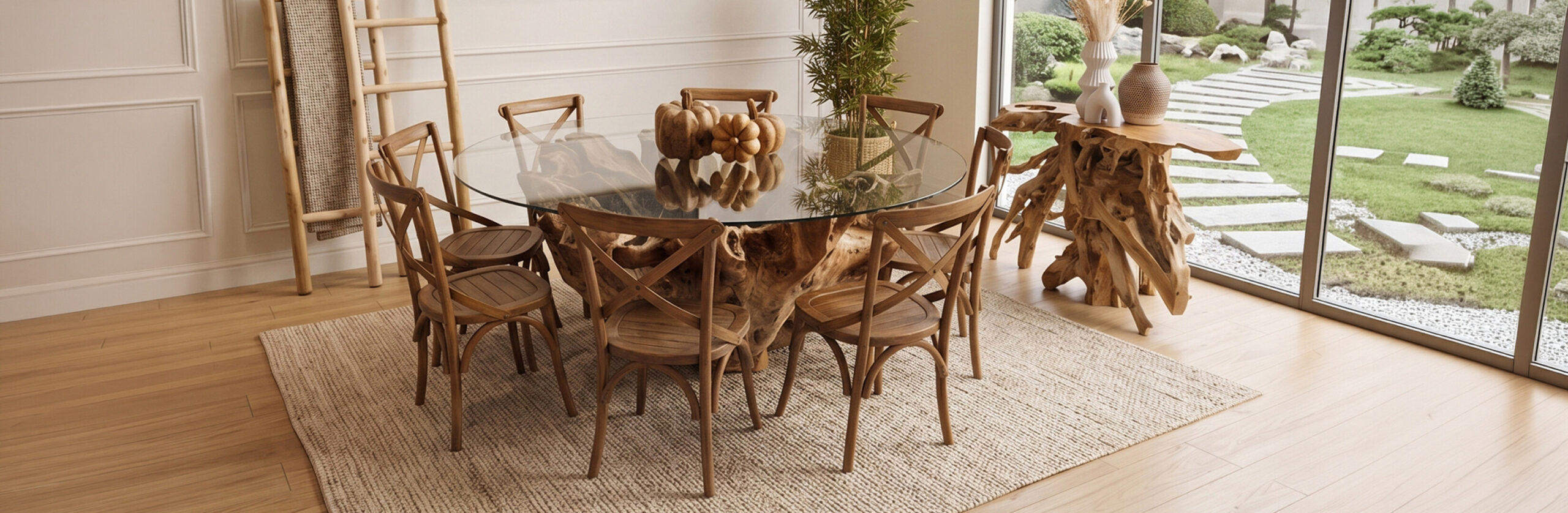
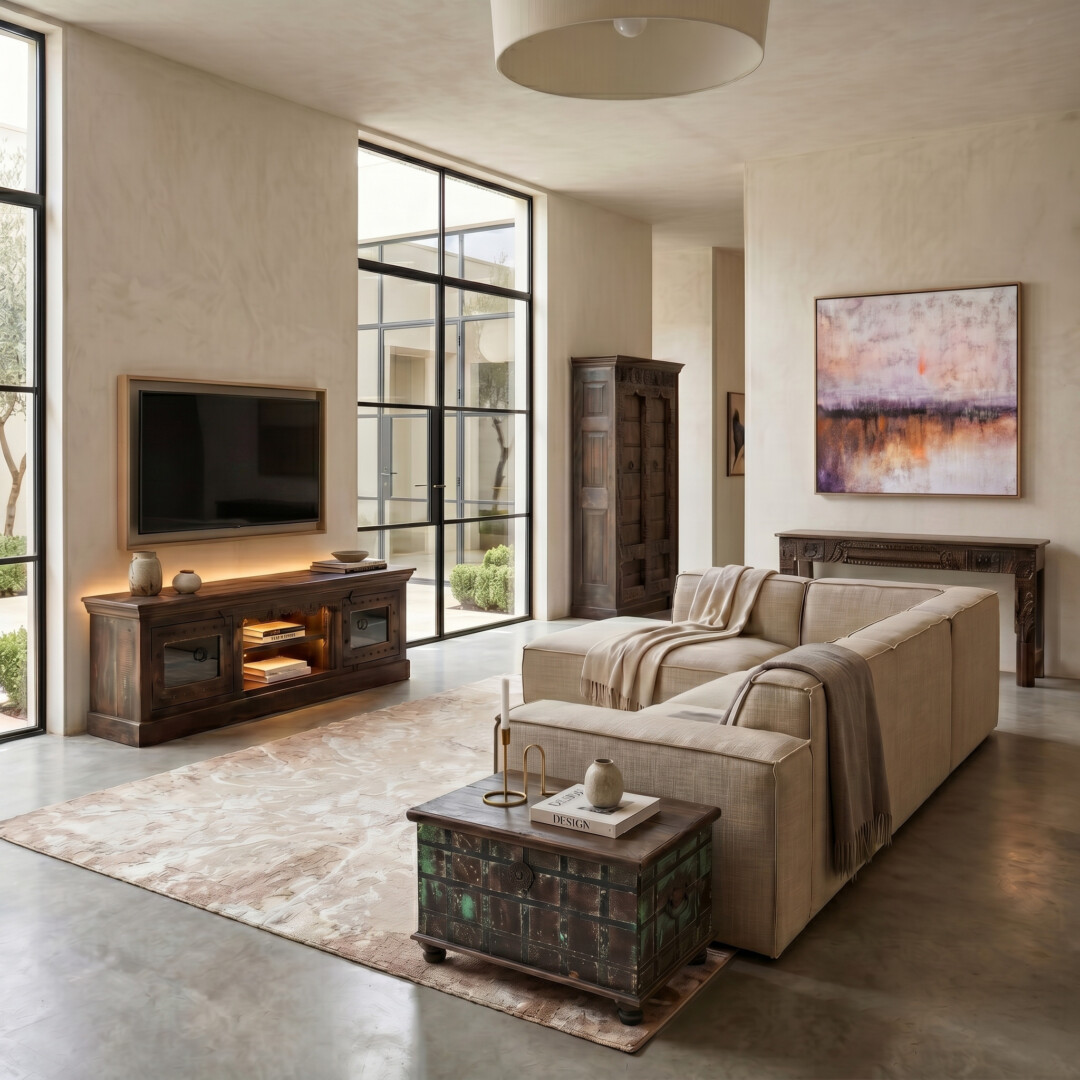
At Sotran, the reclaimed range is broader than most clients realise when they first walk in. Reclaimed teak dining tables and sideboards. Salvaged Indian door panels built into new cabinets. Old fishing boat slats turned into bar stools and dining tables. Decommissioned barrel staves rebuilt into coffee tables. Even bicycle parts and aged elm cabinetry, given second lives as benches and display units. The category is not one material with one story. It is many materials, each with its own past, brought together by the same underlying idea.
Why reclaimed wood ages better than new timber.
The practical advantage of reclaimed wood, and the one most buyers do not realise until they have lived with a piece, is that the timber has finished moving. New timber, even when properly kiln-dried, continues to settle for years after it leaves the workshop. It expands and contracts with changes in humidity and temperature, and the small movements show up as hairline cracks, shifts in joinery, and occasional surface checks. Reclaimed timber has already done most of that work over its previous life. The wood is dimensionally stable, less prone to warping, and less likely to develop the small movement-related issues new timber sometimes does in the first few years.
The other quiet advantage is the depth of the patina. New timber starts a story. Reclaimed timber arrives with one already in the wood, decades of light, use, weathering and care visible in the grain and the colour. You can see the difference within minutes of standing in front of the piece. A new teak dining table has a clean honey colour and even grain. A reclaimed teak dining table has the same wood at a different stage of its life, deeper in tone, softer in surface, more complex in pattern. Both are beautiful. But they are not the same object.
And then there is the irregularity. Reclaimed timber carries marks from its previous use, old nail holes, faint outlines of where hardware used to be, slightly varied finishes from one board to the next. Some workshops fill these in. The better ones leave them visible, because they are the proof that the wood has been somewhere first. That is the difference between reclaimed wood and reclaimed-style finishes. One has lived through history. The other has been styled to look as though it has.
“New timber starts a story. Reclaimed timber arrives with one already in the wood.”
Reclaimed teak: the most familiar of the reclaimed categories.
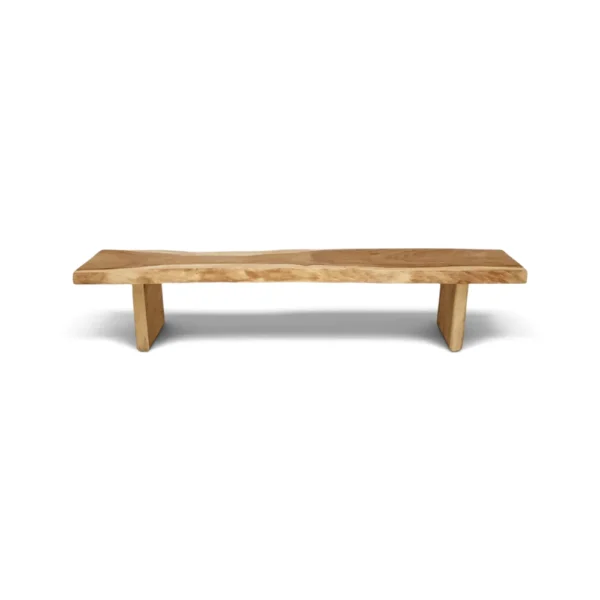
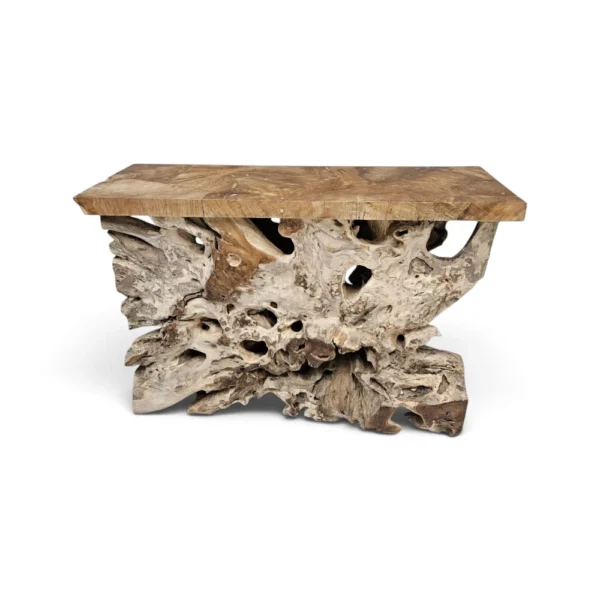
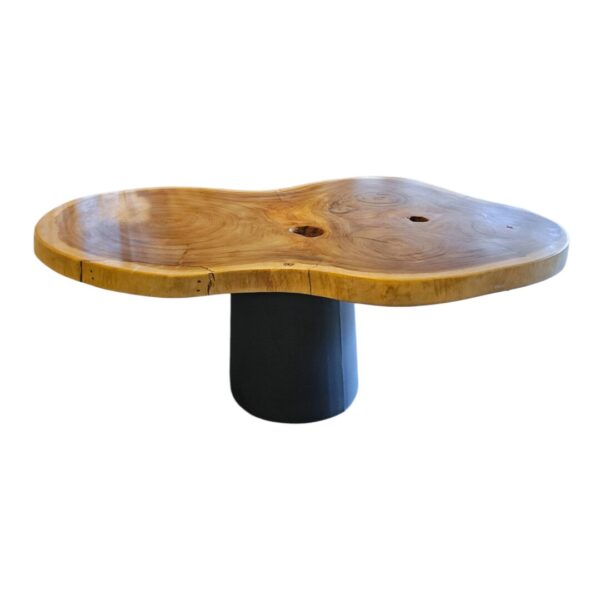
Reclaimed teak is the category most buyers know first, partly because teak is already the most respected dining timber and partly because the reclaimed teak supply has been the most established for the longest. The timber typically comes from older Indonesian or Southeast Asian buildings, sometimes from boats, occasionally from disused industrial structures, and it arrives at the workshop with the warmth and patina of decades of use already in the wood.
A reclaimed teak dining table or sideboard reads differently to a new one in three quiet ways. The colour is deeper from the start, having developed over years of light exposure in the timber’s previous life. The surface has a softer, more lived-in feel, since the wood has already taken and weathered the small marks that new tables only develop over decades. And the piece carries a verifiable past, often documented in the workshop’s records, that gives the table a story before you give it your own.
The pieces also tend to be exceptionally stable, since the wood has already completed the bulk of its movement and settling. A reclaimed teak piece is, in many ways, a more reliable long-term object than a newly-harvested teak piece would be, even though the upfront aesthetic might first appear simply rustic. That stability matters in the South African climate, where temperature and humidity swings put real stress on furniture over the years.
Recycled boat wood: timber with a verifiable working life.
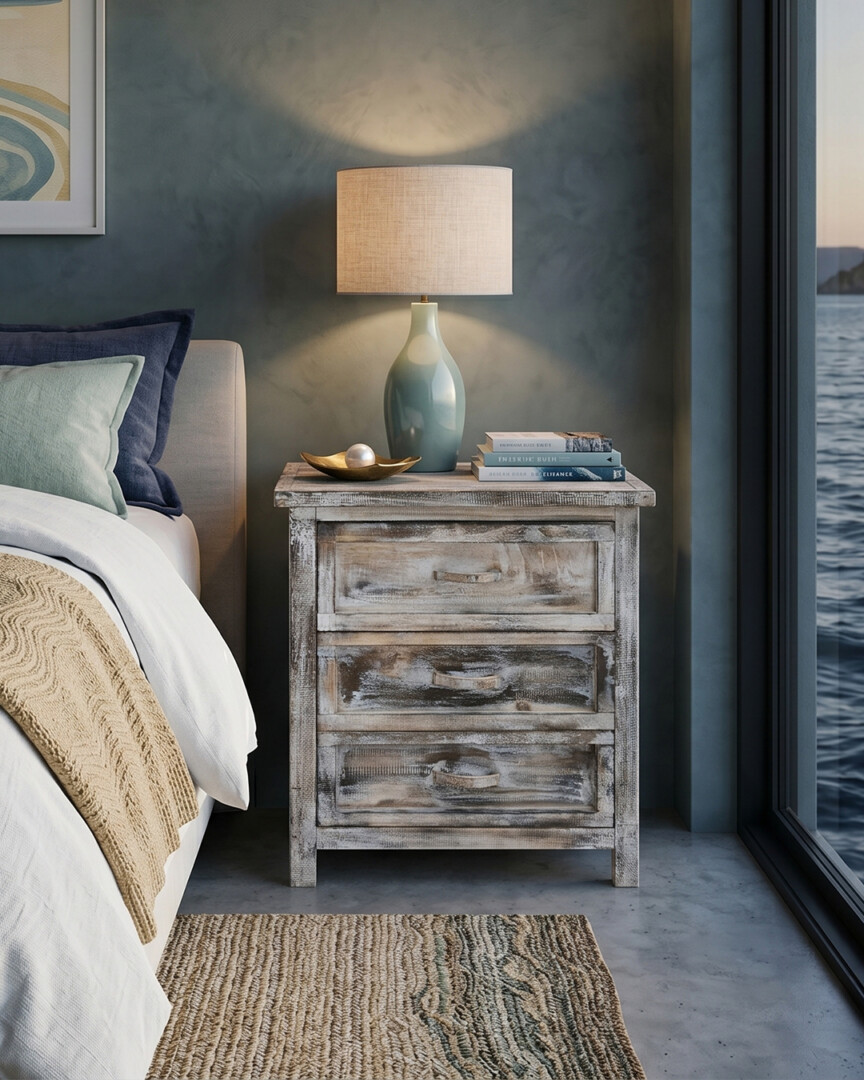
Recycled boat wood occupies its own corner of the reclaimed category, and it is one of the most distinctive in the Sotran range. The timber is salvaged from Indonesian fishing boats at the end of their working lives, with the planks often retaining traces of the colours the boats were painted in — weathered greens, blues, reds, and natural timbers all built into the same finished piece. The result is a dining table, bar stool or coffee table that reads as both rustic and characterful, where every slat is a piece of a boat that used to do something else for someone else.
The boats themselves had hard lives. Salt water, sun, daily use, sometimes decades on the water before being decommissioned. The timber that survives that is genuinely seasoned in a way no plantation timber ever could be. It has been weathered, salt-exposed, sun-cured and stress-tested for years before the workshop ever sees it. That makes the finished piece exceptionally durable, and it gives the timber its characteristic depth of colour and grain.
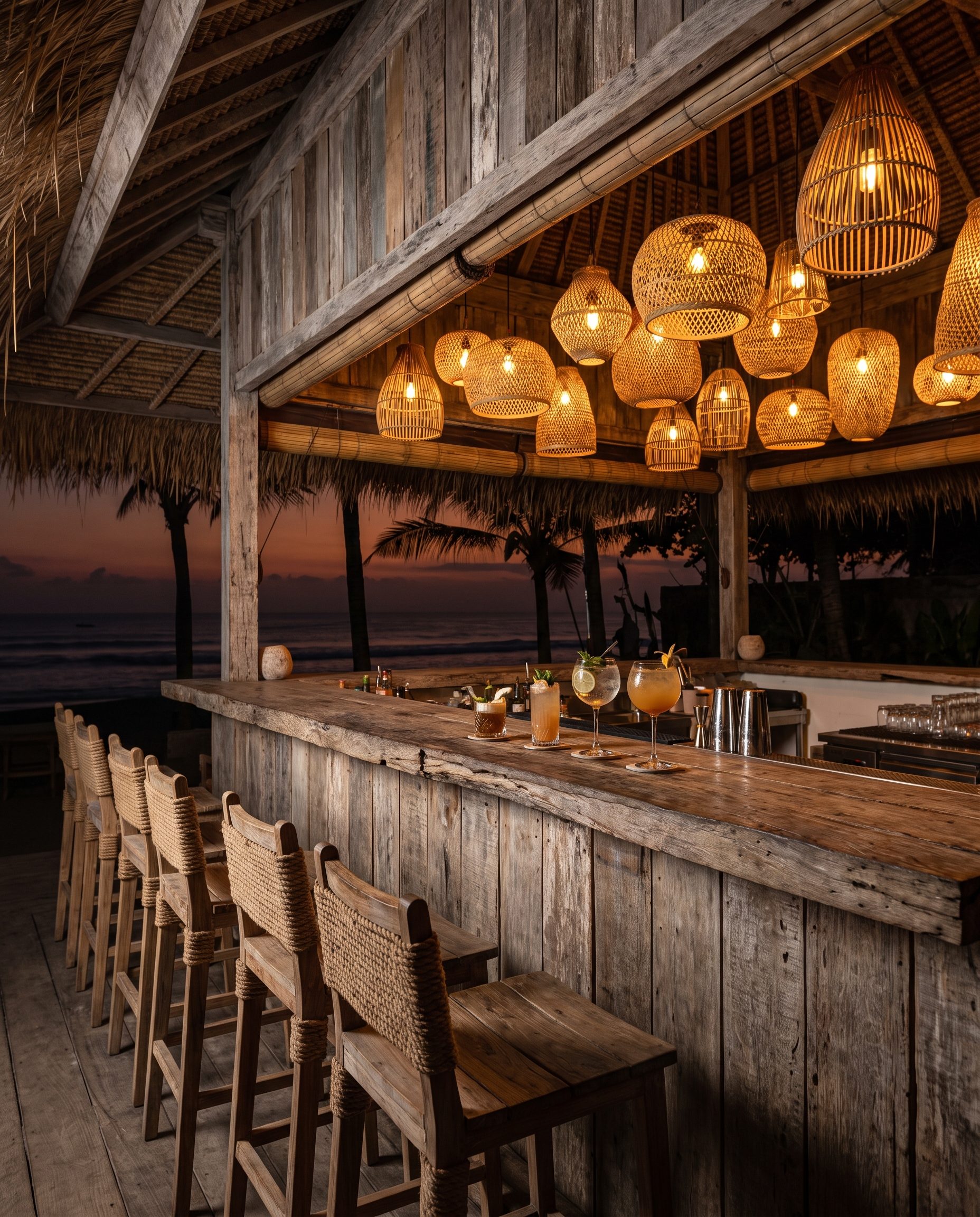
The aesthetic is unmistakable. The slatted-top dining tables, with their alternating weathered colours, look unlike anything else in any furniture category. The bar stools work as conversation pieces in home bars and kitchen counters. The pieces are particularly strong in Beach Cottage, Industrial Farmhouse and Modern Tropical interiors, where the material honesty fits the wider design language. They also work surprisingly well in contemporary settings, where the rustic timber sits as a deliberate counterpoint to cleaner finishes.
Salvaged Indian door panels: architecture rebuilt as furniture.
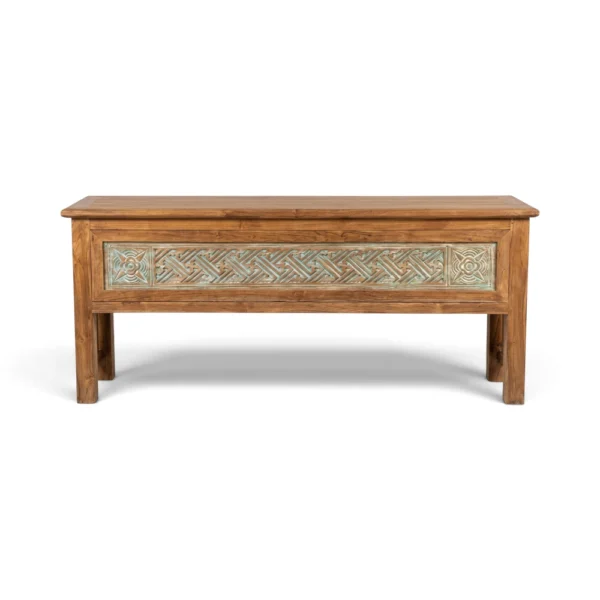
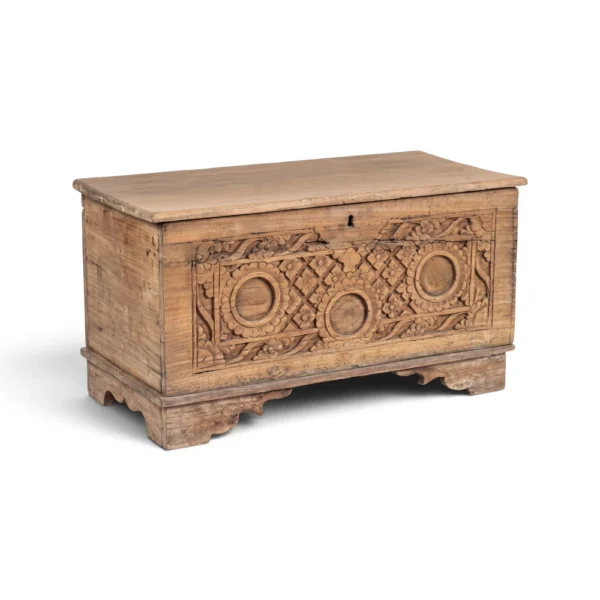
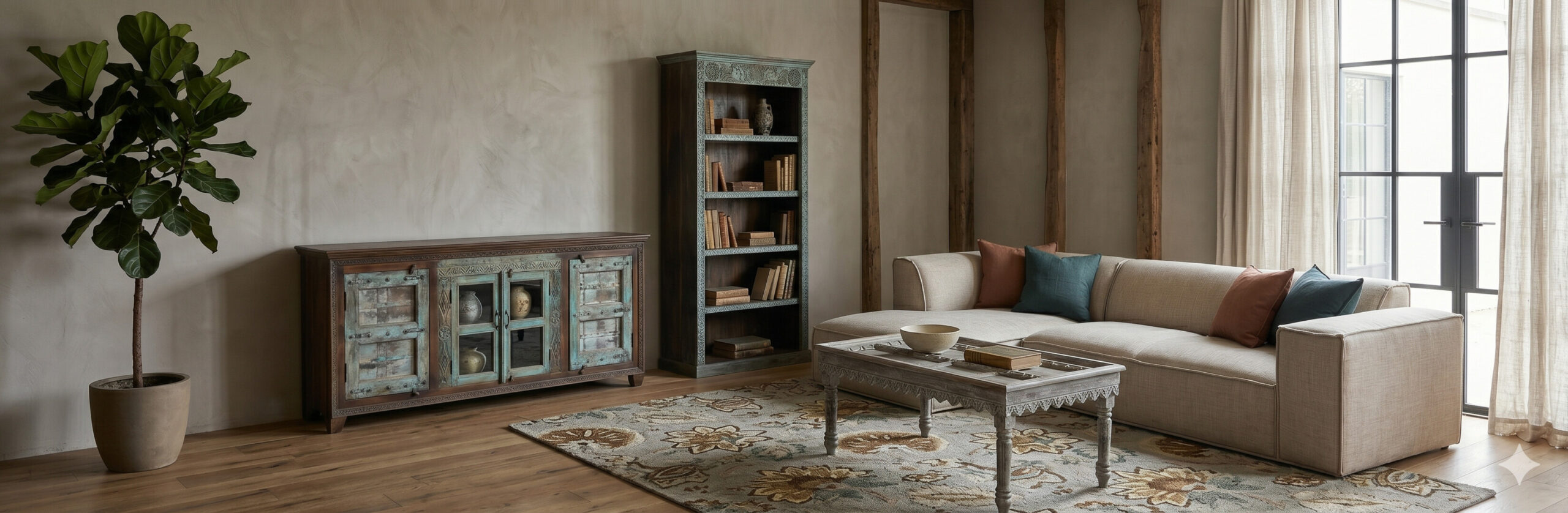
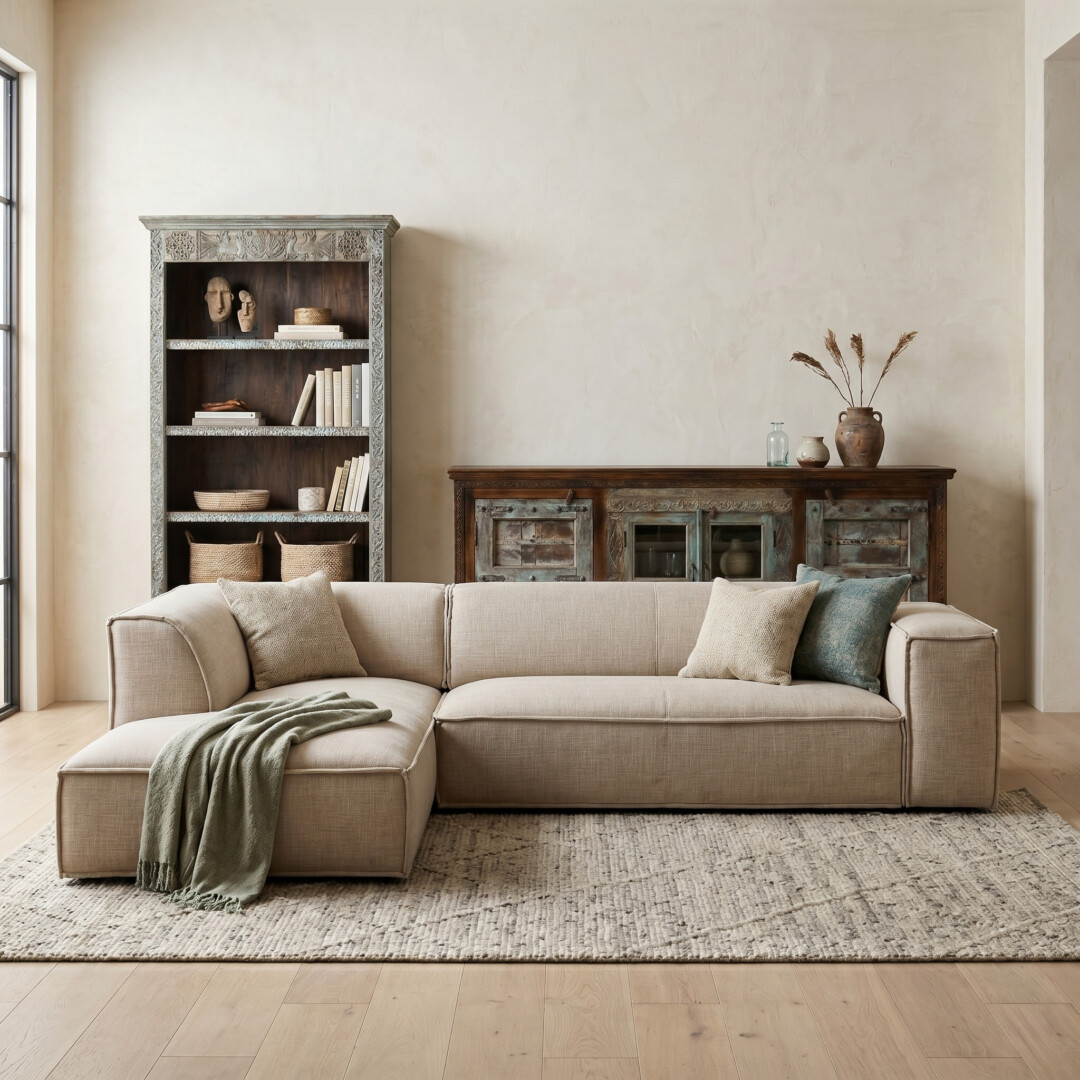
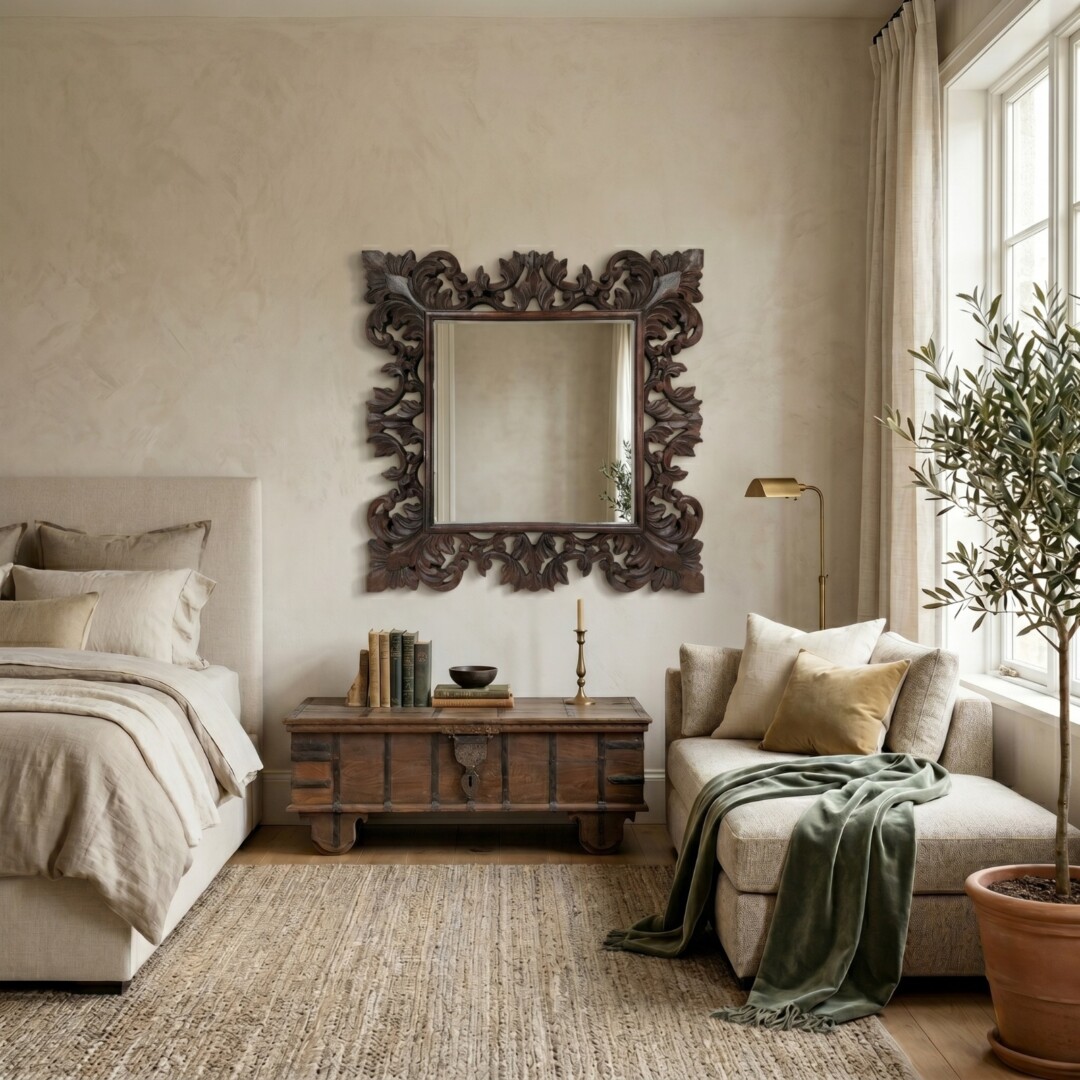
The most architectural corner of the reclaimed wood category is also the most underrated. A meaningful slice of the Sotran sideboard and cabinet range is built around salvaged Indian door panels — real architectural doors from older Indian buildings, given a second life as the front of new furniture. The doors are then incorporated into a modern structural frame, with traditional iron studding, hand-forged hardware and sometimes glass inserts. The result is a piece that reads as both contemporary furniture and architectural artefact at the same time.
What makes these pieces particularly distinctive is that the doors carry visible variation. The carving on one panel will not exactly match the carving on the next, the paint and weathering will be different, and the timber will show its own irregular character. That variation is the proof that the doors are real architectural salvage rather than newly-made panels styled to look old. Pieces like the carved sideboards in distressed turquoise blue, with iron studding and glass-front central doors, are genuinely one-of-a-kind because the doors that built them are.
This is the corner of the reclaimed category that most resembles collecting rather than buying. The doors come from real buildings that no longer exist or that have been substantially altered. The architecture they once belonged to is preserved, in part, in the furniture they have been built into.
Smaller corners worth knowing about.
Beyond the headline categories, the reclaimed wood range extends in some unexpected directions. Reclaimed wood barrel staves — the curved wooden slats from decommissioned barrels — can be rebuilt into coffee tables and side pieces with a rounded, sculptural form that no flat-board construction can replicate. Reclaimed elm cabinetry — traditional Chinese display units and sideboards finished in lustrous lacquered reds and dark stains — brings yet another tradition into the same category, where the cabinet techniques and the timber both have decades of history behind them.
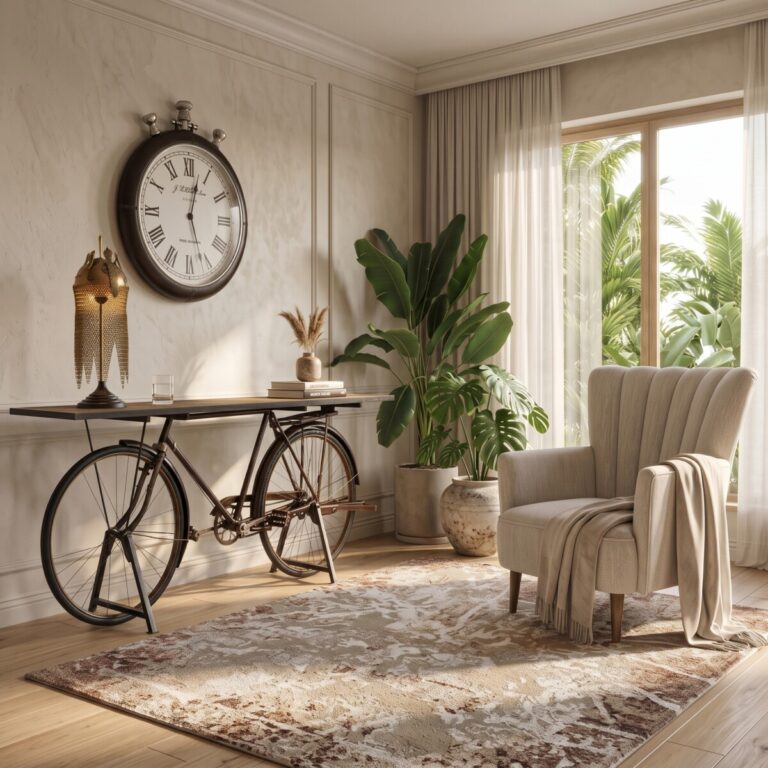
Some of the most playful pieces in the range combine reclaimed timber with reclaimed metal in equal measure. Benches built from old bicycle parts and colour-washed reclaimed wood. Industrial-style pieces using salvaged iron alongside the timber. These are pieces with a sense of humour about the reclaimed idea, where the previous life of every component is visible and part of the design rather than hidden away.
How to live with reclaimed wood furniture.
Reclaimed wood is, in some ways, easier to live with than new timber. The pieces have already developed most of the character they are going to develop, so they look the same year after year. The small marks that accumulate from your own use blend in with the marks from previous lives, and the piece quietly absorbs more history rather than degrading under it.
A reclaimed teak dining table genuinely looks better with a few honest marks of family meals in it than with none, because the marks confirm the table is doing what the wood has always done.
The case for buying reclaimed.
If you are buying a substantial piece of furniture and the sustainability question matters to you, reclaimed wood makes that part of the conversation unusually straightforward. No new tree is harvested. The carbon footprint of the timber has already been paid years or decades ago. The supply chain rewards the salvage and rebuilding of existing material rather than the harvesting of new. That sits comfortably alongside the other genuinely respectable timber options like plantation teak and FSC-certified hardwoods, while quietly answering the sustainability question in a different way.
It also tends to be an unusually good value proposition over the long term. The pieces are dimensionally stable. The character is already in the wood. The piece will look the same in year ten as in year one. And the timber is often denser, more weathered, more resilient than newly-harvested wood, because it has already been through the conditions that would have stressed it. You are buying a finished object rather than a piece that still has to mature into itself.
Online or in-store.
Reclaimed wood is one of the categories where seeing pieces in person changes the decision most. The depth of the patina, the visible irregularities, the colours of the salvaged components — all read more honestly in real light than they do in photography. The Sotran showrooms in Boksburg, Fourways and Somerset West all carry the reclaimed wood range across furniture categories, and the team is happy to talk through provenance, scale and pairing for the specific room you are working with.
The range also orders well online, with detailed photography, dimensions and material information on each product page, and nationwide delivery across South Africa. The reclaimed pieces are spread across several categories on the site, including the rustic furniture range, dining tables, sideboards and coffee tables. Because reclaimed pieces are by definition one-of-a-kind, with each piece built from specific salvaged components, stock can move quickly. If a particular piece is right, it is worth acting on it rather than holding.
A few quick questions.
What is the real difference between reclaimed wood and new wood furniture?
Reclaimed wood furniture is built from timber that has already been used in a previous life, often in older buildings, boats or industrial structures. The wood is salvaged and rebuilt into new furniture rather than being newly harvested. The timber arrives at the workshop with the patina of decades of use already in the wood, and it is more dimensionally stable than newly-harvested timber because it has already finished settling and moving. New wood starts the patina story. Reclaimed wood has it already in the timber.
Is reclaimed wood more sustainable than other "sustainable" timber?
Reclaimed wood sits in a slightly different position to other respectable timber categories like plantation teak or FSC-certified hardwoods. The timber is already harvested, often decades ago, and the piece extends the working life of material that would otherwise have been lost. The carbon footprint has already been paid forward, often a long time ago. That makes reclaimed an unusually clean answer to the sustainability question alongside the other genuinely well-sourced options.
What kinds of reclaimed wood furniture does Sotran sell?
The range covers reclaimed teak dining tables and sideboards, recycled boat wood dining tables and bar stools, sideboards and cabinets built around salvaged Indian door panels, reclaimed barrel-stave coffee tables, reclaimed elm display units in lacquered traditional finishes, and characterful pieces that combine reclaimed timber with salvaged metal components. The reclaimed pieces sit across several categories rather than in one single section.
Is reclaimed wood furniture more durable than new wood?
Often yes, particularly for outdoor or high-use applications. Reclaimed timber, particularly reclaimed teak and recycled boat wood, has already been through the temperature, humidity and stress cycles that would otherwise have caused movement in the first few years. The wood is dimensionally stable, denser through years of weathering, and often more resistant to further movement than newly-harvested timber.
How can I tell genuine reclaimed wood from a "reclaimed-style" finish?
Genuine reclaimed wood carries visible irregularities that machines do not produce. Old nail holes, faint outlines of where previous hardware used to be, variations in colour and finish from one board to the next, real weathering patterns that vary across the piece rather than being applied uniformly. Reclaimed-style finishes use techniques to mimic the look but tend to read as too uniform on close inspection. In person, the difference is usually immediate.
How do I care for reclaimed wood furniture?
Wipe spills as they happen, particularly red wine, olive oil and citrus. Oil the surface every six to twelve months with the appropriate timber treatment. Avoid prolonged direct sunlight on a single area. Beyond that, the pieces are designed to be lived with. The small marks that accumulate from your own use blend in with the existing history in the wood, and the piece quietly absorbs more character rather than degrading.
Why are reclaimed wood pieces often one-of-a-kind?
Because the source material itself is one-of-a-kind. A reclaimed teak dining table is built from specific salvaged boards that cannot be exactly reproduced. A sideboard built around old Indian door panels is unique to those specific doors. A boat wood dining table carries the specific colours and weathering of the specific boat the timber came from. The next piece in the same family will be similar in spirit but built around different source material.
Can I shop the Sotran reclaimed wood range online?
Yes. The reclaimed wood pieces are available across the rustic furniture, dining tables, sideboards and coffee tables categories online, with nationwide delivery across South Africa. The pieces are by definition one-of-a-kind, so stock can move quickly. The team is available by WhatsApp, phone or email to talk through provenance, scale and finish before ordering, and the range is on display in our Boksburg, Fourways and Somerset West showrooms.