Root Furniture
Root furniture: the closest most homes will come to owning a piece of sculpture. Salvaged teak root consoles, hand-carved Suar chairs, sculptural bar stools — root furniture is not designed. It is selected. And that changes everything about how it reads in a home. Almost every piece of furniture in a home is a designed…
Almost every piece of furniture in a home is a designed object. Root furniture is different in a way that is worth understanding before you buy one.
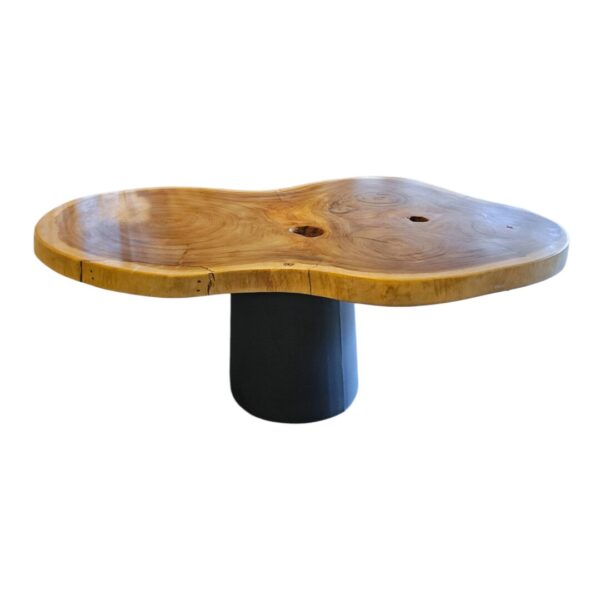
Someone drew it. Someone chose the proportions, decided the angles, selected the joinery, made a hundred small decisions that could have gone differently. That is true of the dining table and the sideboard and the coffee table and the bookshelf. The maker is the author. Root furniture is different. Root furniture is not designed. Root furniture is selected. A skilled artisan walks a field or a workshop yard where salvaged teak root systems have been drying and sorting, and looks for the specific root that already has the sculptural form the piece will keep. Then they clean it, shape a functional surface into it, seal it, and finish it. The final piece has been made by a person, but the shape was made by the tree, sometimes decades before anyone thought about turning it into furniture.
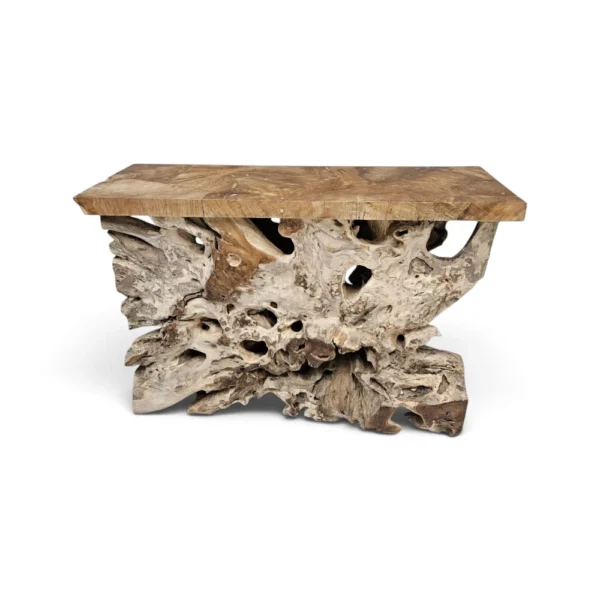
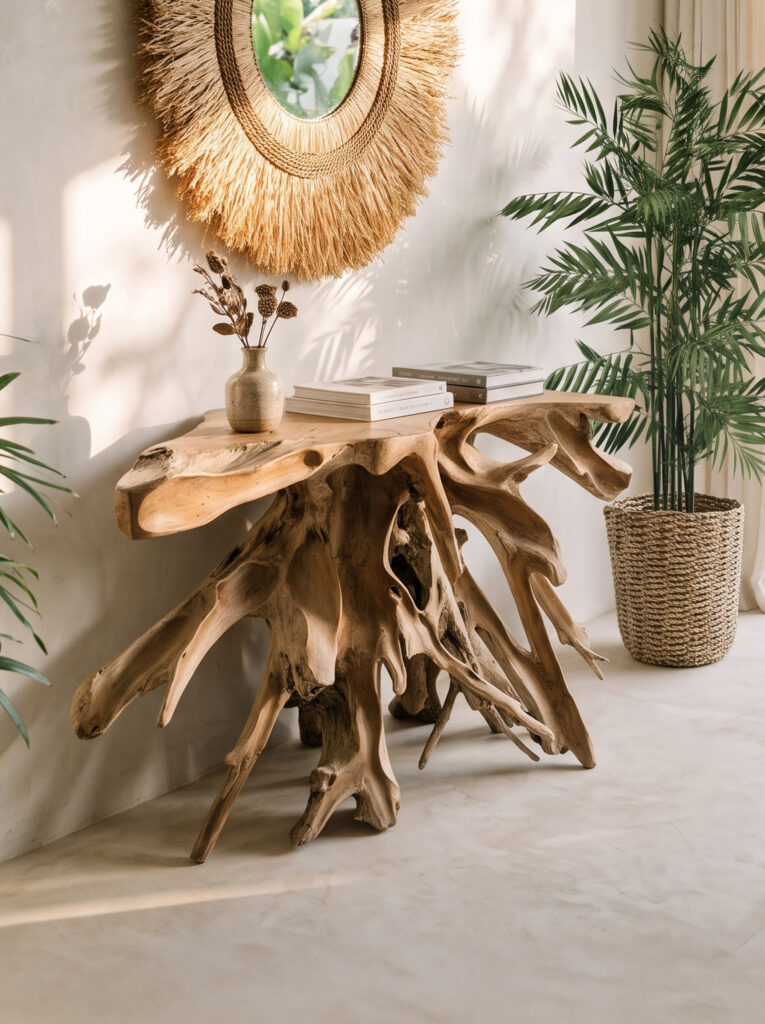
That is why a root console reads as sculpture more than as furniture, and it is why the Sotran root furniture range holds a genuinely different position in a home to anything else the range sells. At Sotran, root furniture is the category clients most often walk past on their first visit and stop dead at on their second. The pieces are unlike anything else in the showroom. A 200cm teak root console with a smooth-polished top flowing over a maze of hollowed root channels. A hand-carved Suar chair with an open decorative pattern sliced through a single solid block. A bar stool where the seat sits on a natural root formation. The scale, the individuality, the fact that no other piece anywhere in the world carries the same silhouette. Once a client has seen the range in person, the question is rarely whether to include a root piece in the home. It is where the piece will go and which one will fit.
The idea that changes everything about the category.
It is worth being explicit about the sculptural argument, because it is the thing that separates root furniture from every other category of solid wood furniture. Every root piece in the Sotran range is genuinely one-of-a-kind, in a way that goes further than the one-of-a-kind claim other reclaimed and handcrafted furniture makes. A live-edge Suar dining table is unique because the slab it was cut from is unique. A reclaimed teak sideboard is unique because the salvaged boards it were built from are unique. A root piece is unique because the underlying form itself is unique. The maker did not design a console and then look for a root to fit the design. The maker looked at a root and thought: this is a console. The console follows the root, not the other way around.
That inversion of the usual design process produces objects that read differently in a room. A designed piece invites you to admire the maker’s decisions. A root piece invites you to notice what the tree did, which happens to be more interesting than what most designers would have done. The tangled base of the Erosi console, the deep hollowed scoop of the Organic Teak Root A2, the sprawling network of channels revealed under the top of the Massive Teak Root Scoop, none of those forms were drawn by anyone. They grew that way, over years or decades, in a tropical forest, in a tree that had no idea it was destined to become a piece of furniture. The maker’s contribution was to see the shape and to reveal it. That is not designing. That is closer to what sculptors do when they work with found materials.
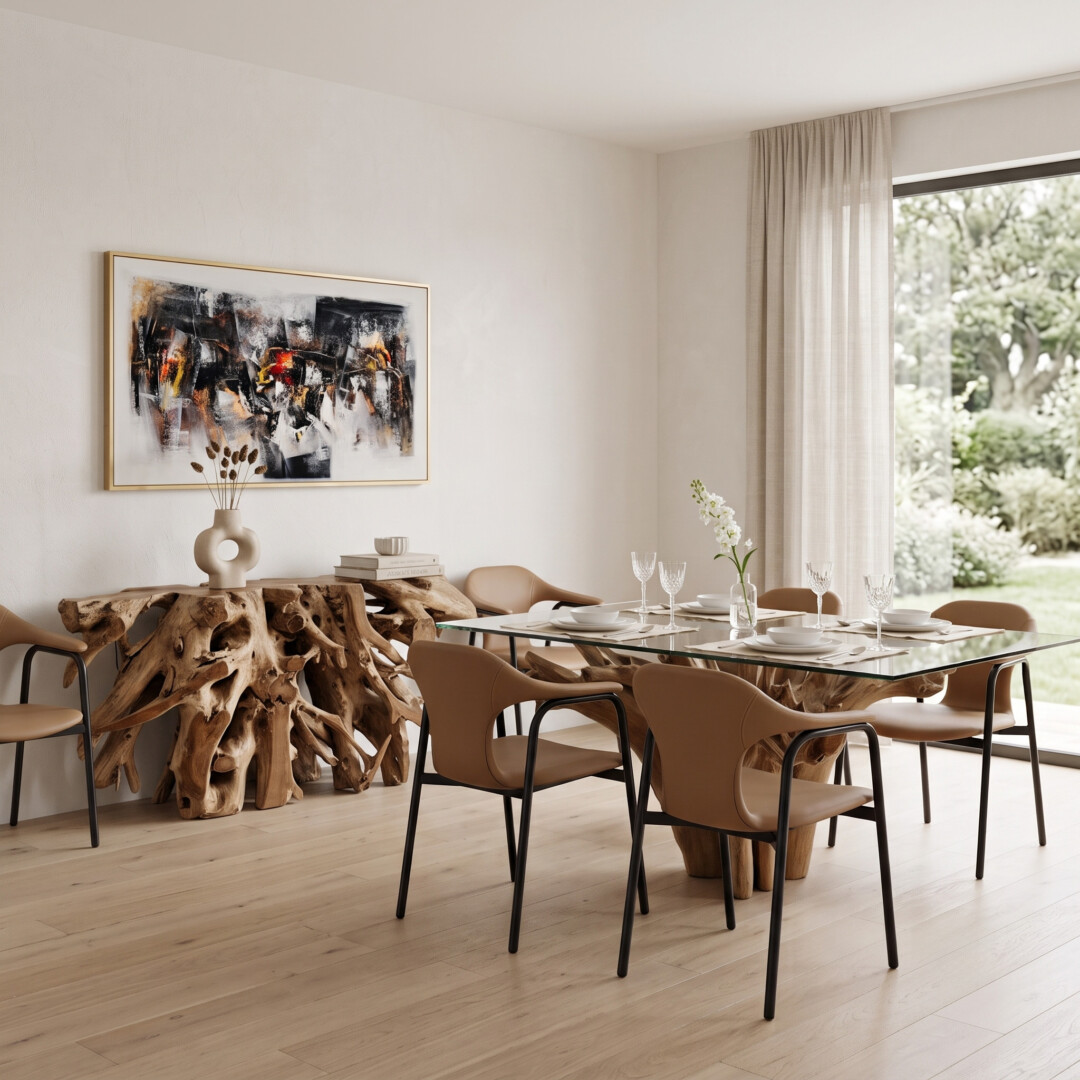
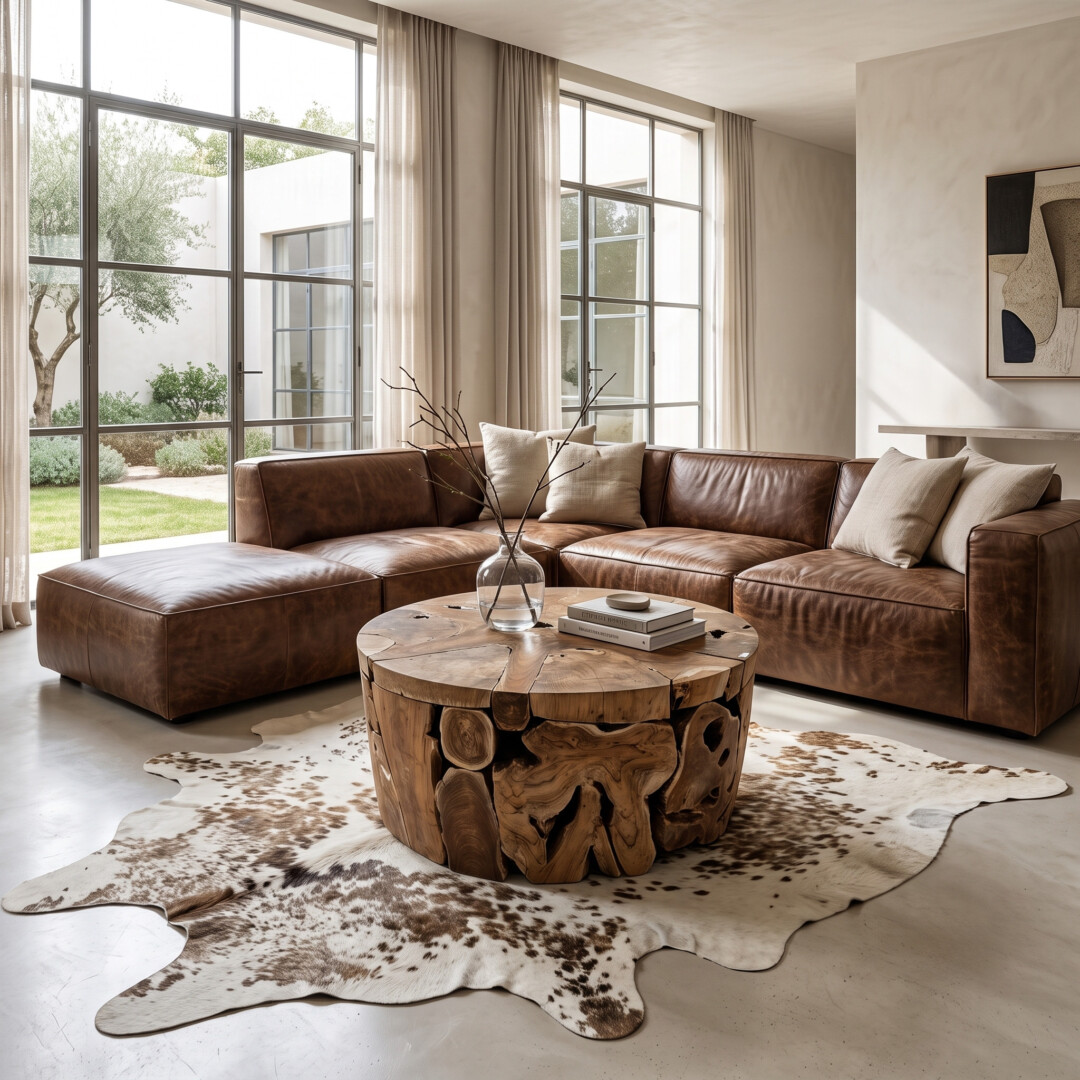
The three console formats worth knowing.
The Sotran root furniture range is anchored by three teak root console designs, each with its own character. The Erosi Organic Teak Root Console is 150cm long and built around a dense, intricately tangled base of natural teak root tendrils that support a smoothed, organic slab display surface. It reads as more compact and more intricately textured than the other consoles, which makes it a strong fit for entryways, hallway feature walls and covered patio transitions where the visual density can be appreciated up close.
The Organic Teak Root Scoop Console A2 is 120cm long and takes a different approach entirely. Its defining feature is a deep, hollowed-out scoop profile that creates an exquisite visual window straight through the gnarled, intertwining root tendrils that make up the base. You can see through the piece, which is unusual for a console and gives the piece a lightness that its raw material never quite suggests. It sits beautifully in double-volume foyers, luxury hotel corridors and dramatic dining room feature walls where the piece can be seen from more than one angle.
The Massive Teak Root Scoop Console and the Teak Root Scoop A10 Console Table are the anchor pieces of the range, both at 200cm long and both drawn from monumental cross-sections of old-growth teak root systems. These are the pieces built for spaces that need real presence. Grand double-volume residential foyers. Luxury hotel main lobbies. Spacious formal dining rooms. Executive boardrooms. The flat display surfaces flow into an organic hollowed scoop layout that reveals an incredible maze of natural root channels and twisted wood fibres. These are not pieces that slot into a room. They are pieces you build a corner of a home around.
“Root furniture is not designed. It is selected. The console follows the root, not the other way around.”
The chair that is its own conversation.
The Nataki Suar Chair sits slightly outside the console conversation, since it is not built from a root system but rather sliced from a single solid block of Suar wood. It deserves inclusion in the root furniture range because it shares the same sculptural approach, where the underlying material dictates the form and the maker reveals rather than imposes. The base features a distinctive open, carved decorative pattern that adds real visual interest without competing with the sculptural silhouette of the chair itself.
At 125cm tall, it is a significant piece that commands attention. It works as a focal chair in a living room, a study or a gallery space, and it works as an occasional chair that becomes the piece guests notice and ask about. Like the root consoles, it is not really a functional-first purchase, though it is entirely usable as a chair. It is closer to a piece of furniture that happens to be a chair, in the same way a root console is a piece of sculpture that happens to be a console.
The bar stool that brings the sculptural language into everyday use.
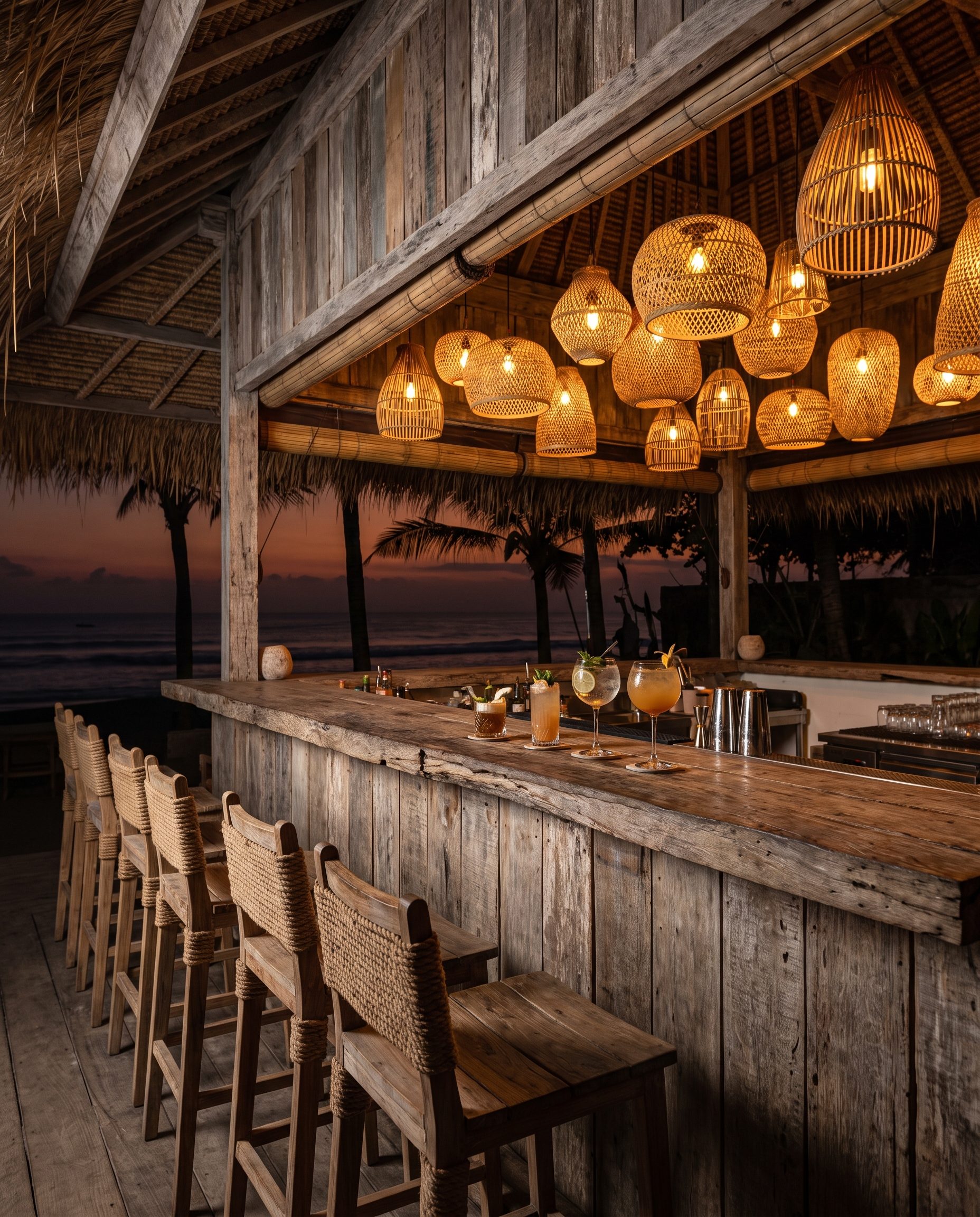
The Teak Root Bar Stool is the piece in the range that gives clients the most accessible entry point into the category. At 40 by 40 by 77cm and priced substantially below the console pieces, it introduces the root furniture language into a home for the cost of a normal handcrafted bar stool rather than the cost of a statement furniture purchase. Each stool is made from solid teak root with an integrated footrest, so the same sculptural individuality that runs through the larger pieces is present at everyday bar stool scale.
The bar stools work brilliantly at home bars, kitchen islands and covered patio counters where the seating gets used regularly. They also work as occasional side seats in living rooms, where the natural form invites use in a way ordinary stools never do. Owning two or three of them around a bar counter is a genuinely lovely way to bring root furniture into a home at a scale that fits the everyday use of the space.
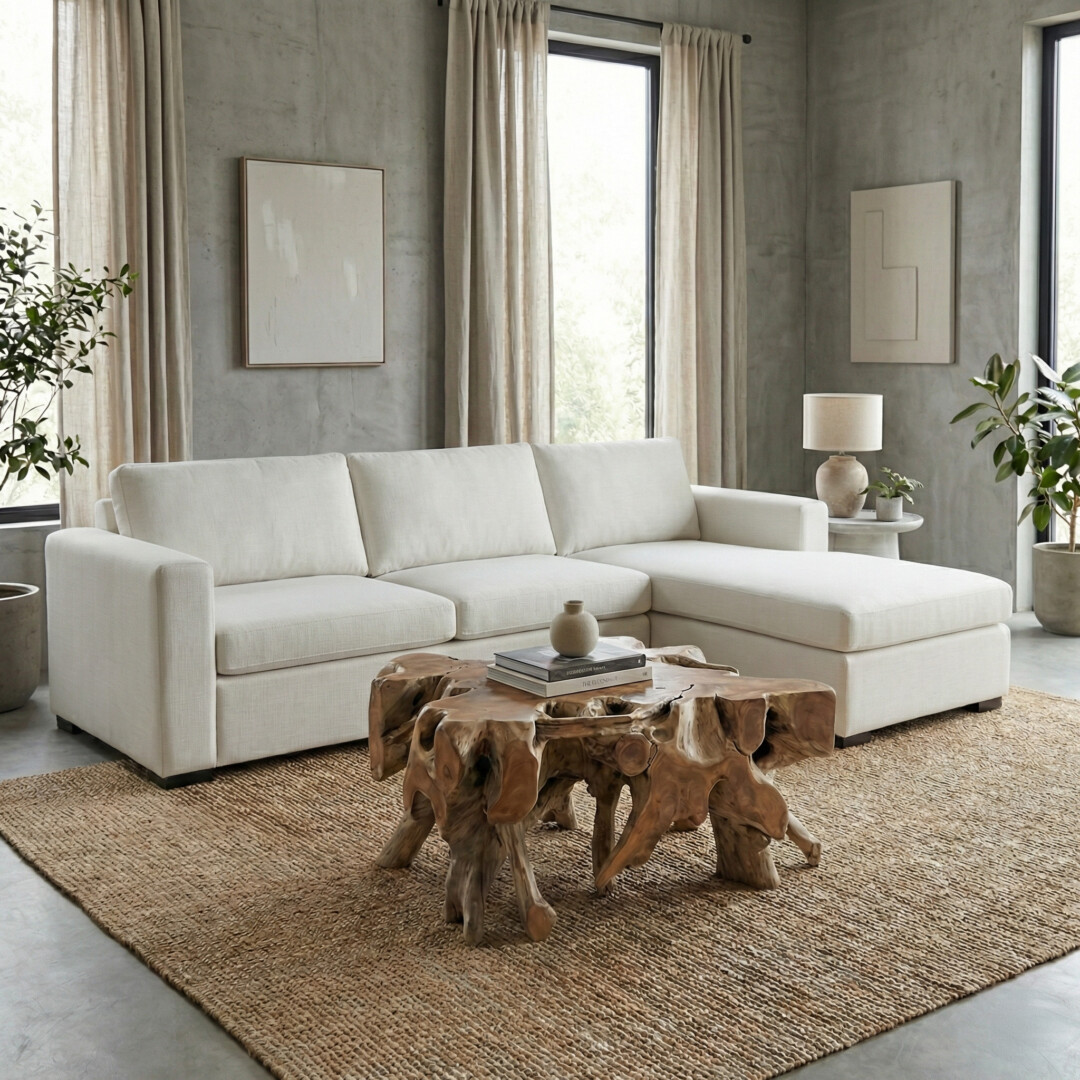
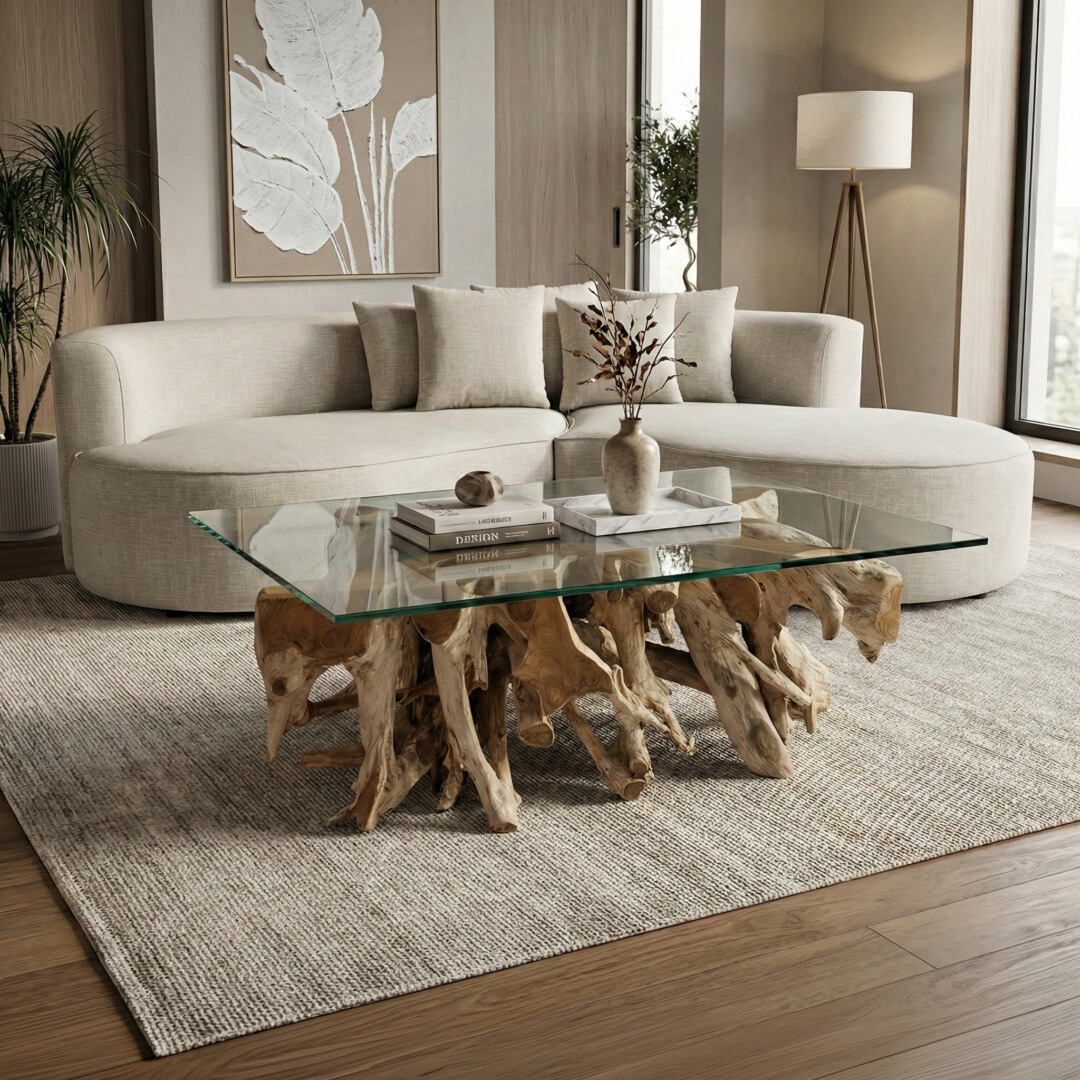
Burmese teak — the material behind almost all of it.
Most of the root furniture in the Sotran range is Burmese teak, formally known as Tectona grandis, which has been the wood of choice for serious tropical hardwood furniture for centuries. The Dutch colonists who first recognised its qualities used it for shipbuilding, and eventually planted vast plantations throughout Java and Sumatra in Indonesia, which is where most of the timber in the Sotran range still comes from. The wood’s reputation is earned. Burmese teak has an unusually high natural oil content, which makes it dimensionally stable, less prone to warping, cracking or shrinking, and naturally resistant to water, dry rot and insect infestation. Those qualities matter for root furniture in particular, since the root system already carries irregular grain and stress lines from its underground life, and only a genuinely stable timber species will hold that form intact for decades of indoor use.
The colour of Burmese teak also matters here. The wood carries a warm honey to deep caramel tone in fresh finish, which develops a beautiful silver-grey patina if left outdoors and deepens indoors into a richer, more honey-caramel character over years of use. That is part of why a teak root piece looks better in year five than in year one, and better still in year ten. The material is doing what teak has always done. The root system is simply carrying that character in a more sculptural form than a straight-grain plank ever could.
Sustainable by nature, not by claim.
Root furniture is one of the categories where the sustainability story is genuinely straightforward. The root systems are salvaged from teak trees whose above-ground timber has already been harvested for boards, planks and other furniture. Historically, root systems were often discarded, since they are difficult to work with and do not yield the straight-grain timber that most furniture manufacturing depends on. Salvaging them for sculptural furniture gives a second life to material that would otherwise have gone to waste. The driftwood-type teak used in some of the range is similarly salvaged from natural sources rather than newly harvested.
That is a real sustainability story rather than a marketing one. No trees come down for the root pieces. The trees that produced these roots came down years ago for entirely different reasons, and the root systems have been drying, aging and waiting in workshops and holding yards for the right maker to see them and turn them into something.
Where root furniture earns its place.
Root furniture works across a specific range of South African interior styles, and it does not work everywhere. The strongest fits are Modern Tropical, Safari Lodge and Rustic interiors, where the natural material language is already established and the sculptural form of a root piece feels like part of the same conversation. Agricultural heritage homes, guest farms, wine estates and lodges use root furniture particularly well, since the pieces read as connected to the land in a way most furniture cannot claim. A root console in a Karoo farmhouse entrance, a root bar stool at a Cape wine estate counter, a Suar chair in a Franschhoek guest cottage. These pieces do work in those settings that no other category of furniture can quite match.
Root furniture also works surprisingly well in contemporary and minimalist interiors, where a single sculptural root piece becomes the deliberate organic counterpoint to the surrounding restraint. A double-volume modern foyer with polished concrete floors and clean white walls is exactly the kind of setting where a Massive Teak Root Scoop Console does its most confident work. The contrast between the raw organic form and the disciplined architecture is the point.
Where root furniture does not work is in busy, ornate or heavily traditional interiors where the sculptural form has to compete for attention with other characterful pieces. A root console in a classical mahogany dining room fights the room. A root chair beside a hand-carved Indian sideboard becomes one note in a crowded chorus. The pieces need visual quiet around them to do their sculptural work, which means the room should be quieter than the piece itself.
Pairing root furniture with the rest of the home.
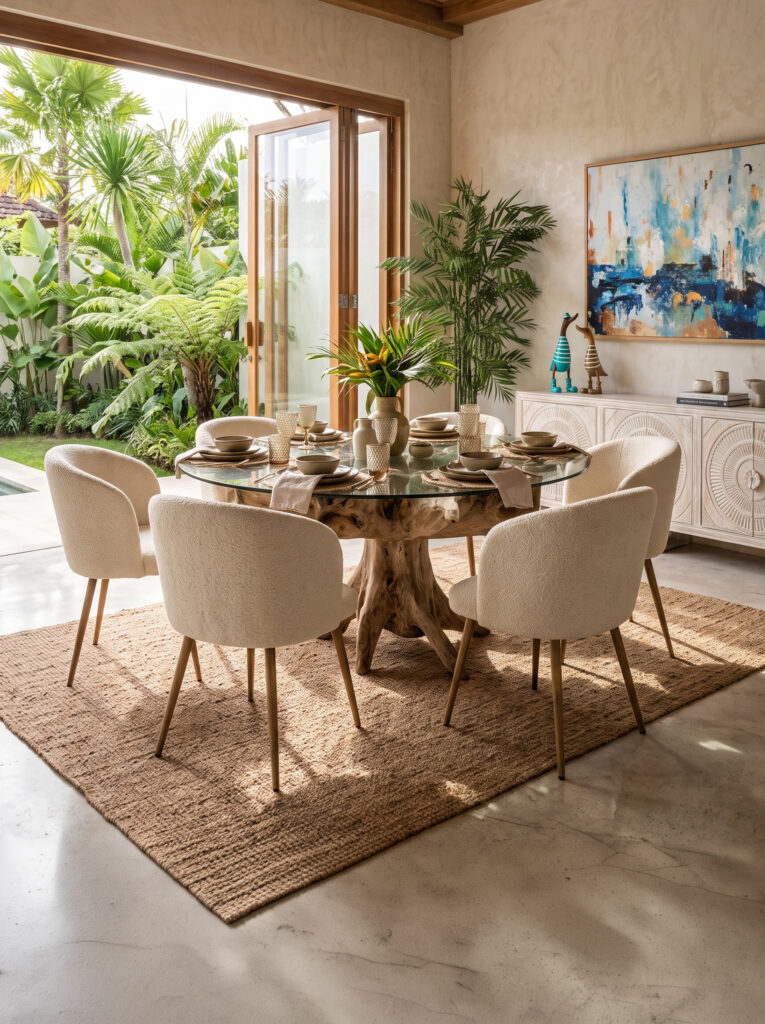
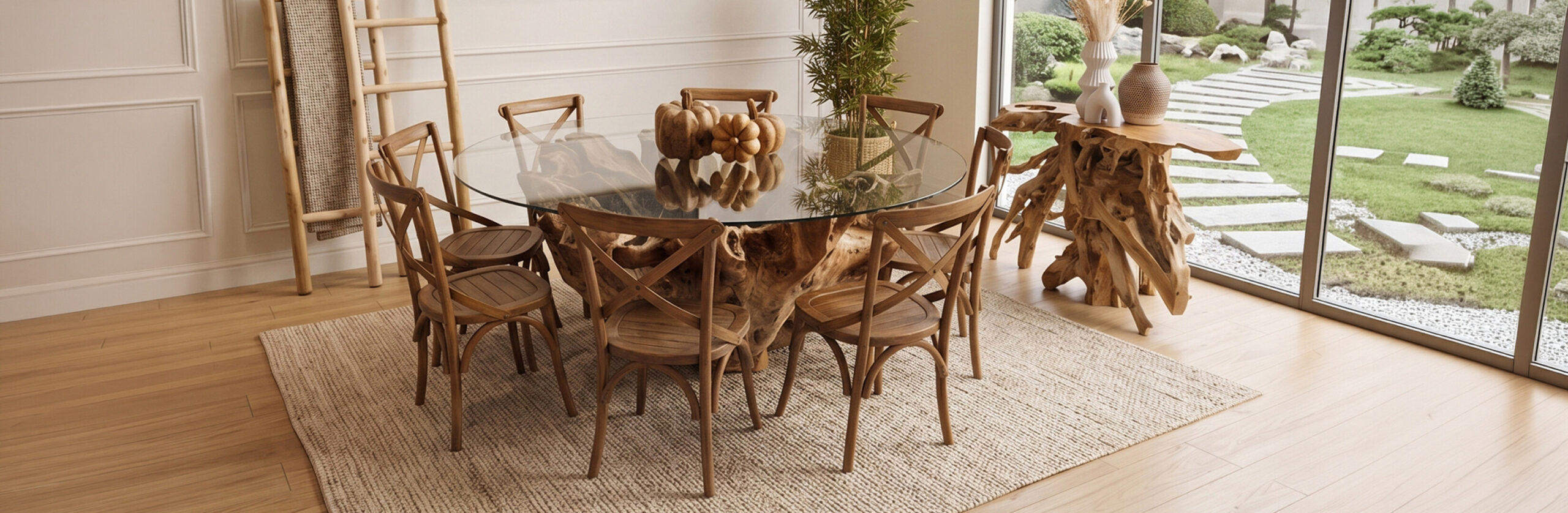
The other quiet rule of using root pieces well is that they pair particularly beautifully with the natural materials Sotran sells across the rest of the range. A hand-blown glass-on-wood piece on top of a root console reads as a natural continuation of the same craft language. A solid Suar or teak dining table in the same room extends the material conversation. A characterful piece of wall art above the console gives the piece the vertical anchor it needs to sit in a room. A coffee table in a complementary natural timber ties the room together.
The rooms that get root furniture most right tend to be the rooms with the fewest pieces overall. One statement root console with three or four carefully chosen supporting pieces reads better than the same console surrounded by ten decor moments. The root piece is already doing sculptural work. The rest of the room should support that work rather than add to it.
Online or in-store.
Root furniture is genuinely one of the categories where seeing pieces in person is worthwhile. The scale, the depth of the root formation, the way the natural surface catches light, and the presence of a piece in an actual room all read more honestly in real materials and real light than in photography. The Sotran showrooms in Boksburg, Fourways and Somerset West all carry the root furniture range, and the team is happy to walk you through the pieces and help work out which specific piece suits the specific room you have in mind.
The range also orders well online. Product pages include full dimensions, weight considerations and detailed photography, with nationwide delivery across South Africa. Larger sculptural pieces are packaged for safe transit. Because every piece is genuinely one-of-a-kind, stock is often limited to a single unit at a time. If a specific piece catches your eye, it is worth acting on it rather than holding.
A few quick questions.
What is root furniture?
Root furniture is hand-crafted from reclaimed tree roots, salvaged root systems and solid root wood. The Sotran pieces are made from solid Suar wood, salvaged teak root systems and sustainably sourced driftwood-type teak. Because root systems are individual to each tree, every piece carries its own unique silhouette, grain pattern and sculptural form, which makes each piece genuinely one-of-a-kind.
Is root furniture practical, or is it more of a sculptural piece?
It is both. Every piece in the range is functional. The consoles hold objects, keys, styled displays and decor. The chair is a working chair. The bar stool is a genuinely usable stool with an integrated footrest. What makes the category distinctive is that the sculptural qualities matter equally to the functional ones, so the pieces are chosen for both reasons at the same time.
Why is Burmese teak used for the root furniture range?
Burmese teak, formally Tectona grandis, has been the wood of choice for serious tropical hardwood furniture for centuries. The Dutch colonists first recognised its qualities and planted vast plantations throughout Java and Sumatra in Indonesia. The wood carries an unusually high natural oil content, which makes it dimensionally stable, less prone to warping and cracking, and naturally resistant to water, dry rot and insect infestation. Those qualities matter for root pieces in particular, since the salvaged root systems already carry irregular grain, and only a stable timber species will hold that form intact for decades of use.
Is your root furniture sustainably sourced?
Yes. Root furniture is made from salvaged, reclaimed and sustainably sourced materials. The teak root systems are salvaged from trees whose above-ground timber has already been harvested for boards and planks, giving a second life to material that would otherwise have gone to waste. The driftwood-type teak is similarly salvaged rather than newly harvested. No trees come down for the root pieces themselves.
What styles does root furniture suit?
Root furniture works best in Modern Tropical, Safari Lodge, Rustic, agricultural heritage, lodge, guest farm and wine estate interiors, where the natural material language is already established. It also works beautifully in modern, contemporary and minimalist interiors where a single sculptural root piece becomes a deliberate organic counterpoint to disciplined surrounding architecture. It is less suited to busy, ornate or heavily traditional interiors, where the sculptural form has to compete for attention.
Where should root furniture be positioned in a home?
Root pieces suit living rooms, studies, galleries, outdoor garden statement positioning, lodge focal points, guest farm entrance features, luxury hotel lobbies, and double-height indoor spaces where the sculptural scale can be appreciated. Console pieces work as anchor features against feature walls or in generous foyers. The Nataki Suar chair works as a focal piece in a living room, study or gallery. Bar stools sit at home bars, kitchen islands and covered patio counters.
Do you deliver root furniture across South Africa?
Yes. Sotran offers nationwide delivery on the full root furniture range. Larger sculptural pieces are packaged for safe transit. Collection options are available from the Boksburg HQ, and from the Fourways and Somerset West stores.
Can I shop the Sotran root furniture range online?
Yes. The full root furniture range is available to browse and shop online, with detailed photography, dimensions and material information on every product page, and nationwide delivery across South Africa. Because every piece is genuinely one-of-a-kind, stock is often limited to a single unit at a time, so if a specific piece speaks to you, it is worth acting on it. The range is on display in the Boksburg, Fourways and Somerset West showrooms.