Rustic furniture in South African
Rustic furniture in South African homes: buying pieces with a history already in them. A reclaimed boat wood stool used to be a fishing boat. A hand-carved sideboard carries one craftsman’s hand. Why rustic furniture brings its own history — and how to choose one piece that does serious work. Most furniture leaves the factory…
Most furniture leaves the factory looking identical to the piece next to it on the production line. Rustic furniture does not.
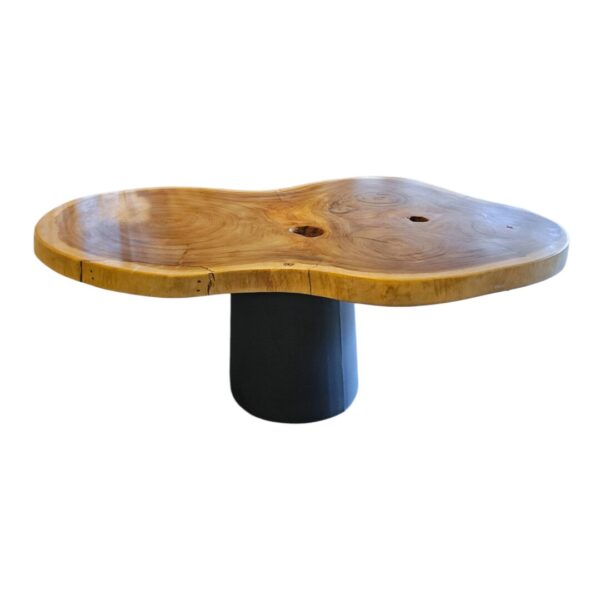
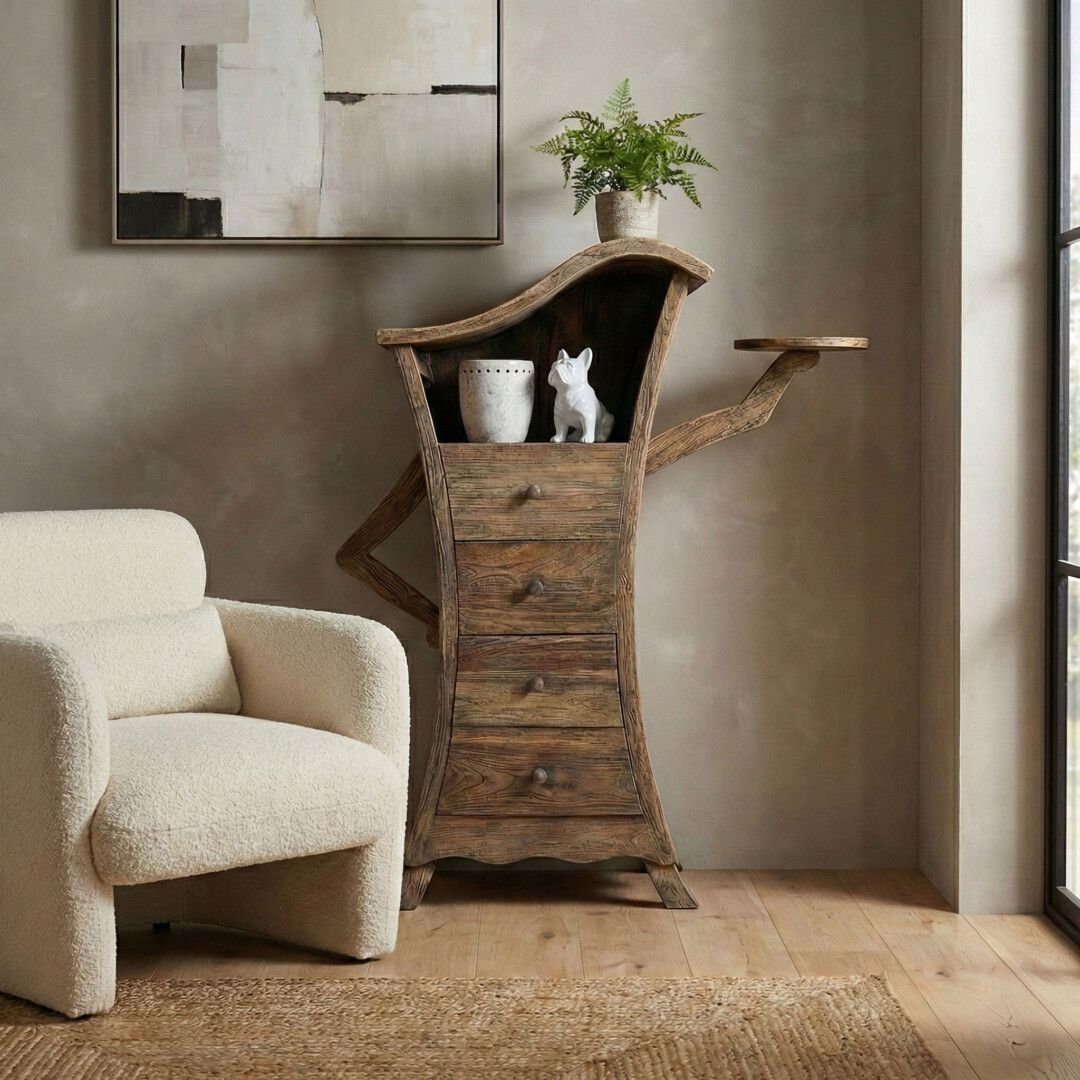
A reclaimed boat wood bar stool used to be a fishing boat. A hand-carved mango wood sideboard carries the work of one craftsman, with no two pieces identical in grain or finish. An iron-bound trunk was forged by someone, not stamped by a machine. That’s the quiet truth at the centre of the rustic category, and it’s also the reason it sits so differently from almost anything else you can buy for a home. You aren’t buying a finish. You’re buying an object that already has a history in it before it arrives at your door. Some of that history is literal — in the reclaimed timbers and the hand-forged metalwork. Some of it is in the maker’s hand, visible in every carved detail. Either way, the piece comes with a story before you give it one. Most furniture asks you to bring the character. Rustic furniture brings its own.
That’s what makes choosing it interesting, and a little different to choosing anything else. At Sotran, our most considered clients tend to approach rustic the way they approach art. They’re looking for one piece they love, not five pieces that match. They want it to anchor a room. They want it to outlast a trend. And they want it to be the piece in the home that other people ask about first.
Why provenance matters more than it sounds.
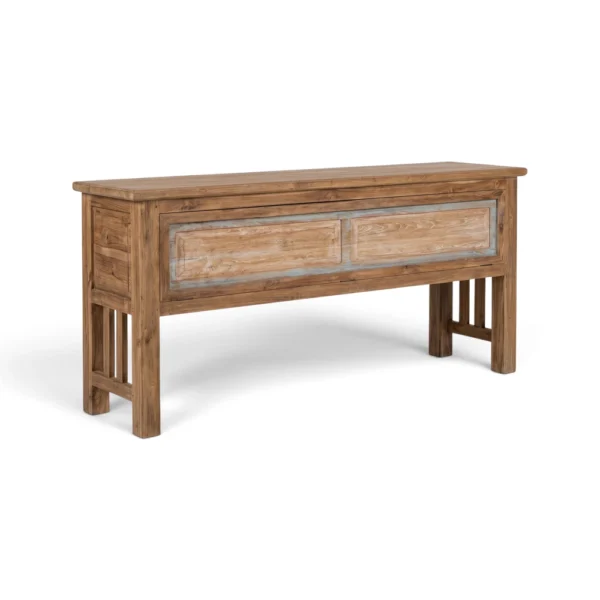
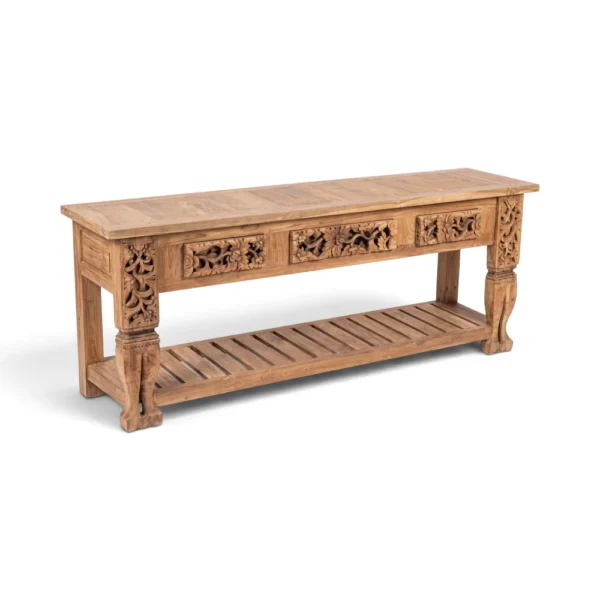
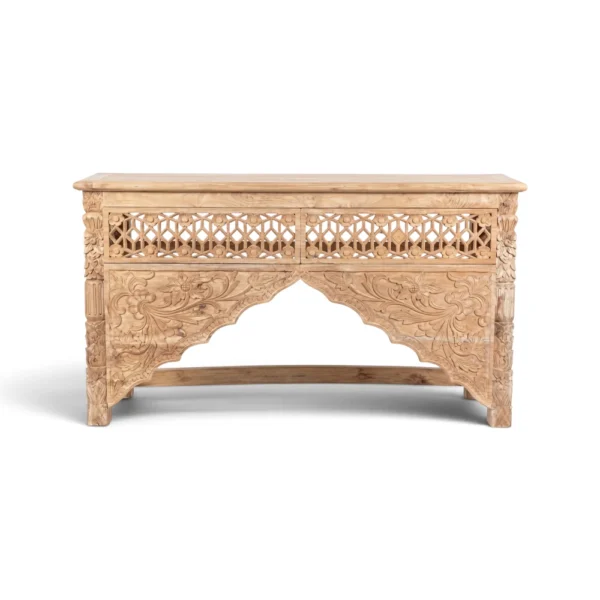
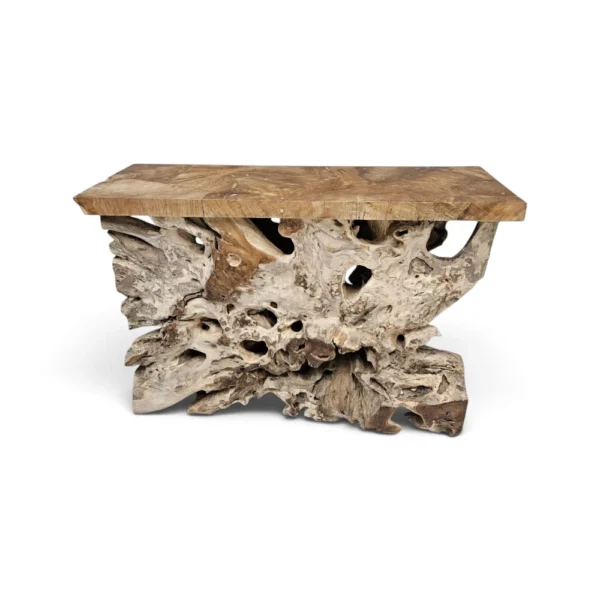
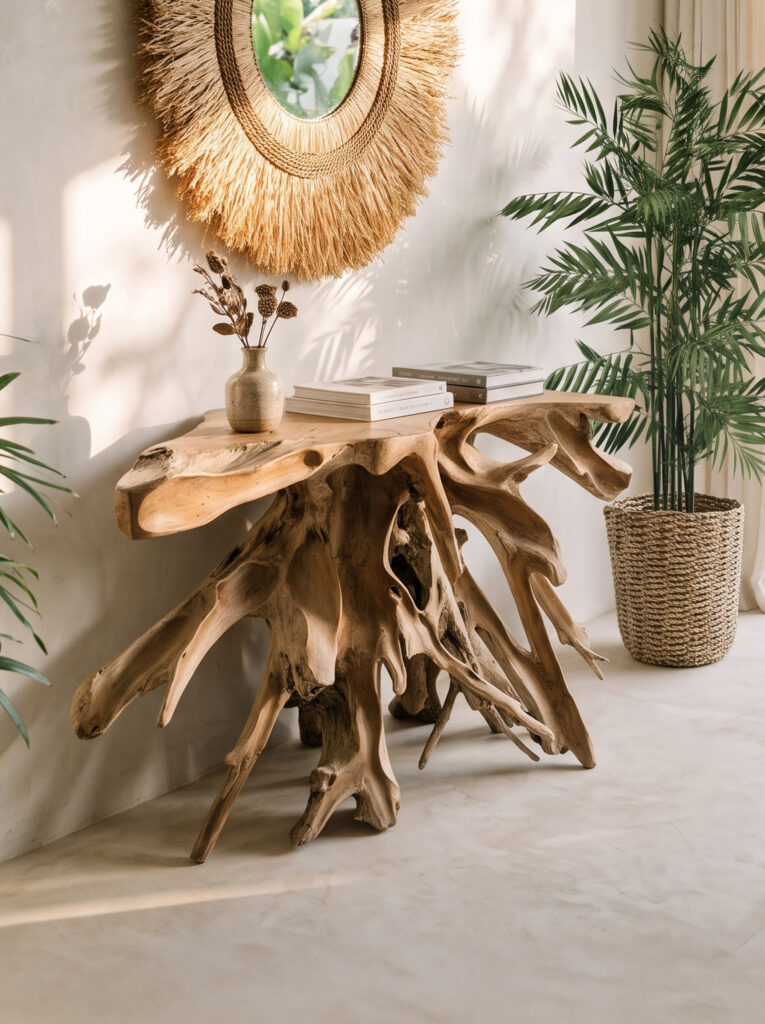
It’s easy to dismiss the provenance argument as marketing romance — until you spend a few minutes with the actual materials. A reclaimed boat wood piece carries salt, weather and decades of use in its grain. A hand-carved sideboard carries small irregularities in the carving that a machine would never produce, and that no two sideboards from the same workshop will share. A whitewashed teak console shows the joinery rather than hiding it. These aren’t surface details. They’re the piece. Strip them out and you have a different category of furniture entirely — the kind of distressed-look pieces that are mass-produced to look characterful and never quite manage it.
That difference matters more in a home than you might expect, because the rooms you live in for years quietly reward authenticity. A piece with real history in it ages well, because it was already old when it arrived. A piece that fakes history struggles to do the same. It looks slightly less convincing every year. It was a finish, not a story.
Why South African homes are good for these pieces.
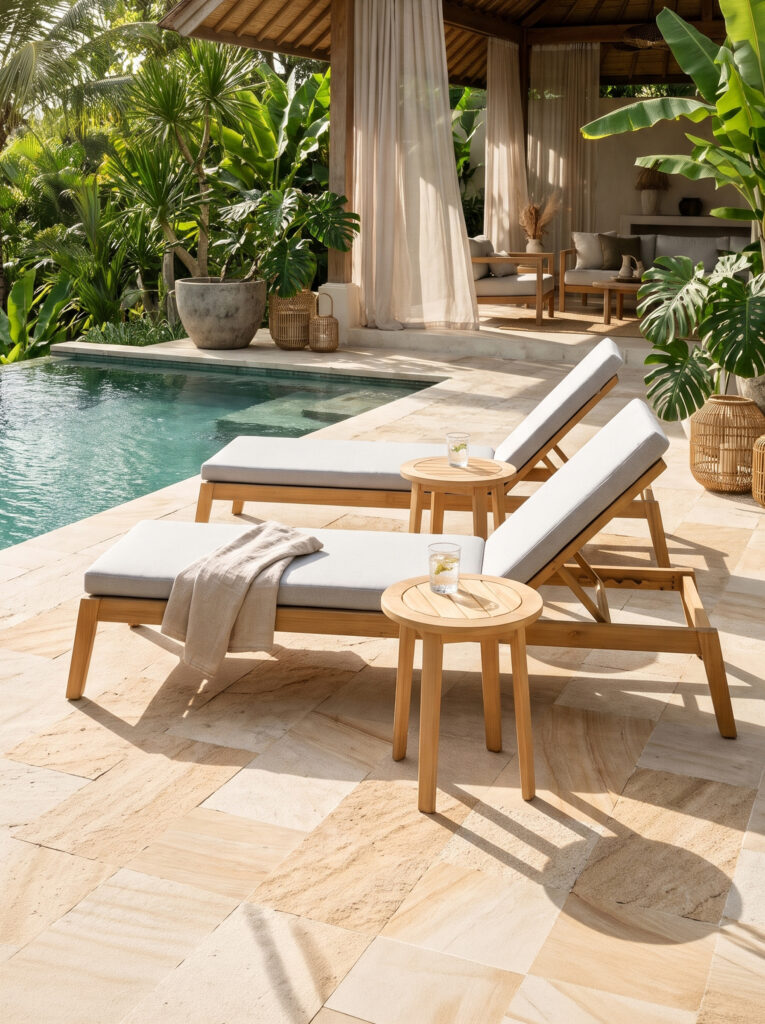
There’s also a quiet match between the rustic category and the way we live. South African homes tend to open to the outside more than European homes do. Our rooms are usually larger, more sociable and less precious. Our light is bright enough to handle weight without the rooms feeling heavy. Hand-finished metal patinas read with more depth in our light than they do under cooler northern conditions. Reclaimed timbers age the way they were meant to. The pieces look like they belong here — which is part of why they have been quietly popular in South African homes for years without ever quite becoming a trend.
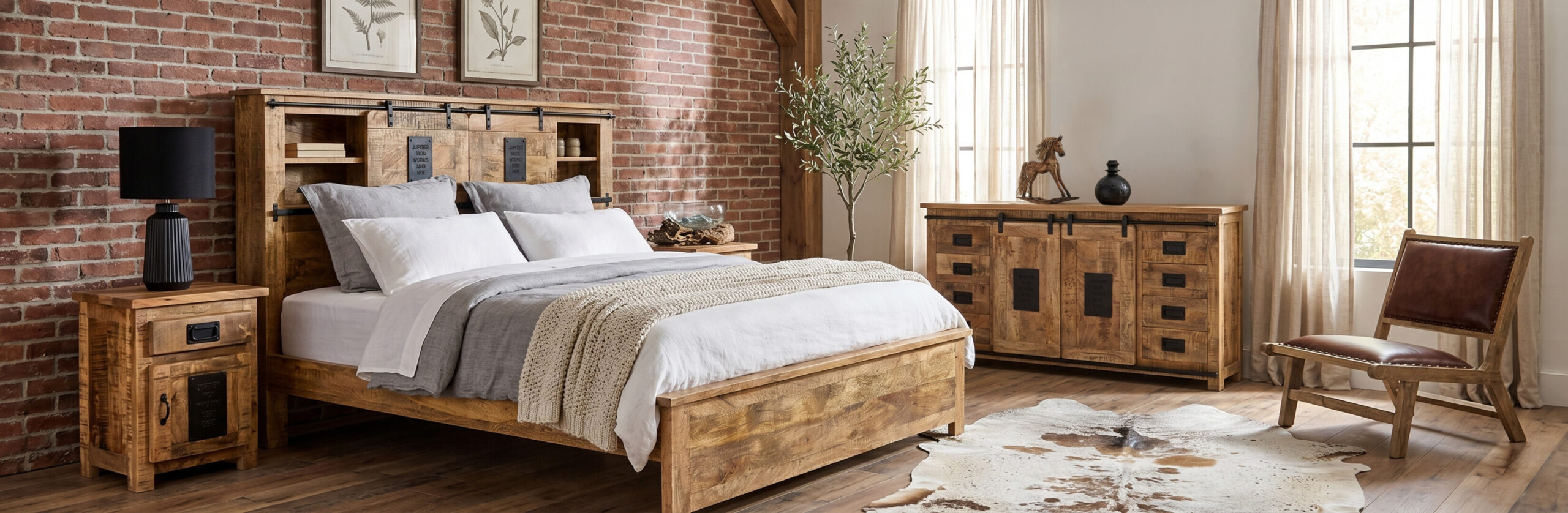
There’s a cultural fit worth naming too. South African homes have a long appetite for pieces that feel collected rather than bought, for furniture with provenance, and for rooms that feel hospitable rather than precious. Rustic furniture answers all of that almost effortlessly. That’s part of why it sits so comfortably alongside our own design worlds — particularly Industrial Farmhouse, Safari Lodge and the rustic edge of Beach Cottage.
“Most furniture asks you to bring the character. Rustic furniture brings its own.”
One piece, doing serious work.
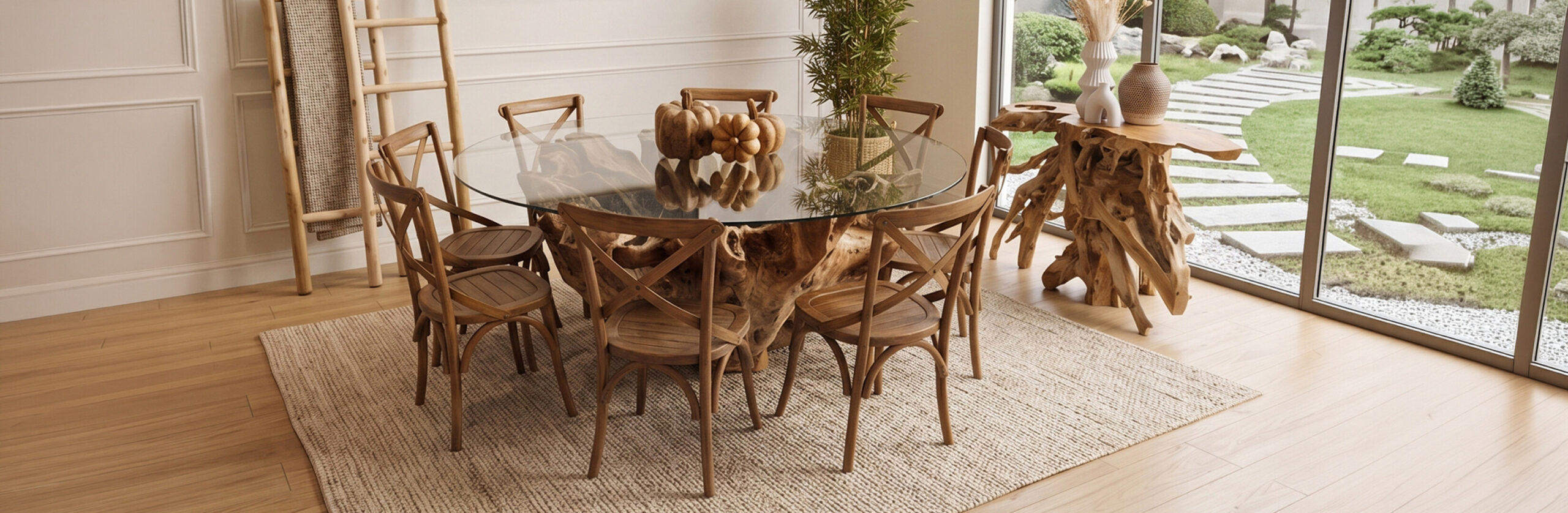
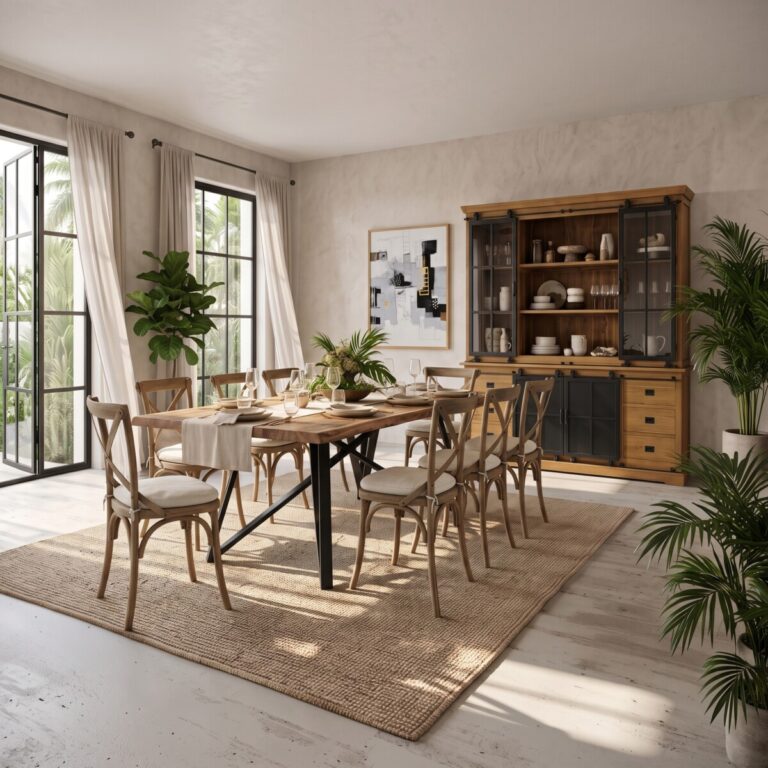
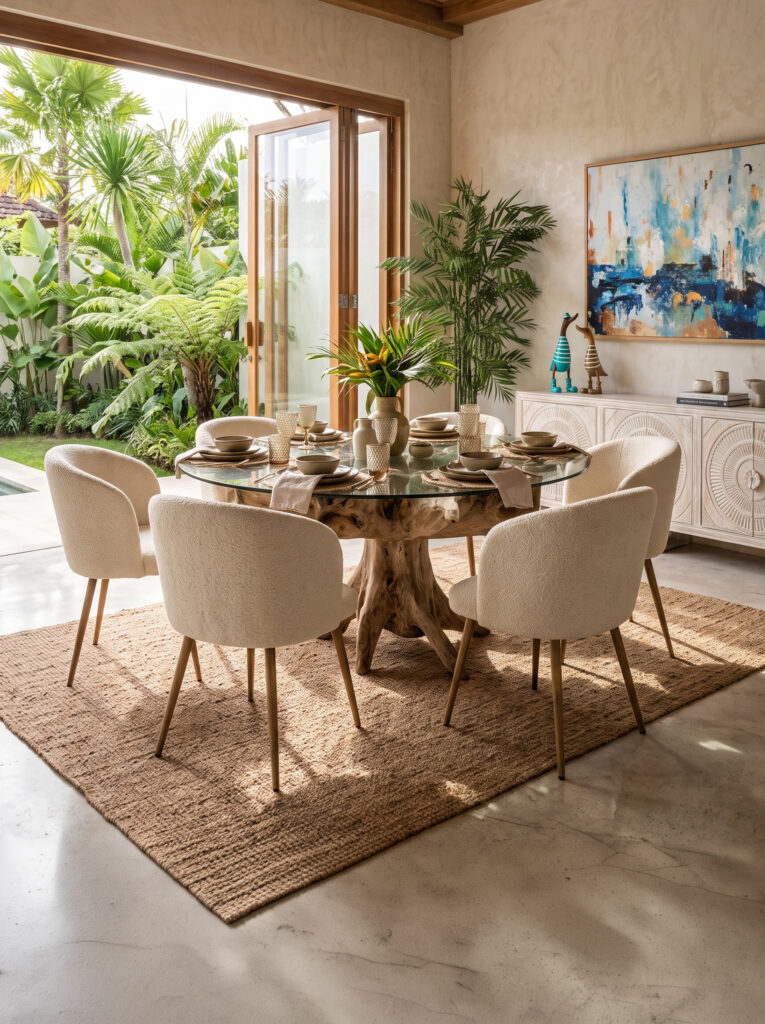
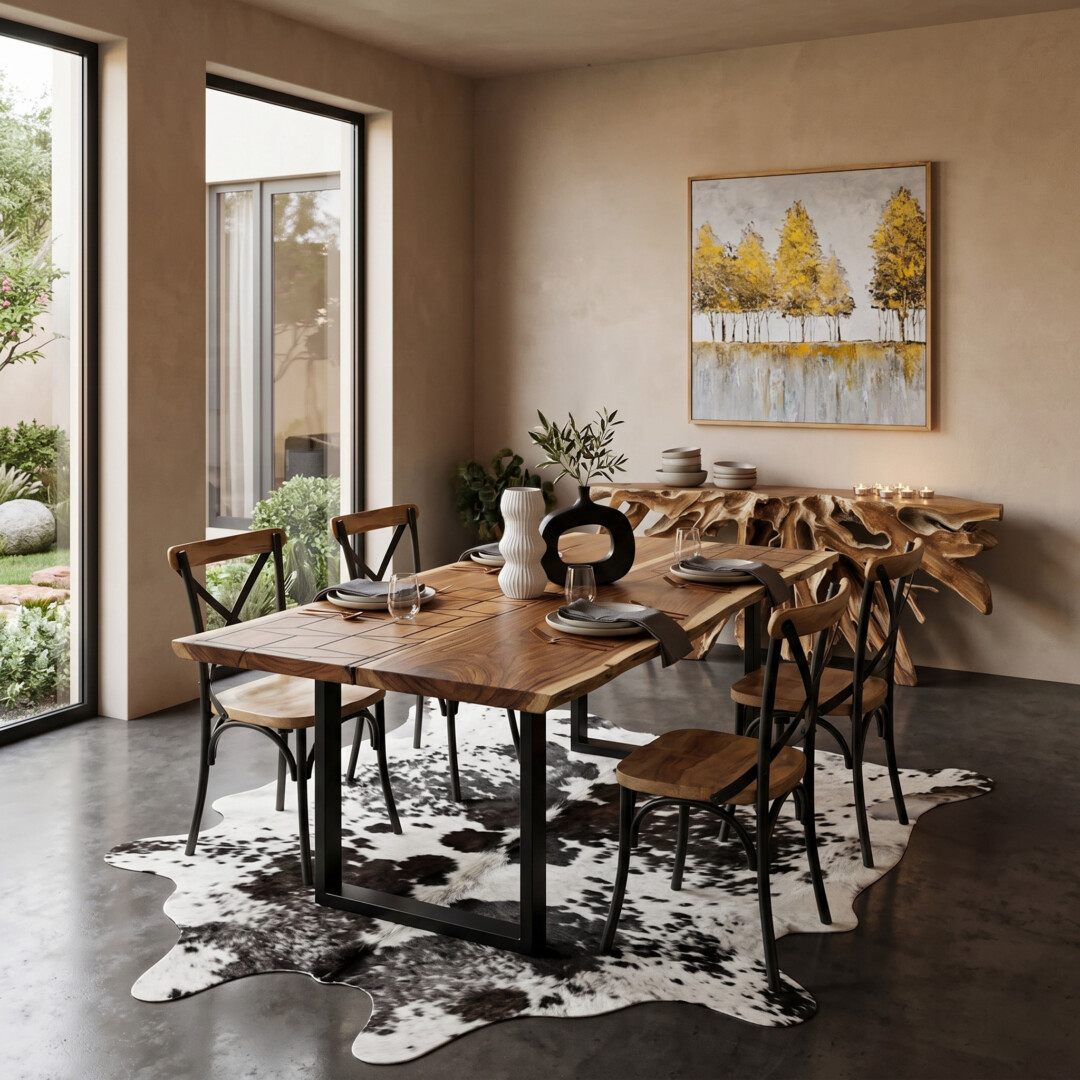
Here’s the part most decorators won’t tell you. You don’t need a rustic home to use rustic furniture. You probably only need one piece. The strongest rustic-influenced rooms aren’t the ones where every surface is reclaimed and every wall is barn-board. They’re the ones where a single substantial piece does the work, surrounded by quieter contemporary furniture that lets it breathe. A heavy mango wood sideboard against an otherwise modern dining room. A reclaimed timber dining table paired with simple upholstered chairs. A characterful console in an entryway that’s otherwise restrained. One piece, with enough scale and character to anchor the room, paired with restraint elsewhere.
That approach also tends to be the most economical use of attention. Spreading the rustic language across five smaller pieces in a room dilutes each of them. Concentrating it in one anchor piece makes that piece work hard, and lets the rest of the room be calmer. It’s also kinder to the budget — since one substantial piece chosen well is almost always a better investment than five lesser pieces chosen casually.
The pieces worth concentrating on.
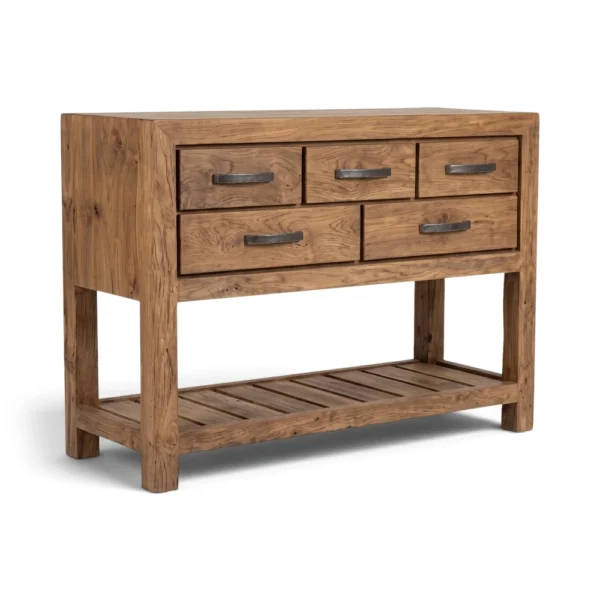
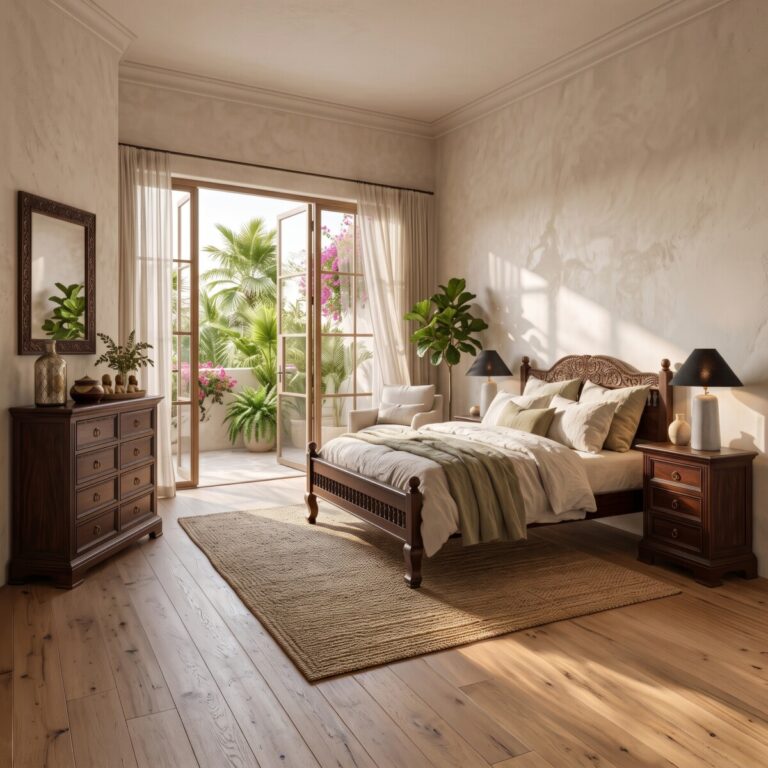
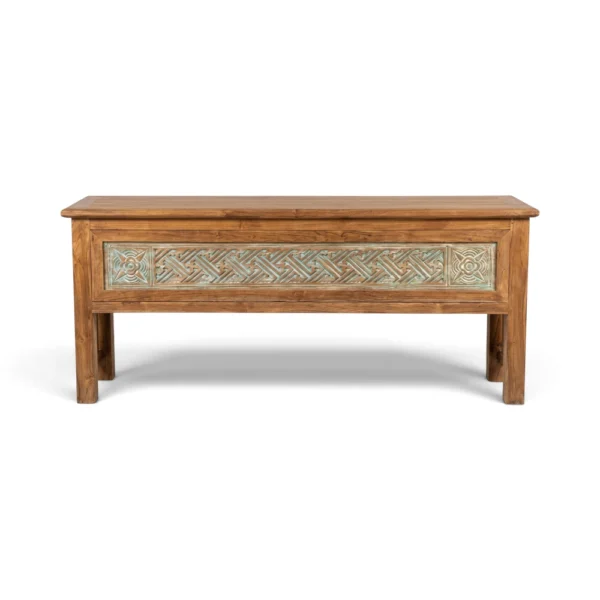
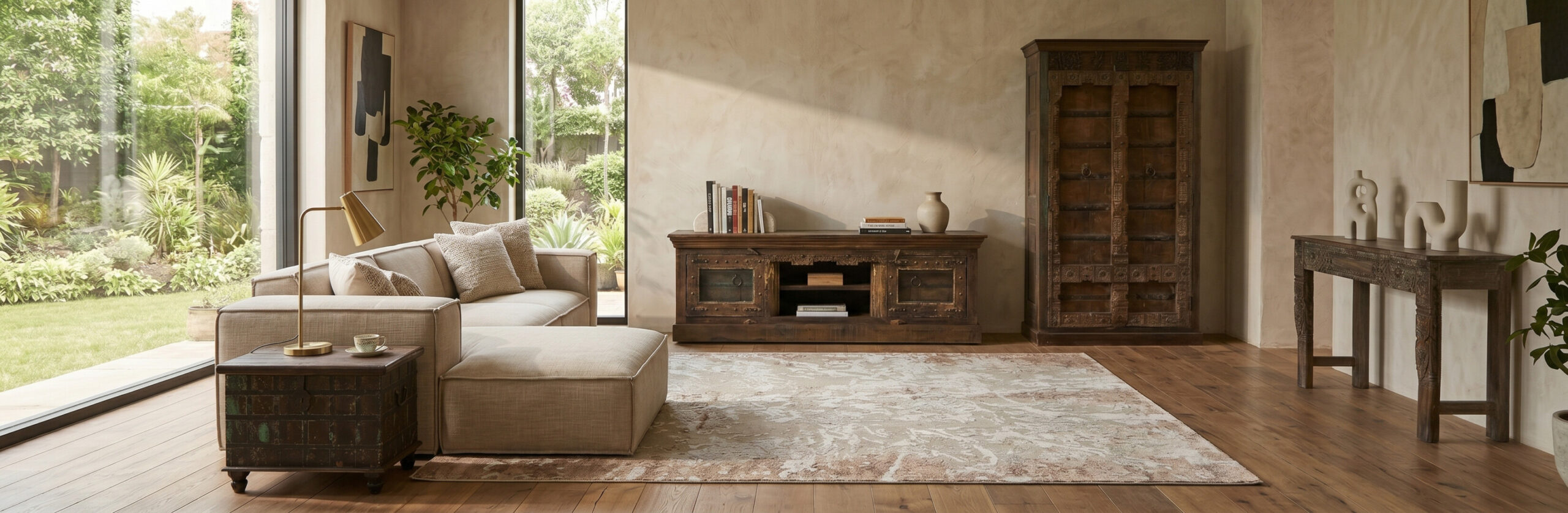
If one piece is going to do the work, it has to be the right piece. Sideboards and consoles are often the strongest entry point. A heavy mango or teak sideboard with hand-carved detailing, iron handles and a deep aged finish has a presence that very few other materials can match, and it gives a dining room or living room an immediate sense of weight and permanence. A characterful console in an entryway is often the first piece a visitor sees, and a rustic console sets the tone for everything behind it.
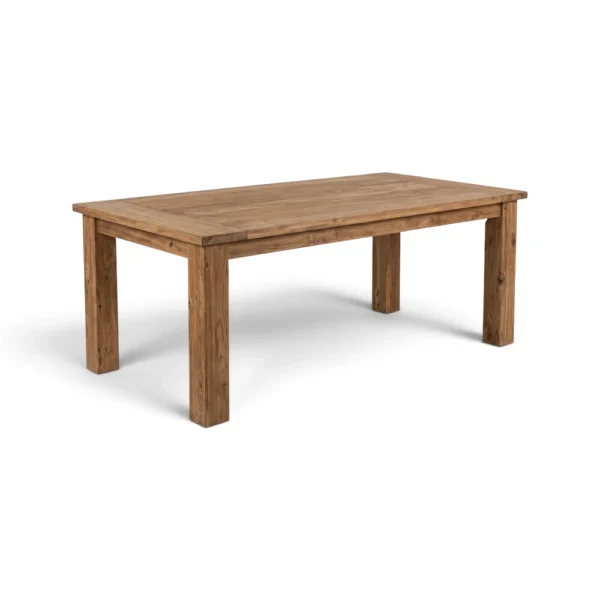
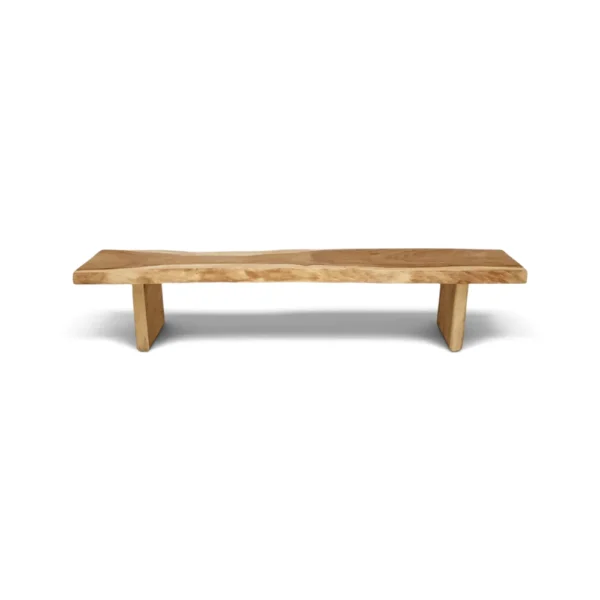
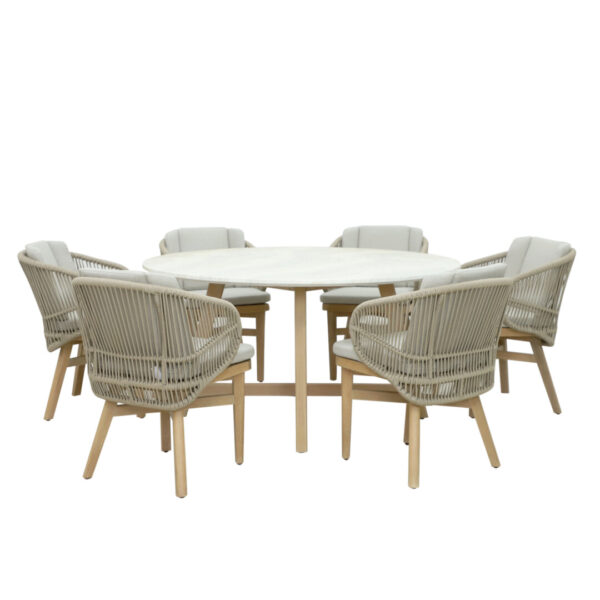
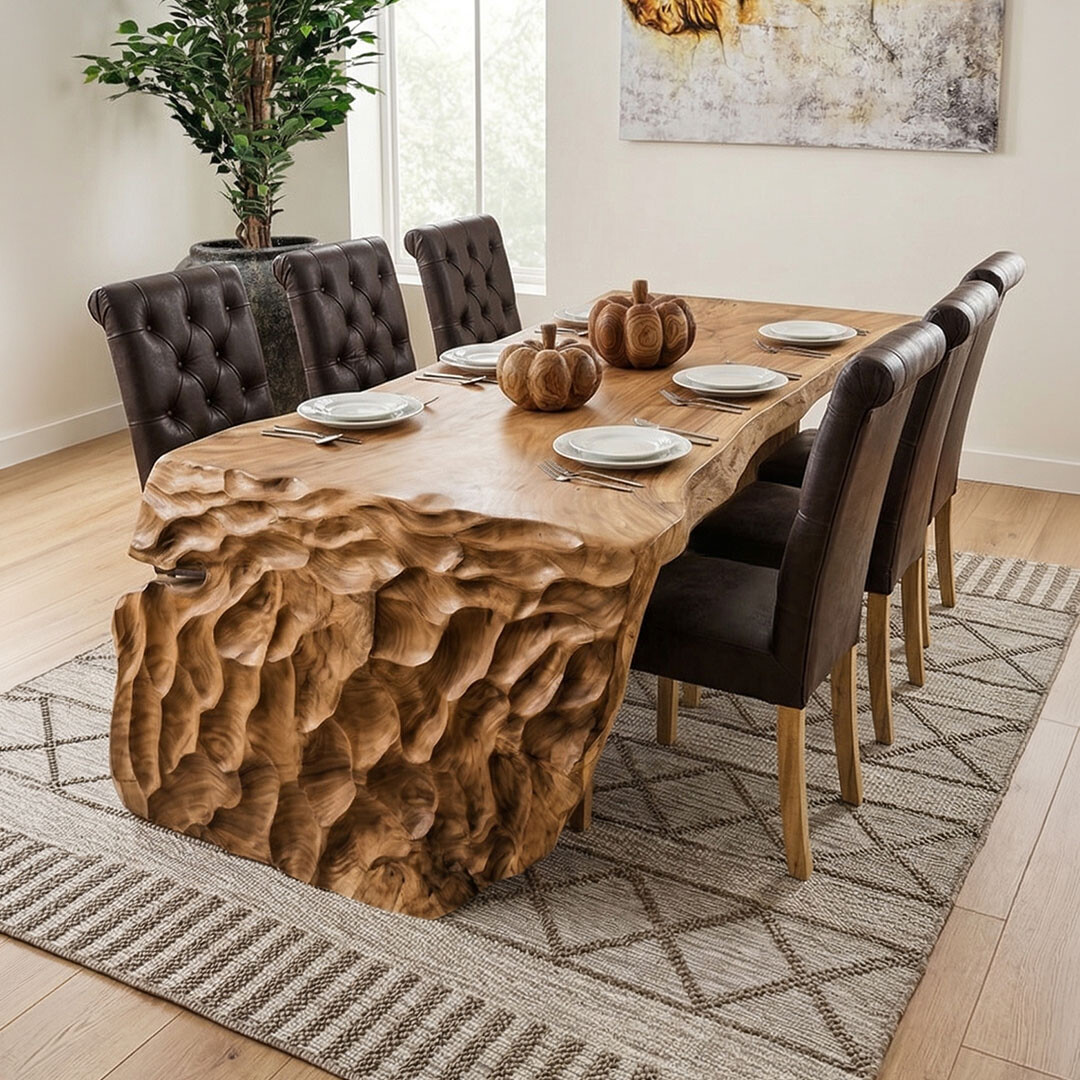
Dining tables in solid timber are another category where rustic craftsmanship leads. A thick-slab mango or teak dining table with visible grain and a slightly imperfect edge ages beautifully across family meals and Sunday lunches, and it carries the dining room without needing decorative help. Pair it with a dining bench for additional weight, or with simpler upholstered chairs for contrast.
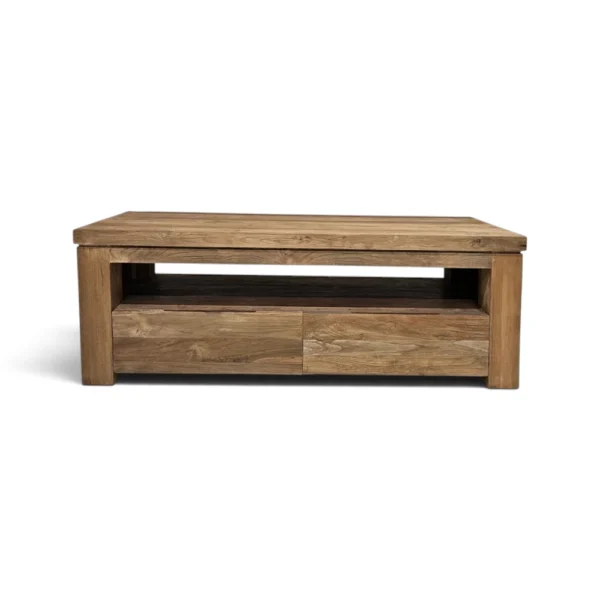
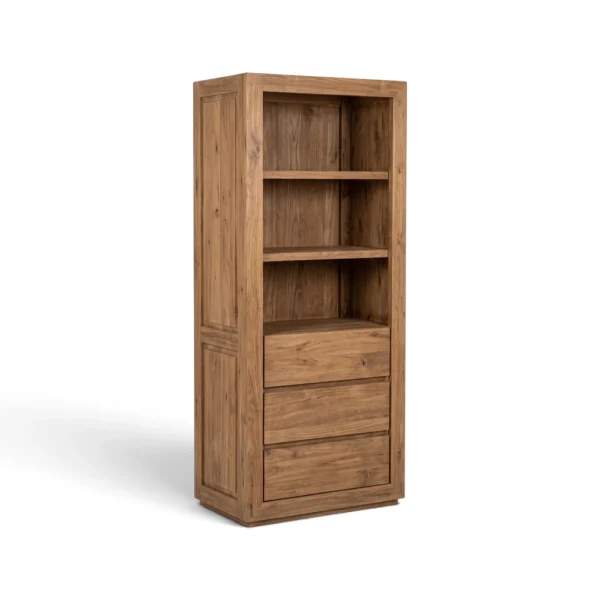
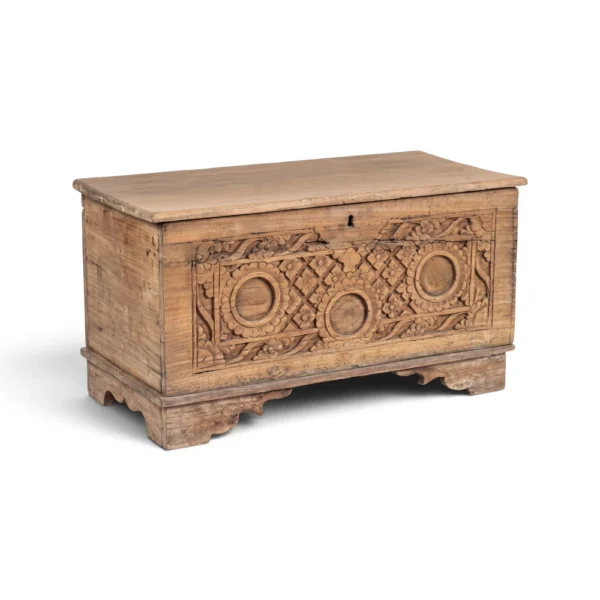
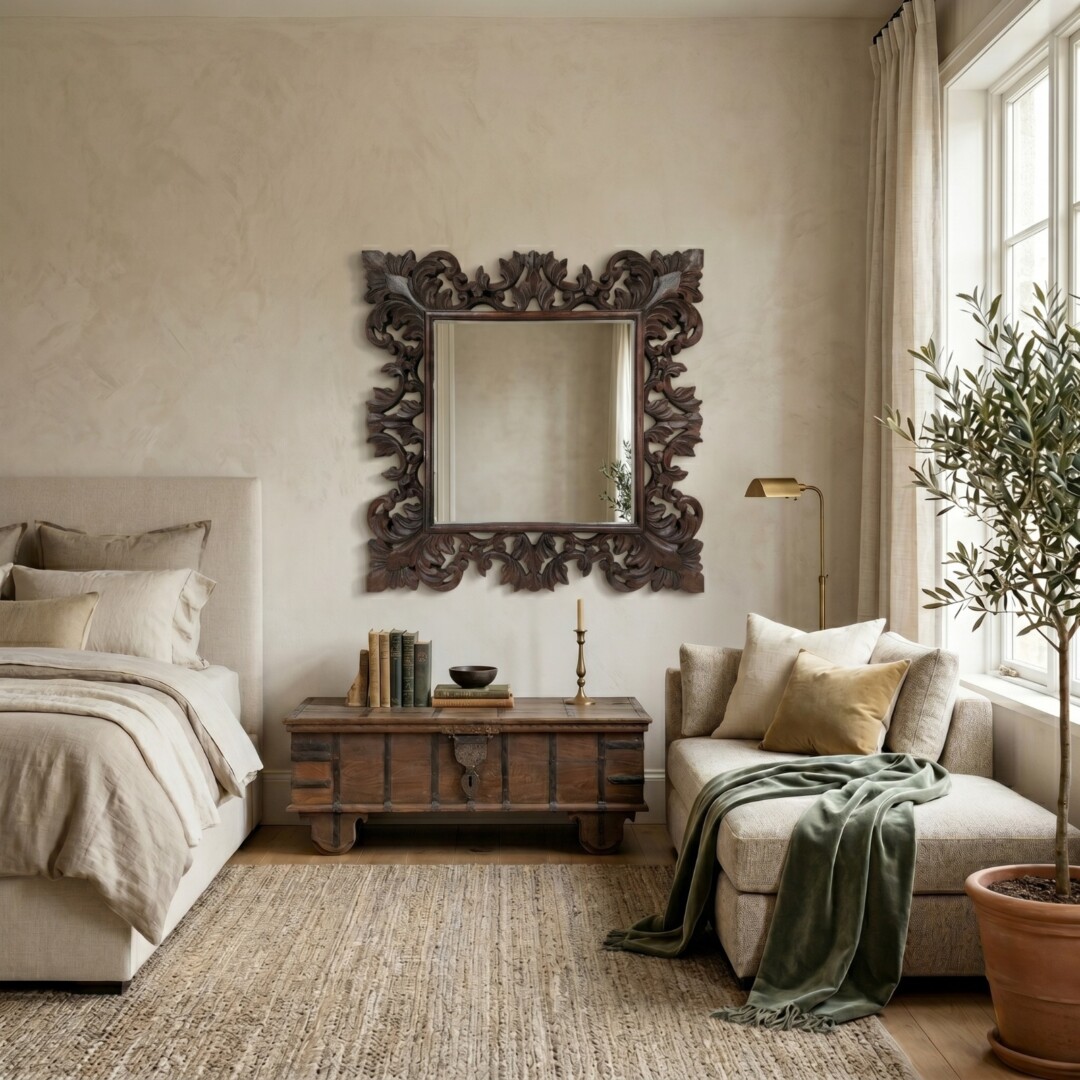
Storage pieces are a quiet strength of the category. Traditional iron-bound trunks, hand-carved cabinets and chunky bedside pedestals all carry the language well, and they bring real utility into a home alongside the visual character. The same is true of TV and media units in reclaimed or aged timber, which solve a very modern problem in a way that doesn’t look modern.
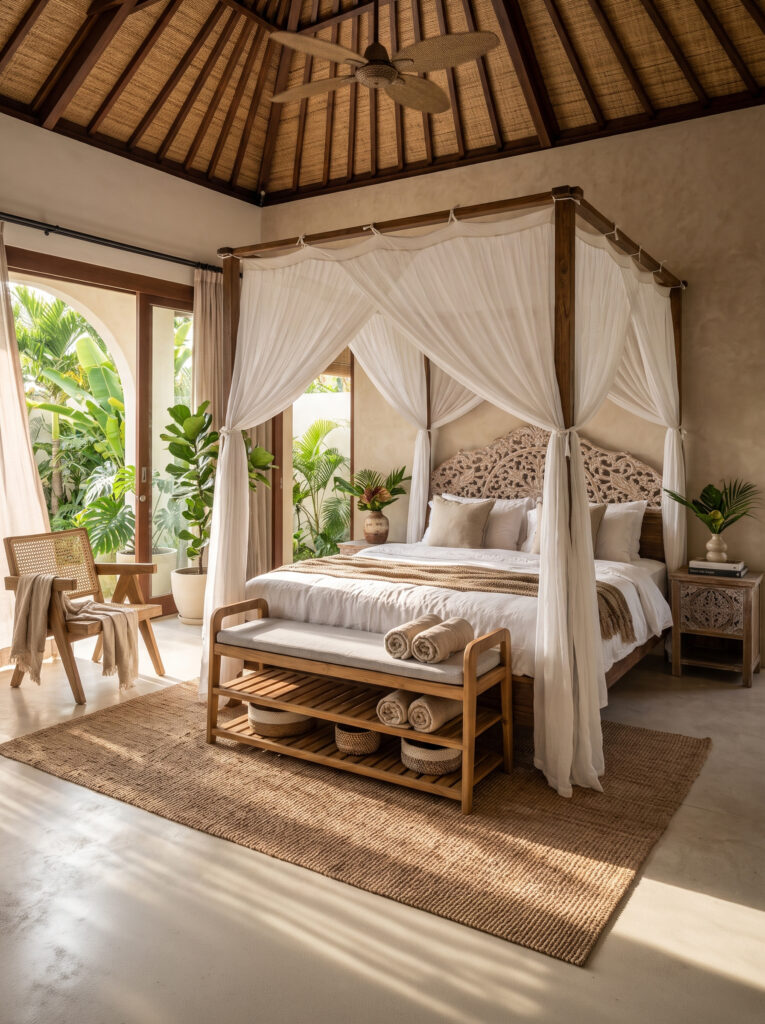
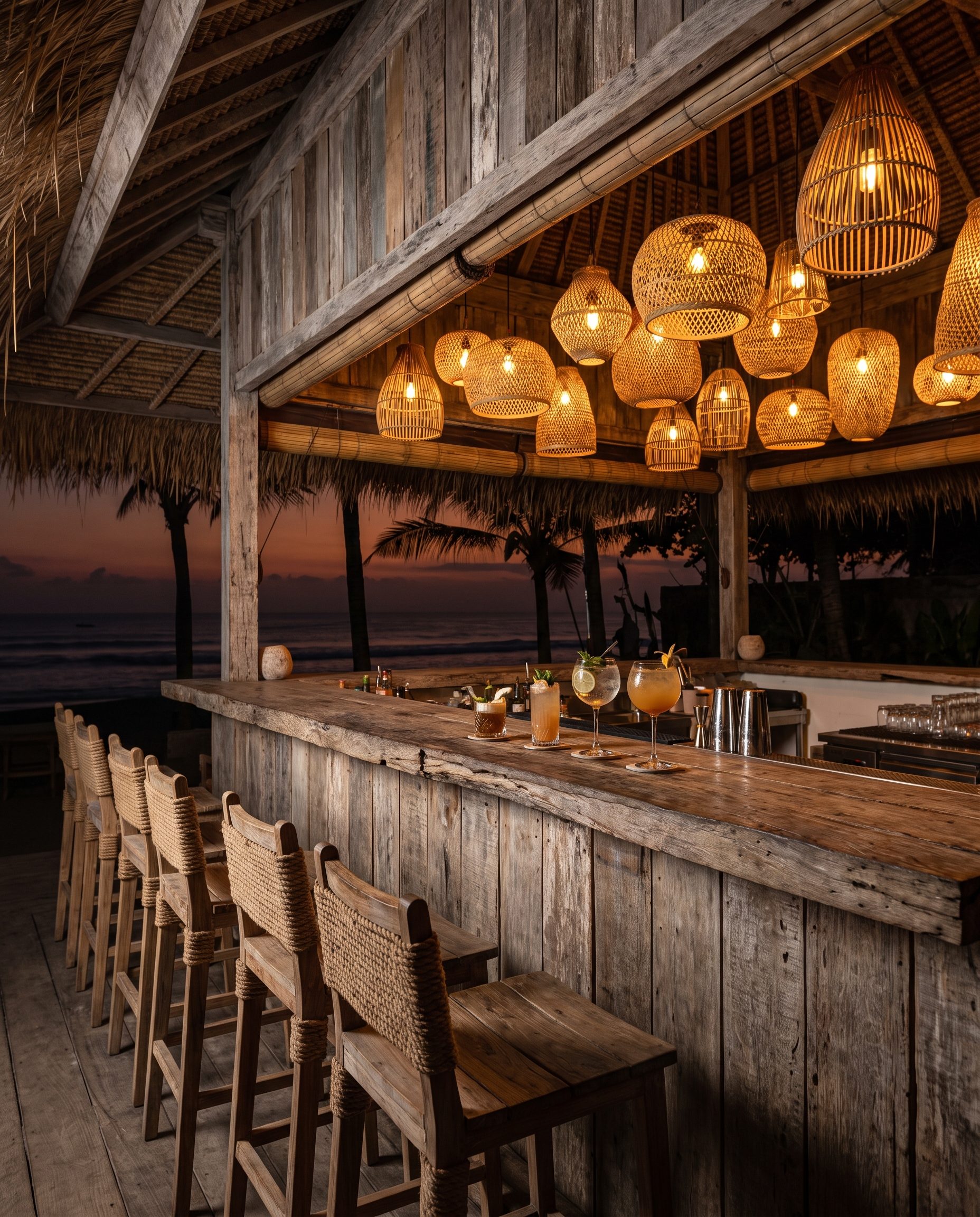
Smaller pieces have their place too, but they should never be the only rustic decision in a home. A recycled-timber bar stool with a slatted seat works as a supporting note next to a bigger anchor piece. A chunky bench at the foot of a bed adds character without committing the room. These pieces are best treated as company for an anchor piece, not as substitutes for one.
Where it can still go wrong.
Two mistakes recur. The first is buying rustic furniture that is too small or too light to carry the language. A delicate side table with a vaguely weathered finish isn’t really doing the work — it’s decorative. Real rustic furniture has weight to it. If you can lift it with one hand, it’s probably not doing the job rustic is meant to do. The second is the costume problem. When the sideboard is heavily carved, the dining table is reclaimed, the coffee table is distressed, the lighting is iron, the cushions are hessian and the walls are barn-board, the room reads as a stage set rather than a home. Almost always, the fix is to remove pieces rather than add them. One anchor, surrounded by quieter furniture, almost always reads stronger than five rustic pieces shouting at each other.
How to surround the anchor piece.
A few quiet principles run through every well-balanced rustic-influenced room. Once you see them, you stop spotting the homes that overdo it.
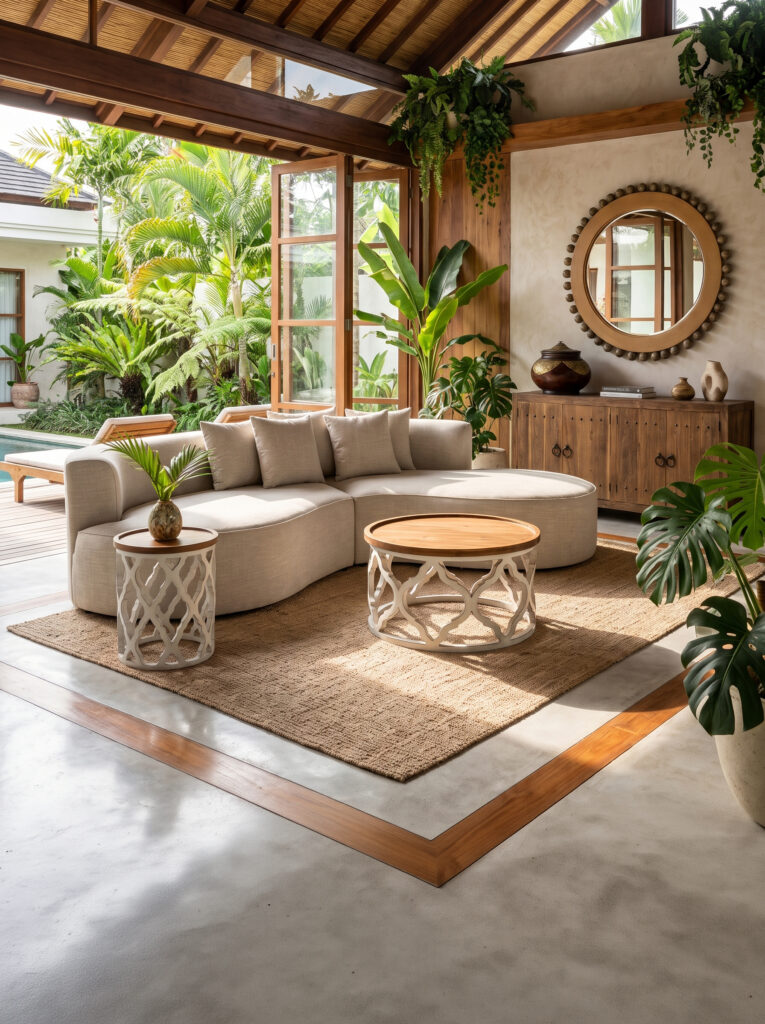
Décor follows the same principle. A well-placed mirror with a hand-carved timber frame, a few pots or vases in raw or distressed finishes, and a Mockana diffuser with a warmer scent profile can carry the language across the room without overdoing it. The goal is for the rustic pieces to feel like they’ve been gathered over time, not bought as a set.
Why the one-of-a-kind nature changes how you shop.
This is the part of the conversation that’s genuinely different to buying any other furniture. Because many of the rustic pieces are hand-carved or reclaimed, no two are identical, and the piece you fall for is, quite literally, the only one of that piece in existence. That changes the shopping rhythm. A sideboard you’ve been thinking about for two weeks may not be there in three. A reclaimed dining table with a particular grain pattern isn’t something you can come back to next month. That sounds like a sales-pressure line, and it would be — if it weren’t simply true of the category. The Sotran rustic range moves quickly for exactly this reason. If a piece is right, it’s worth acting on it.
Online or in-store.
Rustic furniture is one of the categories where seeing pieces in person genuinely helps. The weight, the timber, the hand-finished detailing and the scale all read more honestly in real materials and real light than they do on a screen. The Sotran showrooms in Boksburg, Fourways and Somerset West all carry the rustic furniture range in full room settings, and the team is happy to talk through pairing, scale and placement for the specific room you’re working with.
That said, the range also orders well online. Product pages include full dimensions, detailed photography and material information, and the team is available by WhatsApp, phone or email if you’d like to confirm scale or finish before ordering. Combined with nationwide delivery, this makes it straightforward to order from anywhere in South Africa. The team will also flag similar pieces if something has just sold out — which matters more in this category than in any other.
The piece you keep.
Most furniture is bought, used, and eventually replaced. Rustic furniture, chosen well, is bought and kept. It doesn’t go out of fashion because it was never quite in fashion. It doesn’t date because it was already old. It’s the piece in the home that gets passed to the next house, the next room, the next generation. That’s a different kind of buying decision, and it deserves a different kind of attention. The right piece, chosen with intent, will quietly anchor a home for years longer than the things bought around it. That’s the quiet reason rustic still earns its place in South African homes — and it’s why the Sotran rustic range is built around real timber, real craftsmanship and real one-of-a-kind character.
A few quick questions.
What woods are commonly used in rustic furniture?
Mango, teak, suar and reclaimed boat wood are the most common in the Sotran range. Each offers a slightly different grain, weight and ageing character. Mango is particularly well known for the depth of grain and the size of carved sideboards and dining tables it can produce. Reclaimed boat wood brings its own history and character, often with colourful slats and weathered finishes that no new timber can replicate.
Does rustic furniture suit modern South African homes?
Yes, often very well. Many contemporary South African homes have the light and scale that rustic furniture responds to. The key is selection rather than saturation — one or two confident pieces can transform a modern interior, while a fully rustic room can start to feel themed in a more minimalist architecture. Used as anchors against quieter contemporary furniture, rustic pieces give a home soul that purely modern interiors sometimes lack.
How do I stop my home from looking like a theme?
Lead with one anchor piece per room, balance solid timber with softer materials elsewhere, give the larger pieces space to be read properly, and resist repeating the language too often. The strongest rustic-influenced rooms feel gathered over time rather than bought as a set. Mixing rustic anchors with simpler contemporary furniture is one of the most reliable approaches.
Why are so many rustic pieces one-of-a-kind?
Because many of them are hand-carved, hand-finished or made from reclaimed timber, no two pieces share the same grain, the same carving or the same finish. That is part of why the category feels different to buy from. The piece you fall for is genuinely the only one of itself — which is also why the range moves quickly. If something is right, it’s worth acting on it.
How do I care for rustic furniture in our climate?
Solid hardwood and reclaimed timber furniture generally responds well to South African conditions, but it benefits from being kept out of direct, prolonged sunlight and from periodic care with the right wood treatment. Detailed care guidance is included with most pieces, and the Sotran team can advise on the right approach for the specific timber and finish you choose.
Can I shop the Sotran rustic range online?
Yes. The full rustic furniture range is available to browse and shop online, with nationwide delivery across South Africa. The team is available by WhatsApp, phone or email to talk through scale, finish or pairing before ordering — or to suggest similar pieces if something has just sold out. The range is also on display in our Boksburg, Fourways and Somerset West showrooms.