Peacock Oil Painting
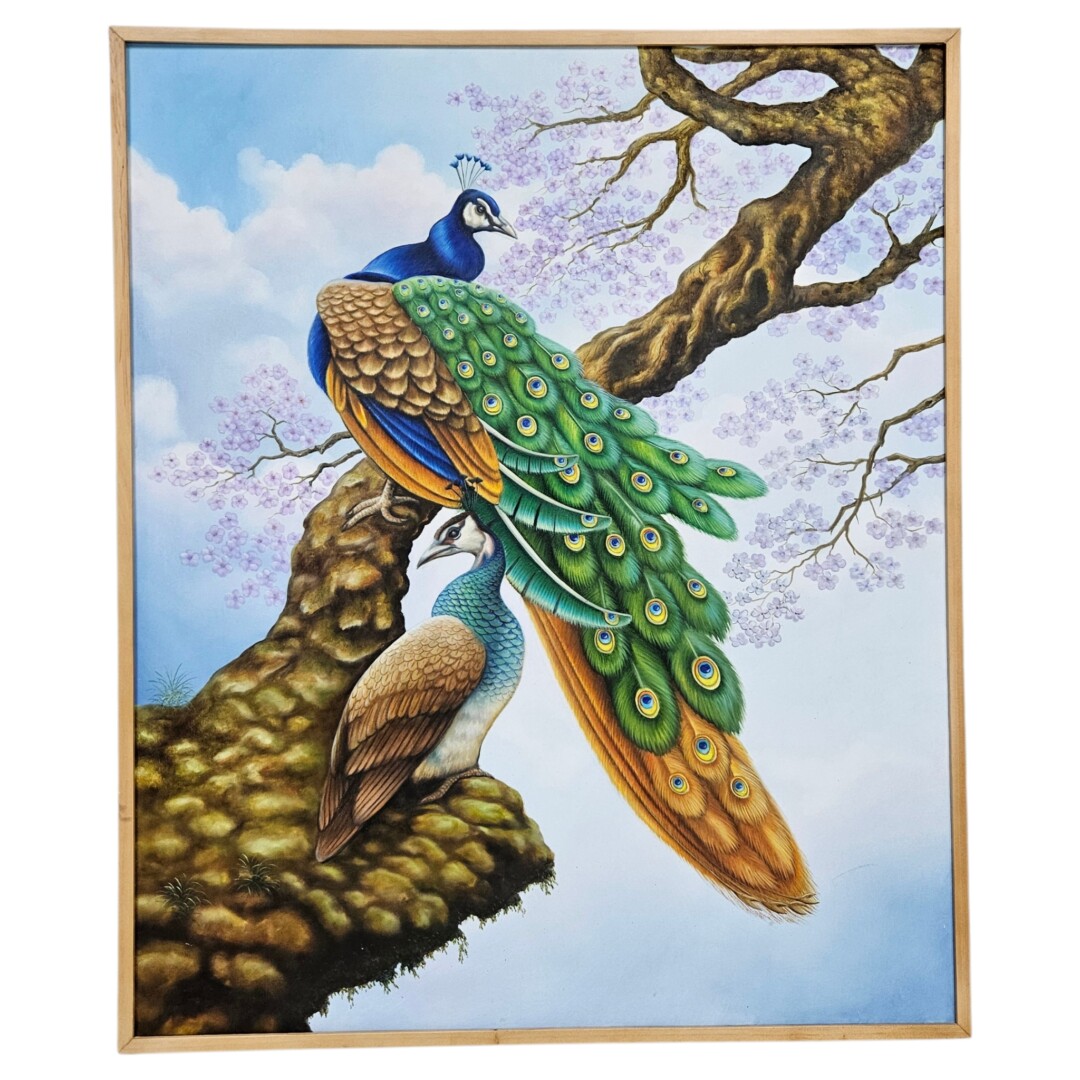
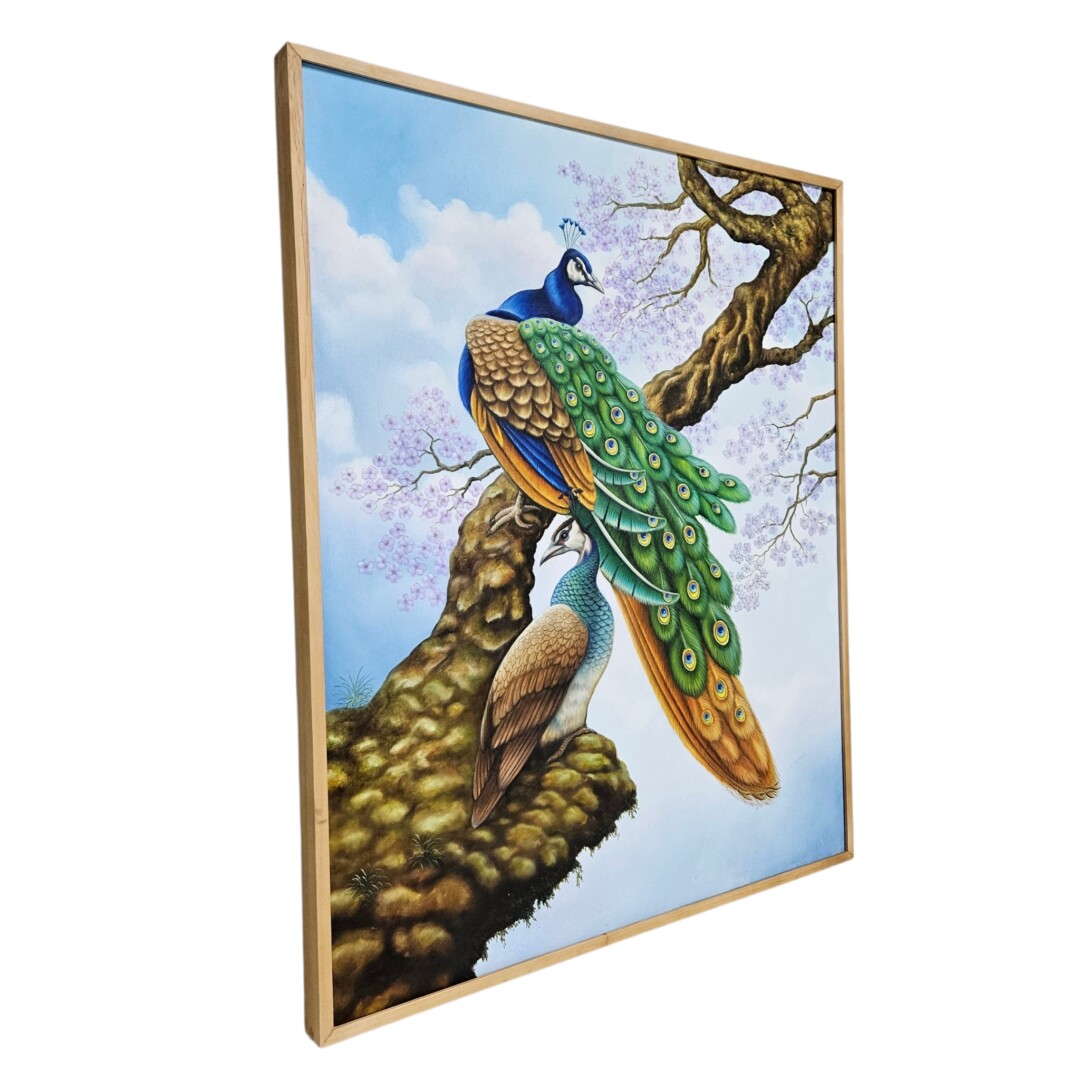
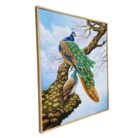
The Peacock Oil Painting is a 100 × 120cm hand-painted original oil work showcasing a pair of peacocks perched upon a rugged, moss-covered branch amidst delicate purple blossoms. The vibrant palette of cobalt blue and emerald green is rendered with the rich, smooth textures characteristic of oil paint, encased in a slim teak wood frame. As a hand-painted single original (1 in stock), the piece is genuinely one-of-a-kind rather than a print or reproduction, with each unit showing the brushwork and surface character of the artist’s hand.
– Dimensions: 100 × 4 × 120 cm (W × D × H)
– Format: 100 × 120cm canvas with 4cm teak frame depth
– Material: oil paint on canvas in solid teak wood frame
– Colour: cobalt blue and emerald green palette with purple blossom and moss-green branch detail, in warm honey brown teak frame
– One-of-a-kind: hand-painted original oil work, single unit not reproduced as a print
– Composition: pair of peacocks on a moss-covered branch with purple blossoms
– Style: traditional / classical decorative style
– Use: indoor wall display
– Suited to: formal living rooms, primary hallways, master suites, hospitality reception areas, and Classical Antique or Modern Boho interiors
- Estimated Delivery : 4 to 10 business days
A 100 × 120cm hand-painted original oil painting in a slim teak frame, showcasing a pair of peacocks on a moss-covered branch amidst purple blossoms in cobalt blue and emerald green
The Peacock Oil Painting brings a touch of regal beauty and natural wonder to interior wall display, featuring a detailed traditional style in a grand 100 × 120cm format. The composition serves as a focal centerpiece showcasing a pair of peacocks perched upon a rugged, moss-covered branch amidst delicate purple blossoms. The vibrant palette of cobalt blue and emerald green is rendered with the rich, smooth textures characteristic of oil paint, creating a soulful artisan quality that print reproductions cannot match.
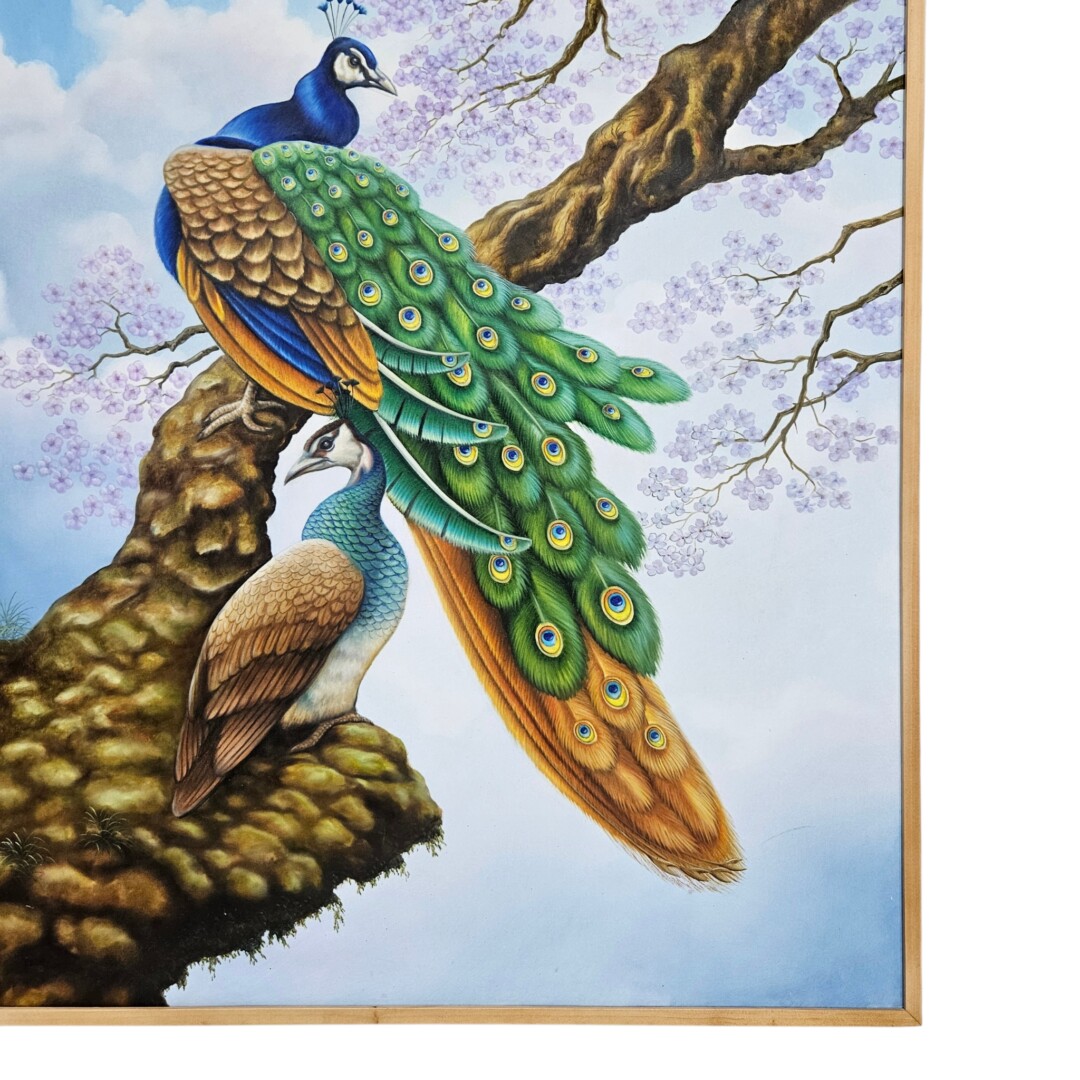
The hand-painted oil-on-canvas construction is the substantive value worth understanding. Most affordable wall art is printed: the original artwork is reproduced via inkjet, giclée, or transfer printing onto canvas or paper, with thousands of identical units produced from the source file. This piece works differently. Each Peacock Oil Painting is hand-painted by an artist working in oils on canvas, with the brushwork, layering, paint thickness, and colour mixing all done by hand for this specific painting. The result is genuinely one-of-a-kind rather than a print, with the surface showing the texture, depth, and individual artist’s hand that printed reproductions cannot replicate. At this price point (R2,970), buyers receive an original oil painting rather than a printed reproduction at similar pricing.
The composition is a classical decorative subject. A pair of peacocks (a male in full plumage, with the iconic eye-spotted tail feathers, and a partner) perch upon a rugged moss-covered branch, surrounded by delicate purple blossoms that read against the deeper greens and blues of the foliage and feathers. Peacocks carry rich symbolism across multiple cultural traditions: Hindu (associated with Krishna, Saraswati, Kartikeya), Persian (royal symbol of paradise gardens), Chinese (beauty, dignity, prosperity), Greek (Hera, immortality), Christian (resurrection). The piece draws on this broad cross-cultural decorative vocabulary rather than authentic to any single tradition, working as ornamental art that signals classical decorative styling without committing to specific cultural reference.
The cobalt blue and emerald green palette is the colour vocabulary worth understanding. Peacock plumage in nature shows iridescent blues and greens that shift with viewing angle, and the painting captures this with deep cobalt blue body tones, emerald green tail feathers, and the distinctive eye-spot patterns rendered in metallic-tone highlights. The colour palette reads richly against typical wall colours (cream, soft white, warm grey, dusty pink, sage green), with the deep saturated tones standing out as the focal styling moment of any wall they hang on. The purple blossoms add complementary colour weight to the composition, giving the eye additional points of colour interest beyond the central peacock figures.
The teak wood frame is the framing choice that elevates the painting from canvas to finished wall art. Teak is among the most durable framing hardwoods, with the warm honey brown tone complementing both the warm colours of the painting (purple blossoms, moss greens) and the cooler colours (cobalt blues). The slim profile of the frame keeps visual focus on the painting itself rather than the framing, with the teak character providing quality framing finish that softer wood alternatives (pine, MDF wrap) cannot match.
The 100 × 120cm format puts this at primary statement wall art scale. The 1m width and 1.2m height combine to occupy substantial wall area, suiting walls of 3m+ width for proper proportional balance. At smaller wall scales, the painting would crowd the visual space; at this format, the composition reads clearly with the proportions the substantial subject demands. The 4cm depth (frame plus canvas) means the painting projects modestly from the wall without dominating the space depth.
This is a piece for buyers who want a genuine hand-painted original oil work with primary statement wall scale, classical decorative subject matter, and warm-toned teak framing, suited to formal living rooms, primary hallways, master suites, and Classical Antique or Modern Boho interiors with a layered, traditional, or eclectic styling sensibility.
Why hand-painted oil and the teak frame work together
Two design choices on this piece, the hand-painted oil-on-canvas construction and the solid teak wood frame, do work that printed reproductions or composite-frame alternatives cannot match.
Hand-painted oil shows surface texture and depth that prints cannot replicate. Inkjet, giclée, and transfer-printed reproductions create flat colour surfaces with no physical paint texture. Oil paint works differently. The paint is applied with thickness, layering, and brushwork that creates physical texture across the canvas, with the eye reading the paint’s three-dimensional surface rather than the flat plane of a print. From across the room, prints and oil paintings can look similar; up close, the difference becomes obvious. The hand-painted surface shows the artist’s brushwork, the paint’s layered depth, and the slight variations that come from working in oil rather than printing from a digital file.
Solid teak framing finishes the painting as premium wall art rather than basic decor. Cheap framing (MDF wrap, vinyl-coated composite, thin plastic) reads as basic wall art regardless of what’s inside the frame. Solid wood framing works differently. The teak frame’s warm honey brown tone, dense hardwood weight, and natural grain character all signal premium wall art at any viewing distance. The slim profile of this frame keeps the focus on the painting, with the teak serving as a finished edge rather than a competing visual element.
The genuine one-of-a-kind nature distinguishes this from print reproductions sold at similar prices. The wall art market is dominated by prints and reproductions: a digital source file is printed thousands of times onto canvas or paper, with every “edition” identical to every other. Buyers paying R2,000 to R3,000 for wall art typically receive printed reproductions. This piece works differently. The single unit in stock is hand-painted: not from a digital file, not reproduced from a master, not one of multiple editions. The painting is the only one of its specific composition, brushwork, and colour application in existence. For buyers who care about owning an original work rather than a printed reproduction, the distinction is genuine.
What to pair the Peacock Oil Painting with
The cobalt blue and emerald green palette and the warm teak frame coordinate cleanly with several pieces in the broader Sotran range.
With other Paintings for layered wall art arrangements. Browse our Paintings collection for additional original and decorative wall art pieces. Multiple paintings across a single wall (gallery-style hanging) or across coordinated walls in a room build a layered wall art vocabulary, with the substantial Peacock painting serving as the primary statement piece anchored by smaller works.
With Wall Mirrors for layered wall styling. Browse our Wall Mirrors collection for mirrors to position alongside or near the painting placement. The reflective surface of a mirror catches the cobalt and emerald tones from the painting, building a layered wall vocabulary that combines reflective and painted surfaces.
With Couches and Armchairs for primary lounge wall placement. Browse our Couches and Arm Chairs collections for seating that the painting hangs above as the focal wall moment. The substantial 100 × 120cm scale suits the wall above a 2-3 seater couch or behind a primary lounge seating arrangement, with the painting anchoring the lounge as the focal styling moment.
With Cushions and Throws for colour palette coordination. Browse our Cushions and Throws collections for soft furnishings in cobalt blue, emerald green, purple, or warm-toned vocabularies that pull colour from the painting into the broader room palette. Mixed-pattern soft furnishings echoing the painting’s tones build a coordinated room styling without literal matching.
With Pots & Vases for layered tabletop styling below the painting. Browse our Pots & Vases collection for vessels to position on console tables, sideboards, or surfaces below the painting. Larger ornamental vases in coordinated tones build vertical styling layers from the surface up to the painting at wall level.
In a Classical Antique or Modern Boho style. The traditional style of the painting suits Classical Antique interiors specifically (formal furniture, traditional decorative vocabulary, layered ornamental styling), while the rich colour palette and the cross-cultural peacock symbolism also work in Modern Boho interiors (eclectic, layered, mixed-cultural sensibilities). Browse our Classical Antique and Modern Boho ranges for furniture and decor that share these styling sensibilities.
Caring for hand-painted oil paintings
Oil paintings are durable but the painted surface and the canvas mounting benefit from the right care routine to maintain the artistic and structural integrity over decades.
Dust the painting surface very lightly with a soft dry brush (a clean, soft-bristled artist’s brush works well) every few months. Avoid pressing on the canvas surface, since pressure can affect the paint layers and the canvas tension over time.
Avoid wiping the painted surface with a damp cloth. Oil paint can react with water and household cleaners, with damage to the surface affecting the artistic value and longevity. If the surface needs cleaning beyond light dusting, consult a professional art conservator rather than attempting cleaning at home.
For the teak wood frame, dust with a soft dry cloth as part of the regular dusting routine. A light wipe with a barely-damp cloth handles surface marks on the frame, but avoid moisture against the canvas itself.
| Dimensions | 100 × 4 × 120 cm |
|---|---|
| Product Assembly | No Assembly Required |
FAQ
Is this an original oil painting or a print?
This is a hand-painted original oil painting on canvas, not a print or giclée reproduction. The painting is one of one — a single unit, not produced as multiple editions. The brushwork, paint layering, and colour application were all done by hand for this specific painting, with the canvas surface showing the texture and depth that distinguishes oil paintings from printed alternatives.
What does the composition show?
A pair of peacocks perch upon a rugged, moss-covered branch amidst delicate purple blossoms, rendered in cobalt blue and emerald green with rich oil paint textures. The traditional decorative style draws on broad peacock-motif vocabulary that appears across multiple cultural traditions (Hindu, Persian, Chinese, Greek, Christian) without representing any single tradition specifically.
What size wall does the painting suit?
The 100 × 120cm format suits walls of 3m+ width for proper proportional balance. Above a 2-3 seater couch (typically 180-220cm wide), the painting reads as the focal wall art moment. On narrower walls (under 2.5m), the substantial scale crowds the available space; on broader walls (3.5m+), additional smaller pieces can flank the central painting in a layered gallery arrangement.
Is the teak frame solid wood or veneer?
The frame is solid teak wood. Teak is among the most durable framing hardwoods, with warm honey brown tones complementing the painting's colour palette. The slim profile keeps focus on the painting while finishing the canvas with quality framing that veneer or composite alternatives cannot match.
You may also like…
-
Cello Player Acrylic Painting
Original price was: R3295.R2800,75Current price is: R2800,75.1 in stock
-
Eagle In Flight Acrylic Painting
Original price was: R3895.R3310,75Current price is: R3310,75.1 in stock
-
Lion Resting Acrylic Painting
Original price was: R5995.R5095,75Current price is: R5095,75.1 in stock
-
Dusty Winter Acrylic Painting
Original price was: R3995.R3395,75Current price is: R3395,75.1 in stock
-
Ladies & Flowers Acrylic Painting
Original price was: R2895.R2460,75Current price is: R2460,75.1 in stock
-
Autumn Trees Acrylic Painting
Original price was: R3195.R2715,75Current price is: R2715,75.1 in stock
 Lion Gazing Oil Painting