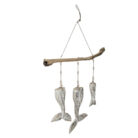
Wooden Hanging Whale Tail Decor
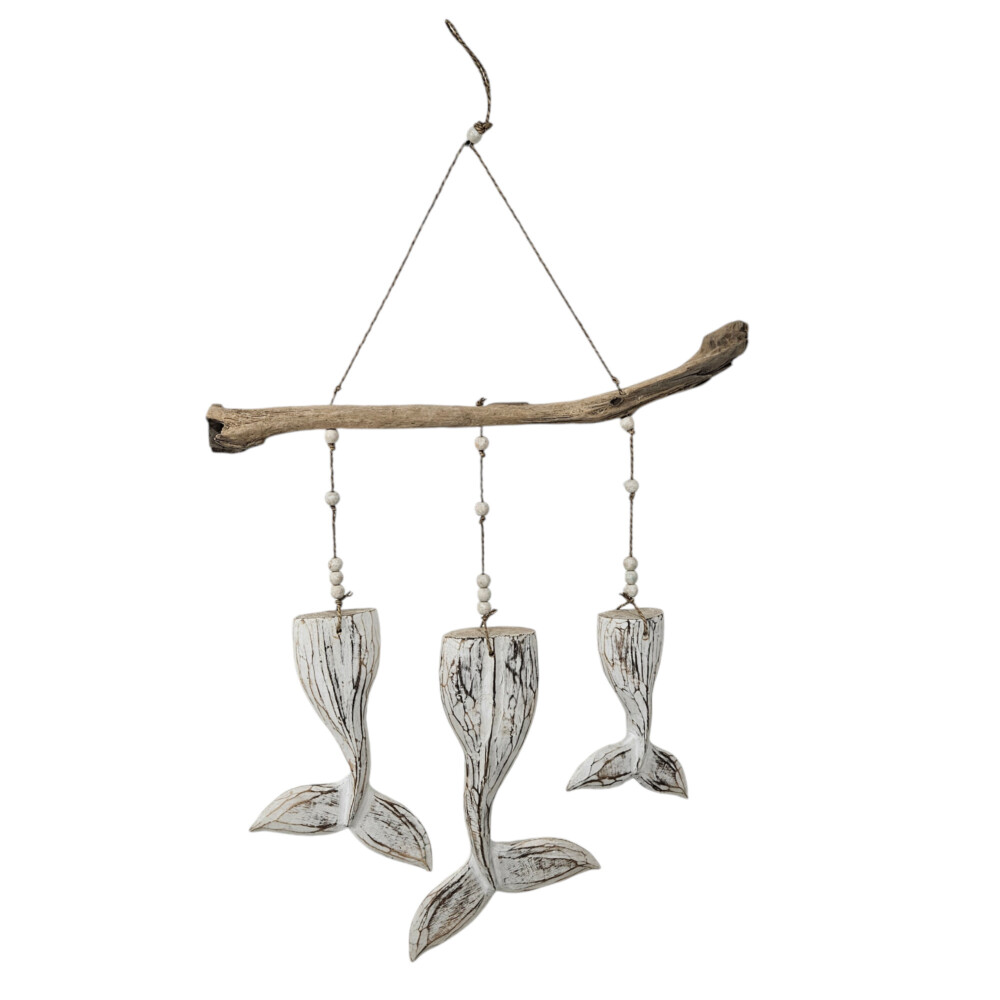
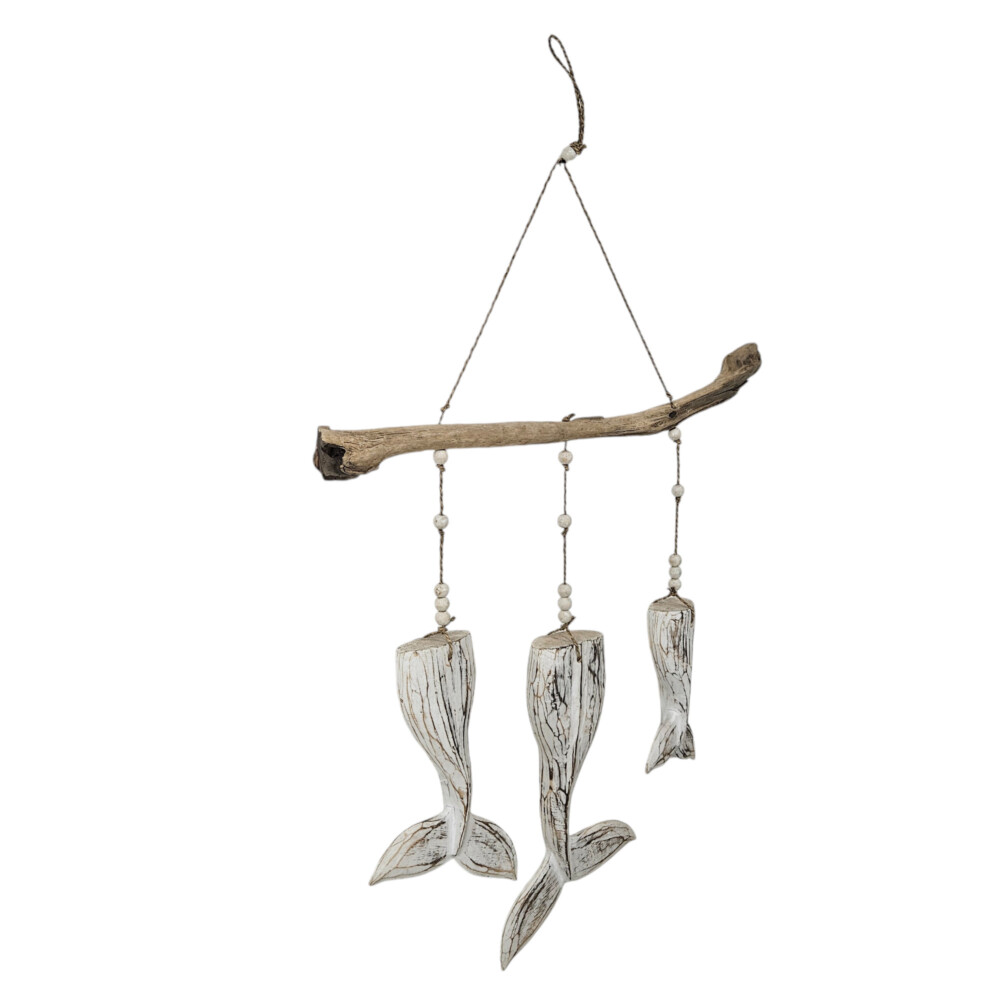
A 120cm-wide horizontal wall hanging featuring three carved white-washed wooden whale tails suspended from a natural branch with simple string and small bead detailing. A coastal mobile-style piece that combines hand-craft and natural materials into one of the most quietly recognisable maritime motifs in decor.
– Dimensions: 120 × 80 cm (W × H)
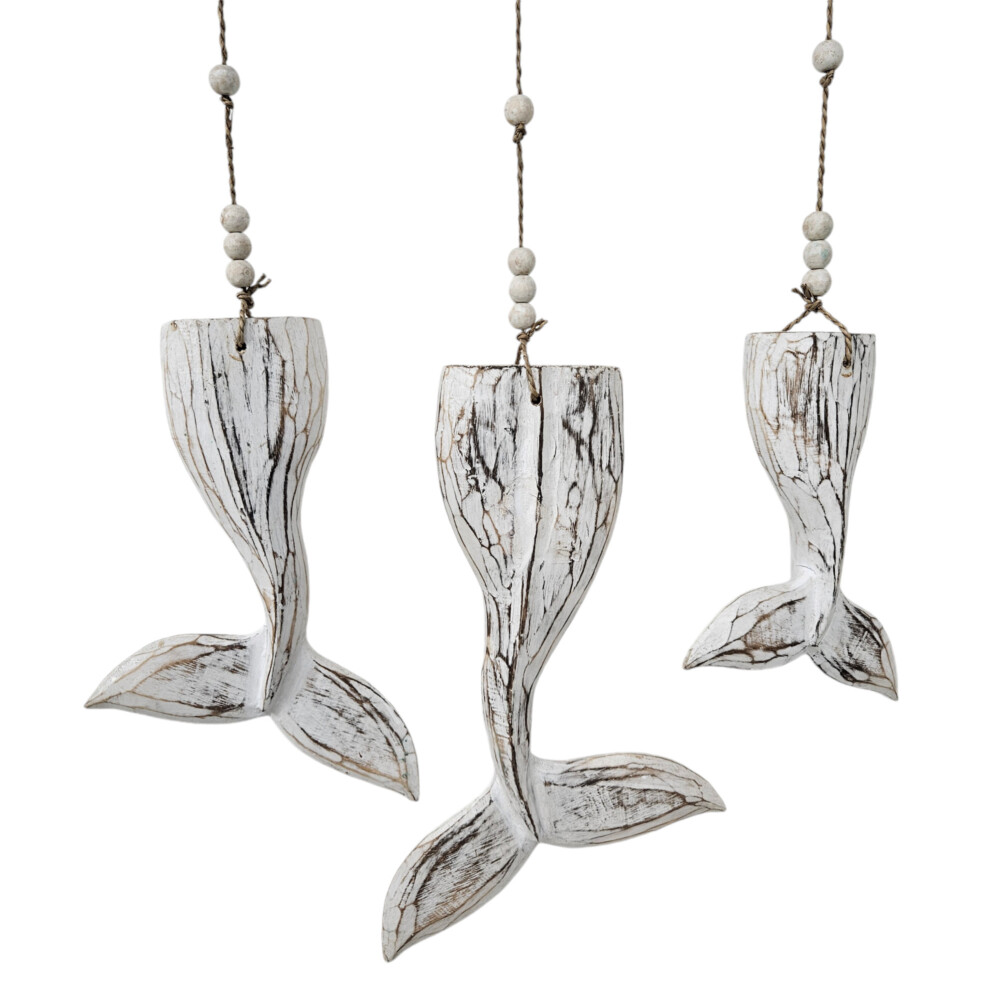
– Three carved wooden whale tails on a natural branch
– White-washed distressed wood finish
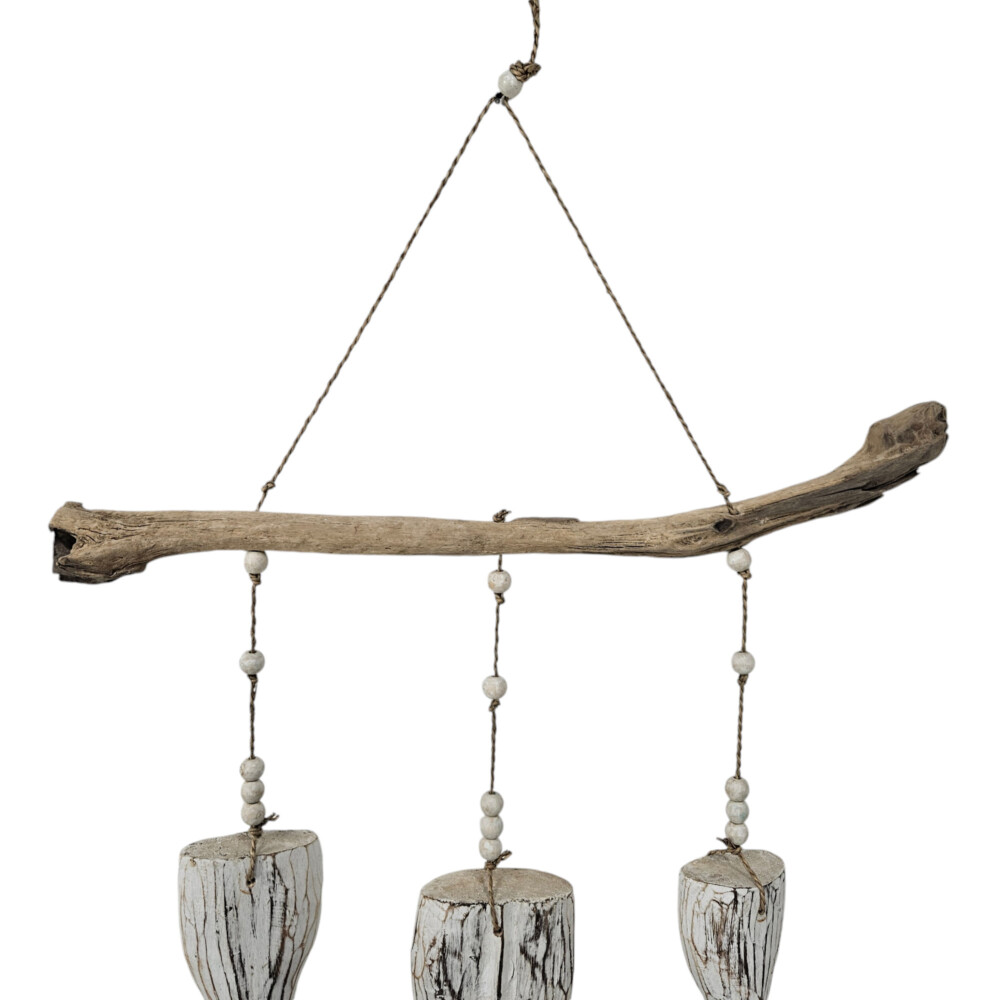
– Suspended by string with small bead detailing
– Natural variation in branch shape — each piece is unique
– Suited to Beach Cottage, Modern Tropical and coastal-influenced interiors
– Indoor placement; covered outdoor use also possible
- Estimated Delivery : 4 to 10 business days
A horizontal hanging wall decor with three carved white-washed wooden whale tails
The whale tail — specifically the fluke that breaks the surface as a whale dives — is one of the most universally recognised images in marine imagery. Whale-watching tours across the world use the fluke silhouette as their visual identifier. Marine conservation organisations have built their branding around it. The image carries instant recognition across cultures because the fluke is genuinely the most photographed and most distinctive moment of a whale’s surface behaviour: the body has already disappeared underwater, only the tail remains briefly visible, and then it too is gone. The form has become shorthand for a certain kind of quiet awe at the sea — a fleeting moment of contact with something vast and intelligent that lives in a world adjacent to ours. As a decor motif, the whale tail carries all of that symbolic weight in an instantly readable silhouette.
The Wooden Hanging Whale Tail Decor is a substantial 120 × 80 cm horizontal wall piece built around three carved wooden whale tail fluke shapes, each suspended by string at varying lengths from a single natural wooden branch. The carved tails are finished in a soft white-washed distressed wood that catches the coastal-decor vocabulary cleanly. Small wooden beads detail the suspension strings. The natural branch at the top of the composition is genuinely natural — meaning each piece has its own slightly different branch shape, knot pattern and surface character. The result reads as a curated mobile rather than as a manufactured wall ornament: deliberately sculptural, slightly varied, anchored in the natural world it references.
Why a whale tail silhouette works as decor
The form does specific work that other wall decor cannot replicate. A few things worth understanding.
It is unmistakable from across the room. Most abstract decor needs proximity to read clearly — visitors approach to work out what they’re looking at. The whale tail silhouette is recognised instantly from any viewing distance. Visitors entering a room with this piece on the wall identify the form before they have time to consciously process it. This immediate readability is one of the things that makes the motif so consistently popular as decor.
It carries gentle environmental and conservation weight without preaching. The whale tail is also the foundational visual of marine conservation movements (Greenpeace, Sea Shepherd, whale-watching ecotourism, ocean advocacy generally). Hanging the form in a home signals quiet alignment with marine awareness without committing to any specific organisation or political stance. The piece reads as considered care for the natural world rather than as activism — exactly the right register for most homes.
The three-tail composition adds movement and visual rhythm. A single whale tail would be a static object. Three tails arranged at varying heights from a single branch suggest motion — fluking surface activity, family pod movement, the ocean’s continuous animation. The composition reads as alive in a way single sculptural pieces don’t.
Why white-washed wood is the right finish for this piece
The colour and material choices on coastal decor matter as much as the form. A few things about the white-wash treatment are worth understanding.
It evokes weathered driftwood without being literal. The white-washed finish references the natural appearance of wood that has been bleached by years of sea and sun exposure — driftwood washed up on beaches, weathered fishing-boat timbers, sun-bleached coastal cottages. The reference is recognisable without the piece needing to actually be made from driftwood (which would be variable, often unsuitable for indoor decor, and typically much harder to source).
It bounces light into the surrounding room. Where dark-stained wood absorbs the surrounding light, white-washed wood reflects it. For coastal interiors that lean toward bright, light-filled palettes (rather than warm-traditional schemes), this matters significantly — the piece becomes part of the room’s general light-bouncing character rather than absorbing the brightness around it.
The distressed character invites natural ageing. Where a perfectly-finished glossy alternative would degrade with the inevitable small marks of being lived with, distressed white-wash absorbs those marks into the existing patina. Small dings and gentle wear become part of the character of the piece rather than damage to it. For a wall decor piece intended to hang for many years, this forgiveness matters.
Where this hanging works best
The 120 × 80 cm horizontal scale and coastal vocabulary suit specific placements within a styled home.
Above a couch in a coastal lounge or beach-cottage living room. The most natural placement. Hang centred above a substantial 2-seater or 3-seater couch, with the bottom edge of the natural branch approximately 20–25 cm above the back of the sofa. The horizontal sweep of the piece visually balances the horizontal line of the couch beneath it — one of the most reliable wall-art-and-furniture combinations in interior design.
Above a bed as a soft alternative to a headboard or framed art. Position centred above a queen or king-size bed, with the bottom of the branch approximately 25–35 cm above the headboard or pillow line. The gentle natural materials and quiet motion of the whale tails read as calming over a bed in a way that more substantial framed art often doesn’t.
In an entryway or hallway as the welcome statement. Position centred on a substantial entry wall, or above an entrance console. The instantly readable coastal motif sets a clear tone for visitors on arrival — making the home’s design vocabulary immediately apparent.
In a covered outdoor space — patio, porch, balcony. The natural-materials construction works in covered outdoor placements that aren’t directly exposed to weather. Particularly effective on a beachside or coastal property’s covered entertainment patio. Worth being honest: direct rain, strong sun and high salt-air exposure will degrade the piece over years, so genuinely outdoor placement is best avoided in favour of covered outdoor placement.
In a guest room or holiday-home bedroom. The coastal vocabulary suits guest rooms in beach houses, holiday rentals, and homes that occasionally host visitors. The piece reads as considered hosting decor — making guest spaces feel purposefully styled rather than functionally generic.
In a bathroom with proper ventilation. The coastal motif and water-related symbolism make the bathroom one of the most thematically appropriate placements. Position above the bath itself, on the wall opposite the vanity, or above a bathroom bench. Worth knowing: bathrooms with regular shower steam will degrade the wood finish over years, so this works best in well-ventilated bathrooms or those used primarily for baths rather than long hot showers.
A note on installation and natural variation
The piece needs a single wall mounting point at the top — typically the natural branch can be hung from a single substantial picture hook or a small wall hook rated for the weight. Confirm the wall material before installation: for drywall, a proper picture hook (rather than a basic nail) handles the weight reliably; for brick or masonry, an appropriate wall anchor is needed. Once hung, the three whale tails will hang naturally at varying lengths — minor adjustments to the strings can fine-tune the composition if needed.
Worth noting: because the natural branch is genuinely natural, the precise shape and character of the branch on your piece will differ slightly from the photographed example. The exact length of the branch, the small knots and surface variations, and the precise hanging proportions of the three whale tails are all unique to your specific piece. This is part of what gives the work its hand-crafted character rather than its mass-produced feel.
What this piece pairs with
The coastal vocabulary and substantial scale set up specific pairings across the Sotran range. The piece is foundational to Beach Cottage interiors — browse the broader tag for furniture and decor that share the soft coastal aesthetic. It works comfortably alongside other items in the broader Wall Art and Decorative ranges — particularly other natural-material wall pieces and coastal-themed decor including the wooden octopus bottle holder, fish wall panels, and other maritime-influenced pieces. The white-washed timber ties to other items in the broader Baskets range and natural-fibre Textiles — the shared organic-natural vocabulary builds a coherent layered scheme. For complete styled walls, position alongside or beneath pieces from the Wall Mirrors range — particularly round white-framed mirrors that share the coastal vocabulary. The piece is also tagged as a Thoughtful Gift — particularly suited to coastal homeowners, marine conservation enthusiasts, holiday-house owners, and recipients with a love of natural-material craft decor.
| Dimensions | 120 × 80 cm |
|---|