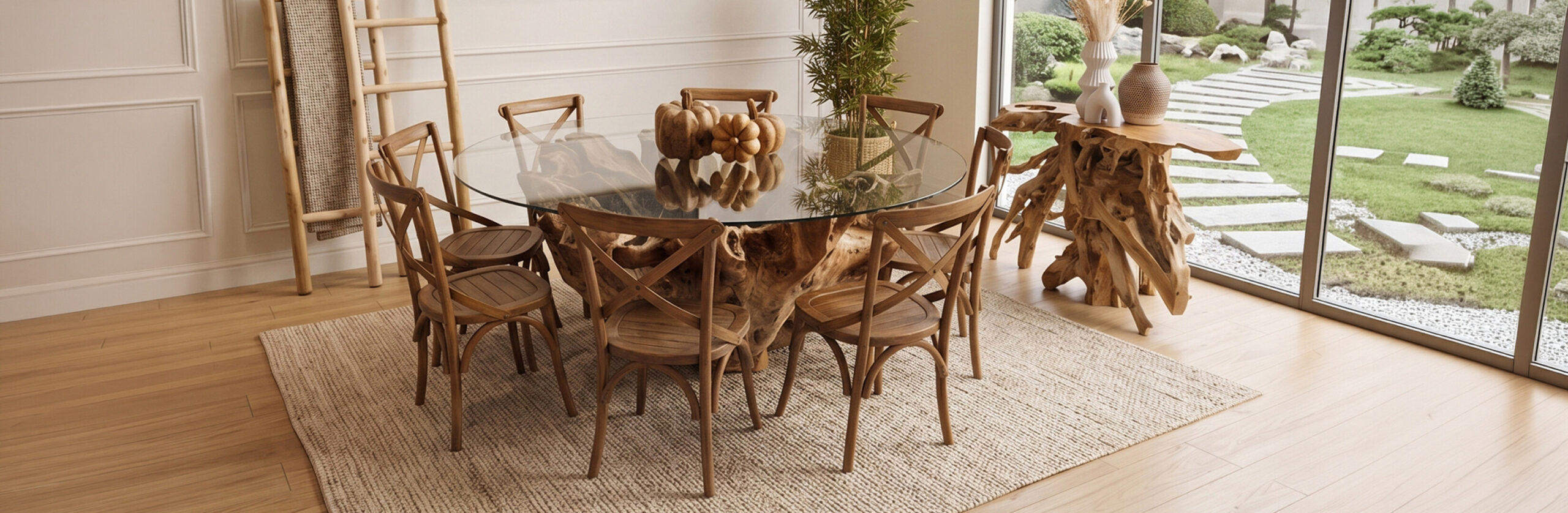
Wooden dining tables
Wooden dining tables: why solid timber outlasts everything else. A real wooden dining table costs more on day one and pays it all back over decades. A guide to the timbers, the differences — and how to choose one to keep. Almost every dining table sold in South Africa is described as wooden. Most of…
Almost every dining table sold in South Africa is described as wooden. Most of them are not.
Veneer over MDF, engineered wood, particle-board with a wood-effect laminate, even glass and metal tables with a token timber accent. The category has been quietly diluted to the point where the word “wooden” is doing very little work. That matters more than it sounds, because the dining table is one of the few pieces in a home that genuinely earns its keep over decades — and the difference between solid timber and everything else only really shows up in years three, five and ten. By then it’s too late.
A real wooden dining table is a different kind of object to buy. It costs more on day one, it weighs more, it asks for slightly more care, and it pays all of that back over the long, slow life of a household. The veneer table looks the same in the showroom. It doesn’t look the same in the kitchen five years in.
At Sotran, the wooden dining table conversation is one of the most rewarding to have with clients, because the customer who is searching specifically for a teak, Suar or solid wood table already knows what they want. They aren’t browsing categories — they’re choosing a piece they expect to keep for the next twenty years. That changes the questions worth asking, and it changes which woods deserve the longest part of the answer.
Why solid wood is the only category worth this much money.
Solid timber does something engineered furniture cannot. It develops character with age rather than degrading under it. The grain deepens, the surface softens slightly, the tabletop carries the small marks of years of meals as patina rather than as damage. That’s the long argument for solid wood — and it’s the only argument that really matters at this price point. A laminate or veneer table is at its best on delivery day. A solid wood table is at its best somewhere around year ten.
The other practical advantage is repairability. A solid wood table can be sanded back, refinished, oiled, even cut down if a household downsizes years later. A veneer surface cannot be sanded once the thin top layer wears through, and an engineered base cannot be properly repaired once a leg fails. The wooden table is a piece you fix when it needs fixing. The engineered table is a piece you replace.
And then there’s the question of weight and presence. A real solid wood dining table is heavy. Properly heavy. The legs don’t flex when you lean on them, the surface doesn’t bounce when you cut bread on it, and the table stays where you put it whether five people or ten are sitting around it. That weight is part of why the room reads as anchored when a real wooden table is in it, and why a lighter engineered table never quite carries the same room.
“The veneer table looks the same in the showroom. It doesn’t look the same in the kitchen five years in.”
Teak: the king of dining timbers.
Teak has earned its reputation over centuries, and the reasoning is the same now as it was when teak became the standard wood for ship decks in the eighteenth century. The timber is rich in natural protective oils and silica, which makes it more resistant to moisture, more dimensionally stable through temperature changes, and far less prone to warping than almost any other dining timber. Those qualities matter in South Africa, where summer humidity and winter dryness can put real stress on lesser timbers over the years.
A teak dining table also ages with a particular character. The colour deepens from honey to a richer warm brown over time. The grain becomes more visible as the surface softens. The table feels like it has been in the home for longer than it has — in a quiet way that no manufactured finish can imitate. This is part of why teak remains the wood most South African families ask for when they’re buying a dining table they plan to keep for the long term.
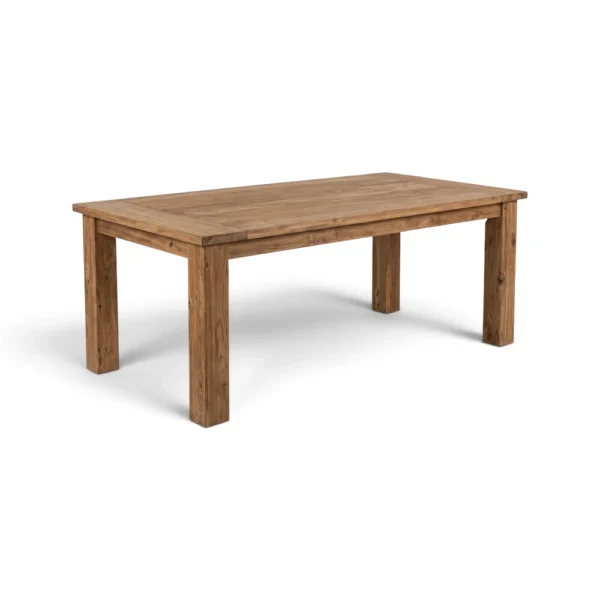
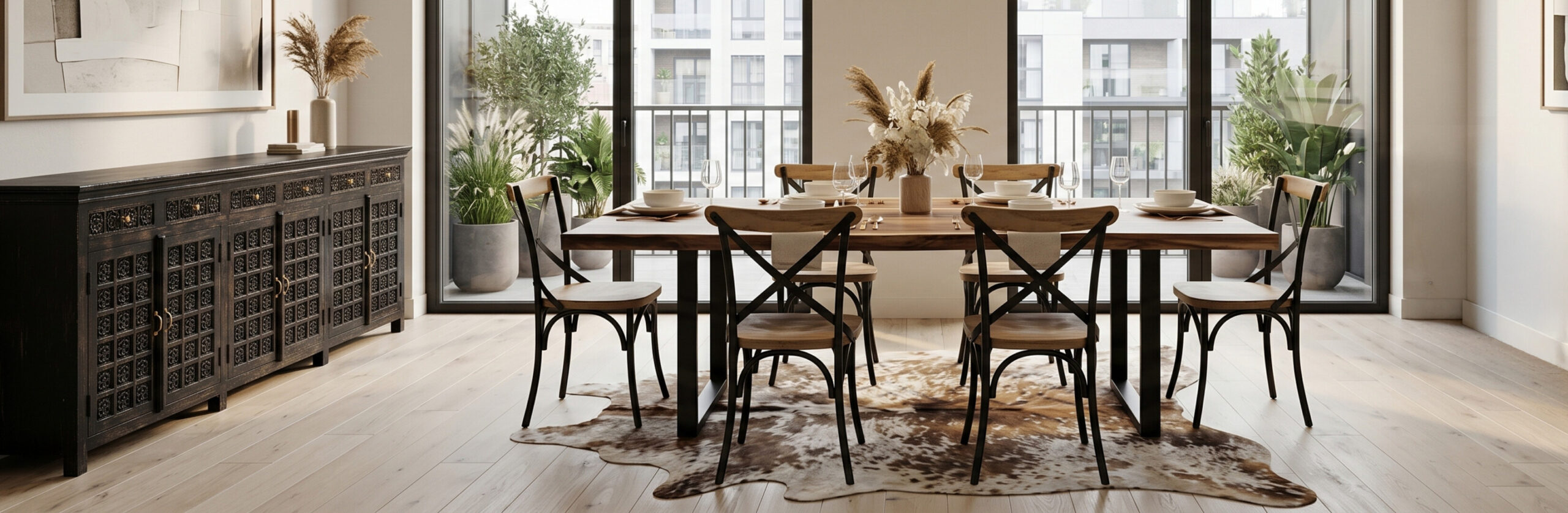
The Sotran teak dining table range covers both new plantation teak and reclaimed teak. Both deserve their place, and the choice between them comes down to what the buyer is looking for. New plantation teak gives you a cleaner starting point — the colour is consistent, the grain is uniform, and the table develops its character with you over the years. Reclaimed teak gives you a head start on that character. The timber has had a previous life, often in older buildings or boats, and it arrives with the patina of decades already in it.
Reclaimed teak: a dining table with a history before yours.
Reclaimed teak deserves its own conversation, because it sits in a category most furniture buyers don’t realise exists. The timber in a reclaimed teak dining table isn’t new. It’s been previously used — often in Indonesian or wider Southeast Asian architecture, sometimes for a hundred years or more — and it’s been salvaged, milled and rebuilt into a new piece of furniture. The result is a dining table that is functionally new but materially old. The wood has already been through its drying, its settling, its temperature cycles, its weathering. What you’re buying is a piece of timber that has proven itself, given a new shape.
That matters in a few practical ways. The wood is more stable than freshly harvested timber, because it has finished doing most of the moving it was ever going to do. The colour and grain carry a depth that new timber simply doesn’t have yet. And the table has a story before you give it one. A reclaimed teak dining table has been somewhere first. That’s the closest you can get to inheriting an antique without actually inheriting one.
It’s also, quietly, the most sustainable option in the dining table category. The timber has already been harvested. No new tree comes down for the piece. The carbon and the craftsmanship have already been paid forward, and you’re extending the life of a material that would otherwise have been lost.
Suar: the headline timber for one-of-a-kind tables.
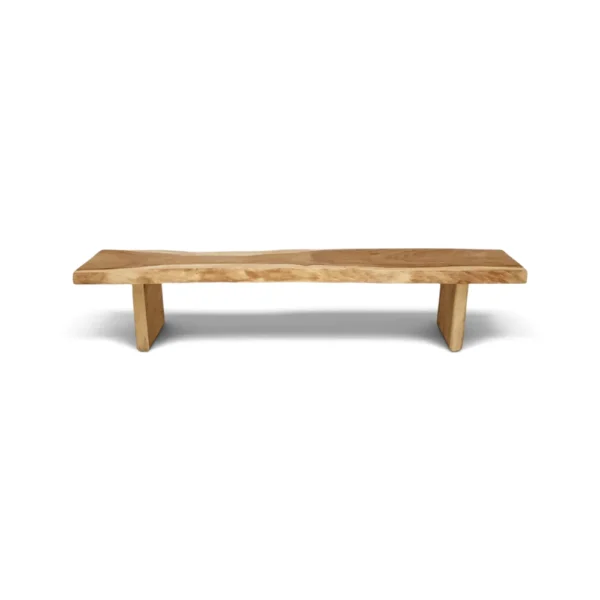
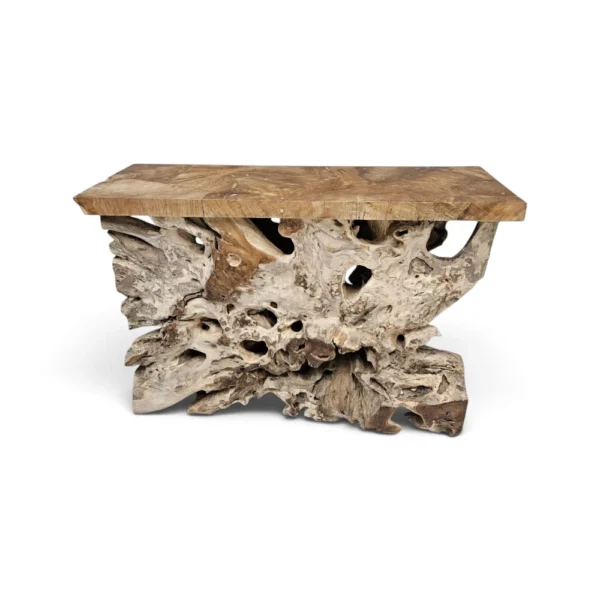
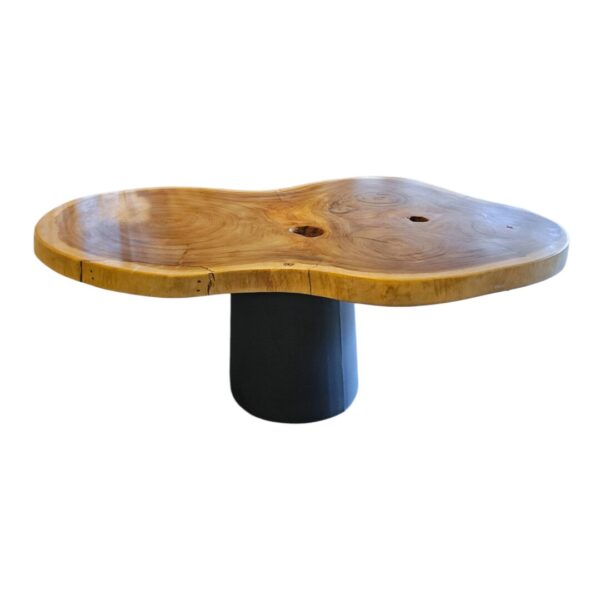
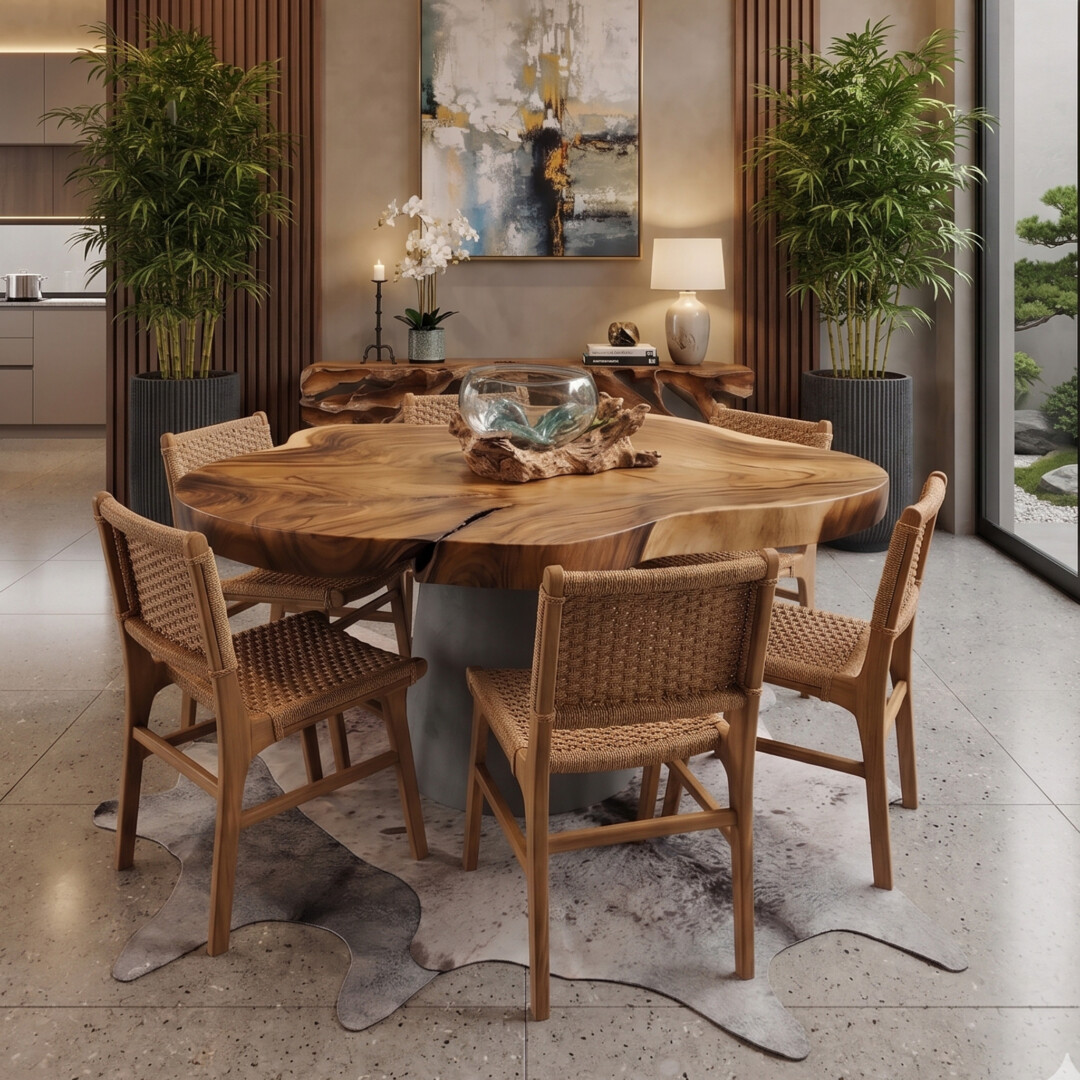
Where teak is the trusted classic, Suar — also known as rain tree — is the headline wood for the kind of dining table that becomes the focal point of a room. Suar trees grow large, fast and dense, which means the timber can be cut into single solid slabs of remarkable size. A live-edge Suar dining table is cut from one of those slabs, with the natural edge of the tree preserved rather than cut into a straight line. The grain runs differently across every piece. The edge profile is unique to the specific tree. No two Suar tables are alike.
That uniqueness is the point. A Suar dining table isn’t really competing with other dining tables for the room — it’s more like commissioning a piece of sculpture that happens to seat eight to twelve people. The colour ranges from pale cream sapwood at the edges to a deep golden-brown heartwood at the centre, often with both colours visible in the same slab. The grain pattern can be dramatically swirled in some tables and quietly linear in others. The character of the specific tree dictates the character of the specific table.
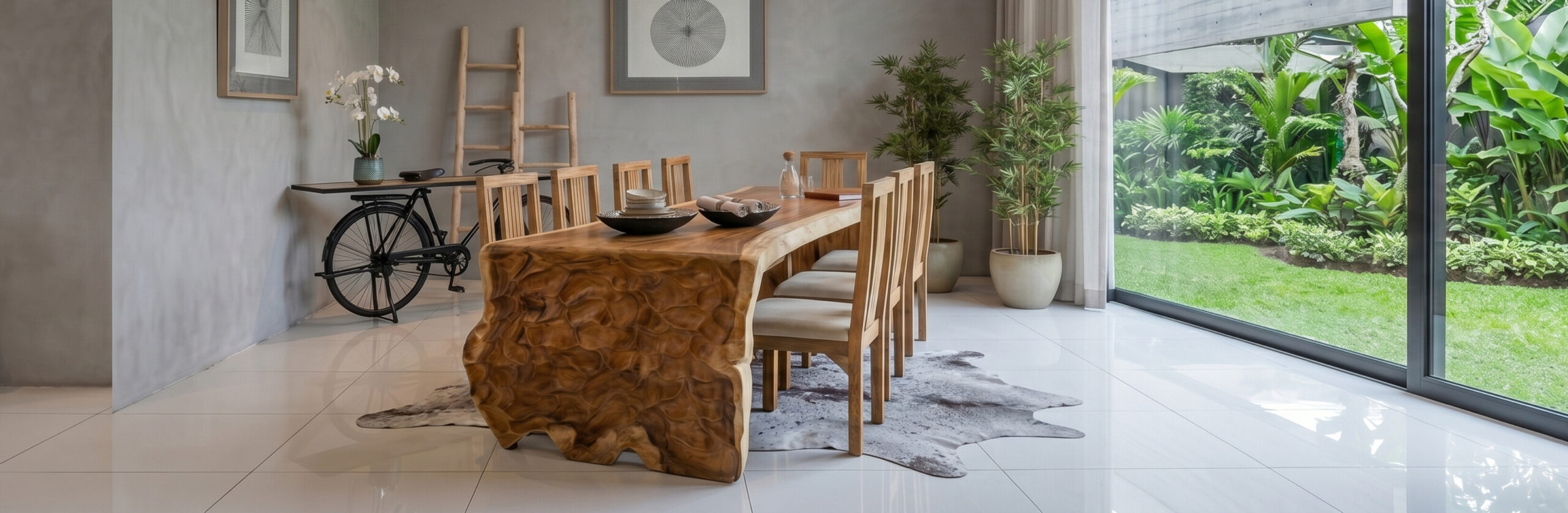
Suar also performs well as dining furniture, not just as sculpture. The timber is dense and heavy, which makes the table stable and substantial. It holds its shape over time, takes a good finish, and ages with the same depth as other tropical hardwoods. The waterfall edge designs — where the grain flows seamlessly from the tabletop down into a solid vertical leg — are some of the most architecturally striking pieces in the Sotran range.
Mango wood: the quietly underrated choice.
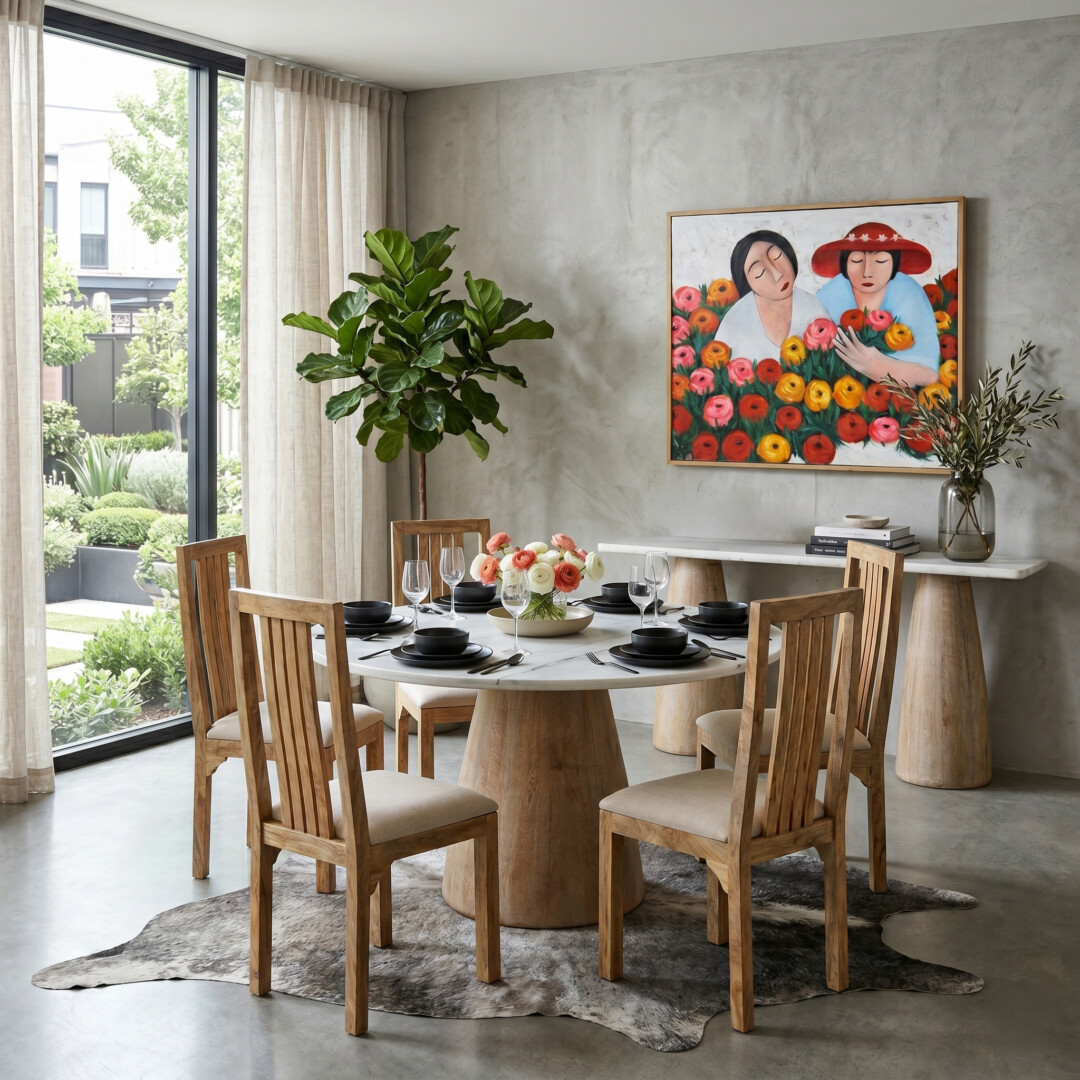
Mango wood is one of the strongest stories in the dining table category that nobody tells properly. The timber is dense, beautifully grained, takes hand-carving exceptionally well, and produces tables that age in the same way teak and Suar do. It’s also one of the most quietly sustainable timbers available — because the trees are only harvested once they stop bearing fruit. The wood is, in effect, a second commercial life for a tree that has already done its primary job.
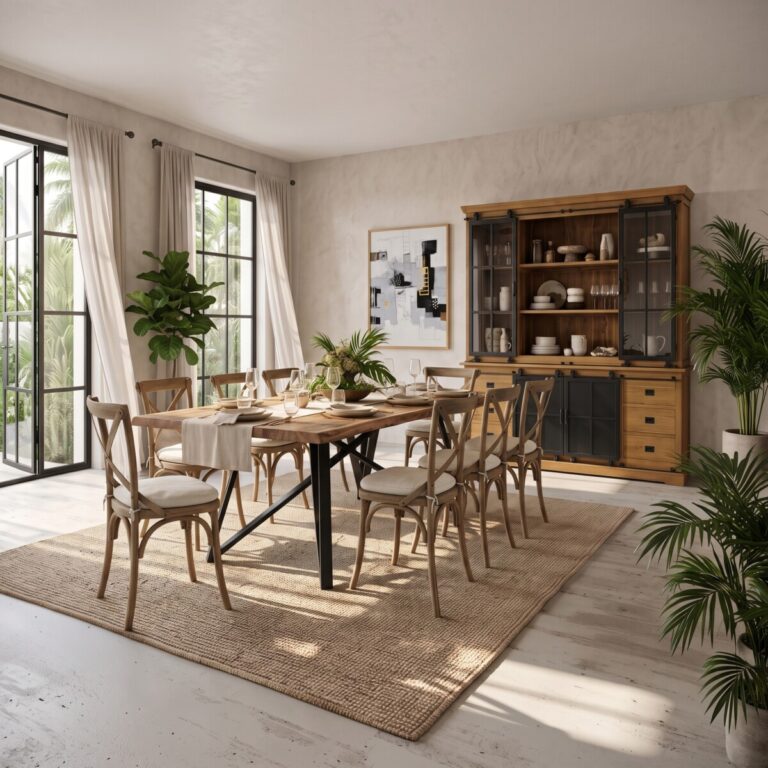
The grain on a mango dining table tends to be more dramatic than teak, with more visible variation in colour and pattern. That makes mango a strong choice for buyers who want a table with real character to it, particularly when the rest of the dining room is quieter. Mango pairs especially well with darker metal accents — like the steel X-base tables — which give the warm timber a contemporary industrial edge.
Reclaimed boat wood: the table with a verifiable past.
One further category worth naming. Reclaimed boat wood tables — particularly the slatted-top designs — are built from actual fishing boat timber salvaged from Indonesian and Southeast Asian vessels at the end of their working lives. The slats often retain traces of their original colours, with weathered greens, blues, reds and natural timbers built into the same tabletop. The result is a dining table with a verifiable past life, where every slat is a piece of a boat that used to do something else.
This is a smaller corner of the wooden dining table range, but it’s one of the most distinctive pieces a household can own. The table reads as both rustic and characterful, and it carries a story most furniture cannot match. For homes leaning toward Beach Cottage, Industrial Farmhouse or any direction that values material honesty over polish, this is the table that earns its place faster than any other.
How to live with a wooden dining table.
The practical conversation worth having before buying. A solid wooden dining table asks for slightly more care than a manufactured surface — but less than most people expect.
The small marks that accumulate over years of use aren’t damage. They’re the table earning its place. A genuine solid wood dining table looks better with a few honest marks in it than with none — because the marks confirm the table is doing what it was made for.
Online or in-store.
Wooden dining tables are the category where seeing the piece in person makes the biggest difference, particularly for the live-edge Suar and reclaimed teak pieces. The weight, the grain, the depth of colour and the way the surface reads in real light all matter more than they do in almost any other furniture category. The Sotran showrooms in Boksburg, Fourways and Somerset West all carry the wooden dining table range in styled room settings, and the team is happy to talk through species, grain and pairing for the specific room you’re working with.
The range also orders well online, with full dimensions, material information and detailed photography on each product page. Nationwide delivery is available anywhere in South Africa. Because so many of the wooden dining tables are one-off pieces — particularly the live-edge Suar and reclaimed timber tables — stock can move quickly. If a specific table is right, it’s worth acting on it rather than holding.
A few quick questions.
What is the best wood for a dining table?
Teak is the most trusted choice, with centuries of proven performance and a natural oil content that resists moisture and movement. Suar is the headline material for live-edge and statement tables, with each piece cut from a single slab and unique in grain and edge. Reclaimed teak gives you the depth and stability of old timber from the day the table arrives. Mango is the underrated choice, with dense grain, beautiful character and strong sustainability credentials.
Is teak worth the higher price for a dining table?
Yes, for households planning to keep the table for the long term. Teak’s natural oils and dimensional stability mean it ages without warping, splitting or losing shape, which lesser timbers often do over the years. The colour deepens and the grain develops over time, so the table looks better in year ten than in year one. The higher upfront price tends to disappear when you average it across two or three decades of use.
What is the difference between new and reclaimed teak?
New plantation teak gives you a cleaner starting point, with consistent colour and uniform grain. The table develops its character with you over time. Reclaimed teak has had a previous life — often in older buildings or boats — and arrives with decades of patina already in the wood. It’s more stable than freshly harvested timber because it has finished moving, and it’s the most sustainable option since no new tree comes down for the piece.
What makes a live-edge Suar table different?
A live-edge Suar table is cut from a single solid slab of timber with the natural edge of the tree preserved rather than cut into a straight line. Each table is genuinely unique, with a grain pattern and edge profile dictated by the specific tree the slab came from. The pieces read as sculpture as much as furniture, and they tend to be the table you build a dining room around rather than the table you slot into one.
How do I look after a wooden dining table?
Wipe spills as they happen, particularly red wine, olive oil and citrus. Use coasters and trivets for hot dishes. Oil the surface every six to twelve months with the appropriate timber oil to keep the wood nourished. Avoid placing the table in direct, prolonged sunlight over long periods. The small marks that accumulate over years are part of the table earning its place, not damage to be hidden.
Why are wooden dining tables sometimes one-off pieces?
Because solid timber tables are made from specific pieces of wood that cannot be exactly reproduced. A live-edge Suar table is cut from a single slab from a specific tree. A reclaimed teak or boat-wood table is built from specific salvaged boards. The next table in the same family will be similar in spirit but built around different timber. If a specific table is right, it’s worth acting on it.
Can I shop the Sotran wooden dining table range online?
Yes. The full dining table range — including the Suar, teak, reclaimed teak and mango pieces — is available to browse and shop online, with nationwide delivery across South Africa. Many tables are one-off, so stock can move quickly. The team is available by WhatsApp, phone or email to talk through species, size and finish before ordering, and the range is on display in our Boksburg, Fourways and Somerset West showrooms.