Wooden kitchenalia
Wooden kitchenalia: pieces that work as hard on the table as in the kitchen. Teak boards, bamboo bowls, hand-carved trays — the pieces that quietly carry a home and earn their place twice over. A guide to the materials, the care, and how to live with them well. The most considered kitchens have something in…
The most considered kitchens have something in common that has nothing to do with the cabinetry or the appliances. They have a few beautiful wooden pieces sitting out in the open.
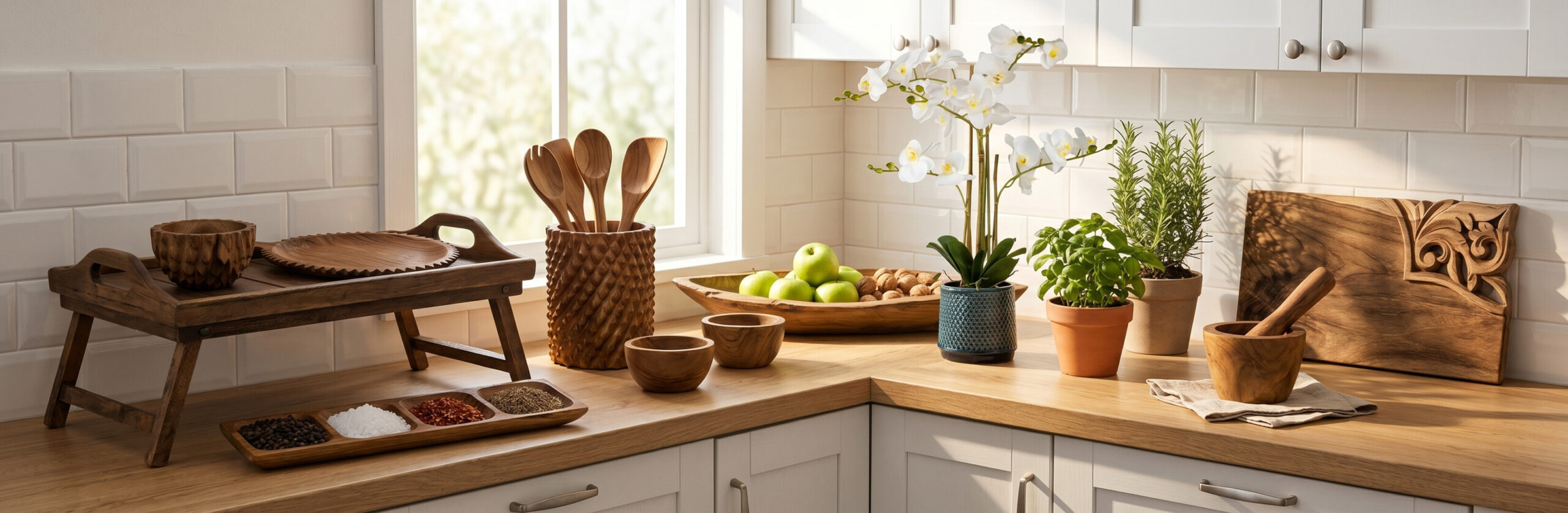
A teak cutting board left on the counter, used daily, slowly developing the patina of years of bread, lemon and butter. A bamboo serving bowl on a console between meals, holding a few fresh figs or apples or just sitting empty. A serving tray on a sideboard, ready to lift the next round of drinks onto the patio without anyone having to think about it. These are the pieces that quietly carry a kitchen, and the homes that use them well treat them less like utensils and more like part of the furniture.
That is what the Sotran kitchenalia range is built around. Wooden serving trays, bamboo bowls, hand-carved boards, sculptural fruit vessels and a handful of speciality pieces — all made from real natural materials and all designed to do at least two jobs in a home. Serving and styling. Hosting and resting. Kitchen and dining room. The best wooden kitchenalia does not really belong to either room. It moves between them, and the home it lives in gets quietly better for having it.
At Sotran, kitchenalia tends to be the part of the showroom clients linger longest in without expecting to. They came in for a dining table or a sideboard, and they leave with a teak cutting board, a Mahara Bambu bowl and a serving tray, because once they have seen the pieces in person, the case for owning them is obvious. These are not expensive objects in the wider scheme of furnishing a home. They are some of the most affordable ways to introduce real craft and real material into everyday life.
The case for wood in the kitchen.
Wood does something in a kitchen that plastic, ceramic and metal cannot. It softens the room. A timber cutting board on a stone counter, a bamboo bowl on a kitchen island, a wooden serving tray on a sideboard — each piece carries warmth and texture into a space that is otherwise composed of harder, cooler surfaces. The room feels more lived in, more welcoming, more like a home. That is the quiet reason wood has held its place in serious kitchens for centuries while every other material has come and gone.
The other quiet advantage of wooden kitchenalia is that it ages well. A bamboo serving bowl looks better after two years of use than it does on delivery day. A teak cutting board develops a soft sheen and absorbs the small marks of years of meals as character rather than damage. The pieces become genuinely lovelier with time, in a way few household objects do. That makes them the kind of purchase that earns its place once and keeps earning it.
Burmese teak, and why it deserves its reputation.
Worth pausing on, because it is the material at the heart of the eatware and serving range. Burmese teak (Tectona grandis) is one of the most respected hardwoods in the world, and it has earned that reputation for genuine reasons. The timber is dense, fine-grained, and unusually rich in natural protective oils. Those oils are what make teak resistant to water, dimensionally stable through heat and humidity, and naturally resistant to the kind of warping, splitting and pest problems that affect softer woods.
In practical terms, this means the Burmese teak pieces in the range behave better in everyday use than most wooden kitchenware. The serving trays, cutting boards and bowls are dishwasher-safe, which is unusual for natural timber, because the oil content protects the wood through standard wash cycles. They handle hot dishes, hot soups and freshly cooked meals without cracking or warping, since teak’s thermal stability is genuinely exceptional. And they do not absorb food odours or strong stains as easily as softer woods, which means the same board can move from cutting onions to slicing fruit without carrying the previous meal into the next one.
The pieces are also sustainably sourced. Sotran’s Burmese teak comes from carefully managed plantations rather than wild harvesting, which is part of why the wood can carry the heirloom-quality positioning it does. Each plate, bowl and platter supports long-term forest conservation rather than depleting it.
“The pieces become genuinely lovelier with time, in a way few household objects do.”
Looking after teak well.
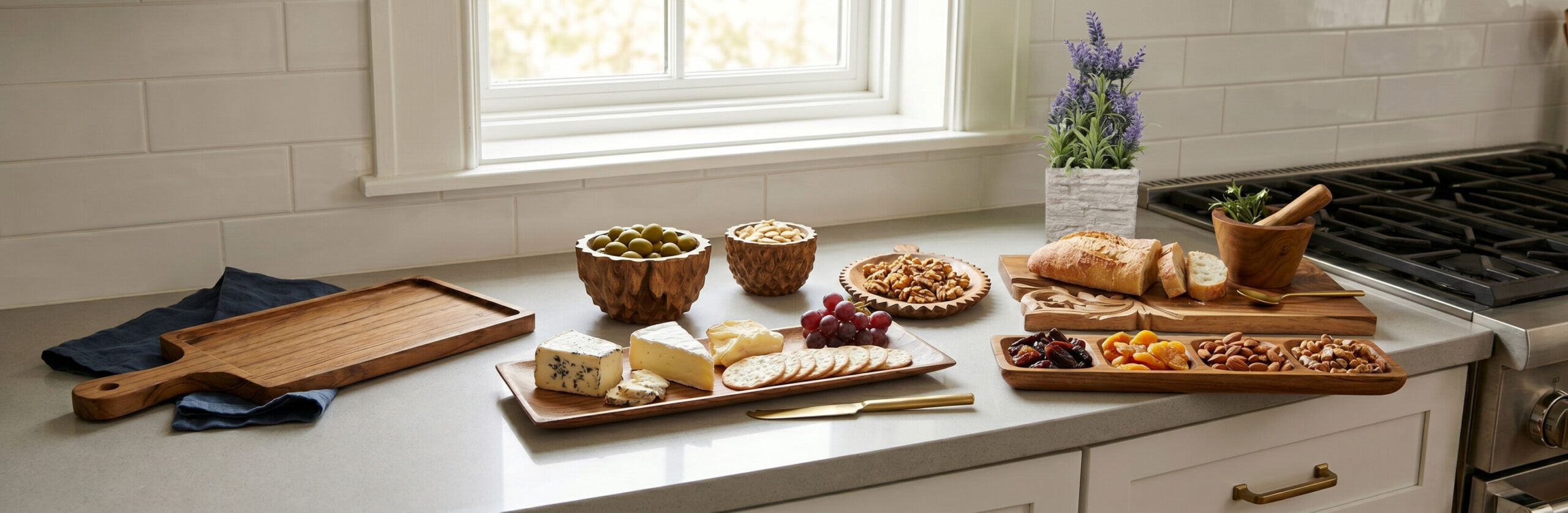
A small amount of care extends the life of these pieces substantially, and the routine is genuinely simple. After washing, dry the piece off rather than letting water sit on the surface. Once a month or so, apply a thin coat of food-safe oil. Olive oil or sunflower oil both work beautifully, and most kitchens have one or both already in the pantry. The oil restores the deep golden-brown grain that gives teak its character, and it keeps the wood from drying out between uses.
One quiet caveat worth knowing — teak is not microwave-safe. The natural micro-moisture inside the grain can expand unevenly under microwave heat, which over time can dry the wood out or cause minor splitting. The kitchen workaround is straightforward — heat food in ceramic or glass, and serve it on the teak. That is how teak has been used in the homes that have known it longest.
Other practical notes. Steak knives and heavy cutlery will leave faint surface marks over time. That is true of any real timber. The good news is that teak is unusually forgiving — the marks blend into the grain rather than standing out against it, and the monthly oil treatment makes superficial scratches significantly less visible. Highly pigmented foods like turmeric, beetroot or rich curries are best washed off after the meal rather than left to sit overnight. A normal wash cycle followed by the next monthly oil treatment will keep the timber looking right.
Bamboo, where the kitchen meets sustainability.
Bamboo deserves its own conversation, because it is one of the materials behind the most distinctive pieces in the range. Technically a fast-growing grass rather than a hardwood, bamboo is harvested on a three to five year cycle, where most hardwoods take twenty to forty years to mature. That makes it one of the most renewable materials available in any furniture or decor category, and it is the reason bamboo has become so widely used in contemporary kitchenware.
The Mahara Bambu bowls are some of the loveliest pieces in the range. The interior reveals the warm organic grain of coiled bamboo. The exterior is finished in a smooth matte white that gives the bowl a clean, sculptural quality. The undulating sculptural rim and integrated cutout handles make the piece work as both a serving vessel and a styled centrepiece, and the design earns its place at almost any modern dining table. The Mahara bowls come in two sizes — 25cm for a side surface or smaller table, and 35cm for a dining table or kitchen island.
The Venus Bambu bowls take a quieter approach, with a natural multi-tonal bamboo finish on a sleek circular form. The 22cm, 25cm and 30cm sizes work for fruit, snacks, salad service, or simply as a styled empty vessel on a surface that needed one. The bamboo flat serving trays are smaller-scale pieces with crisscross slatted detail and raised edges, designed for moving drinks, breakfast and snacks between rooms.
The carved pieces that earn their place as decor too.
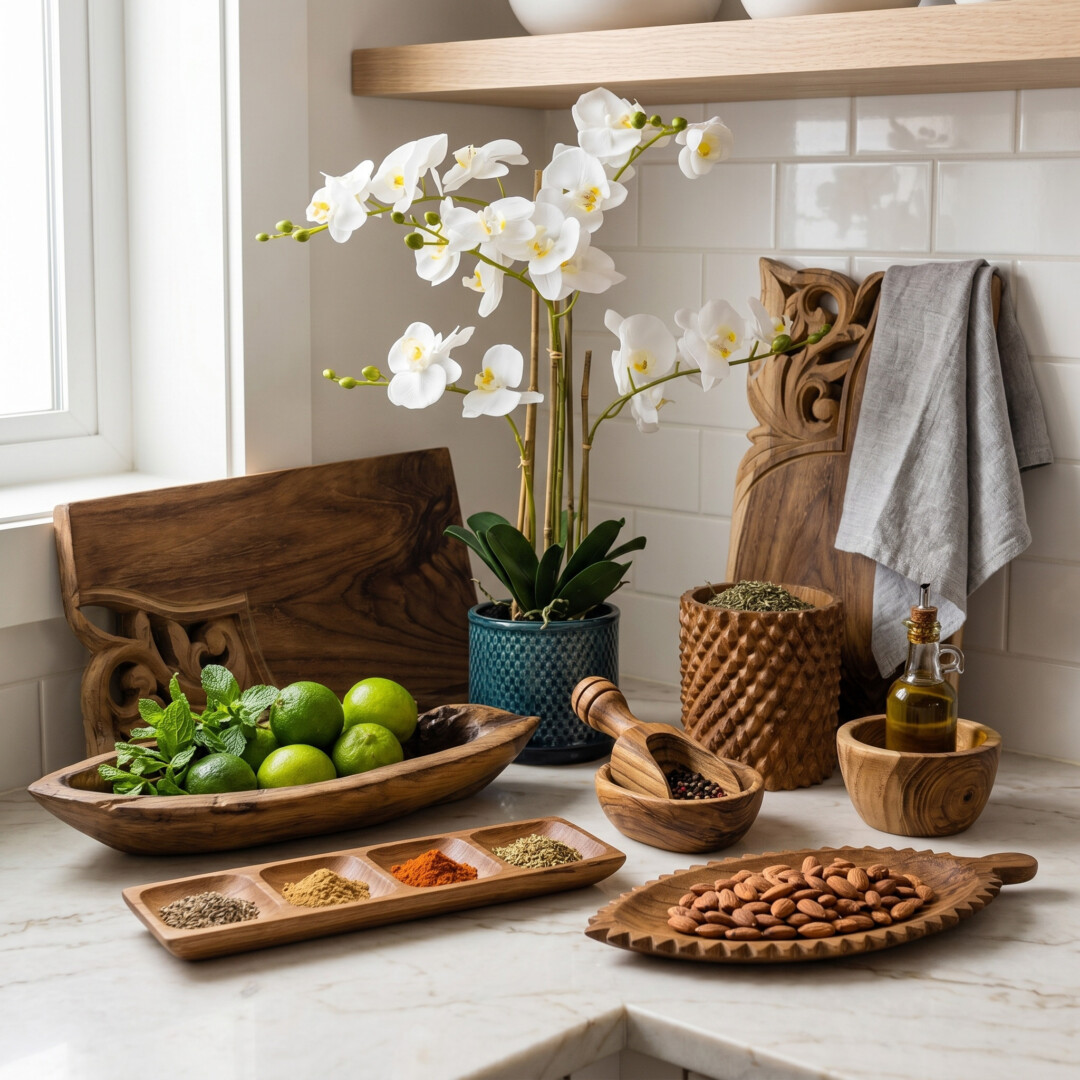
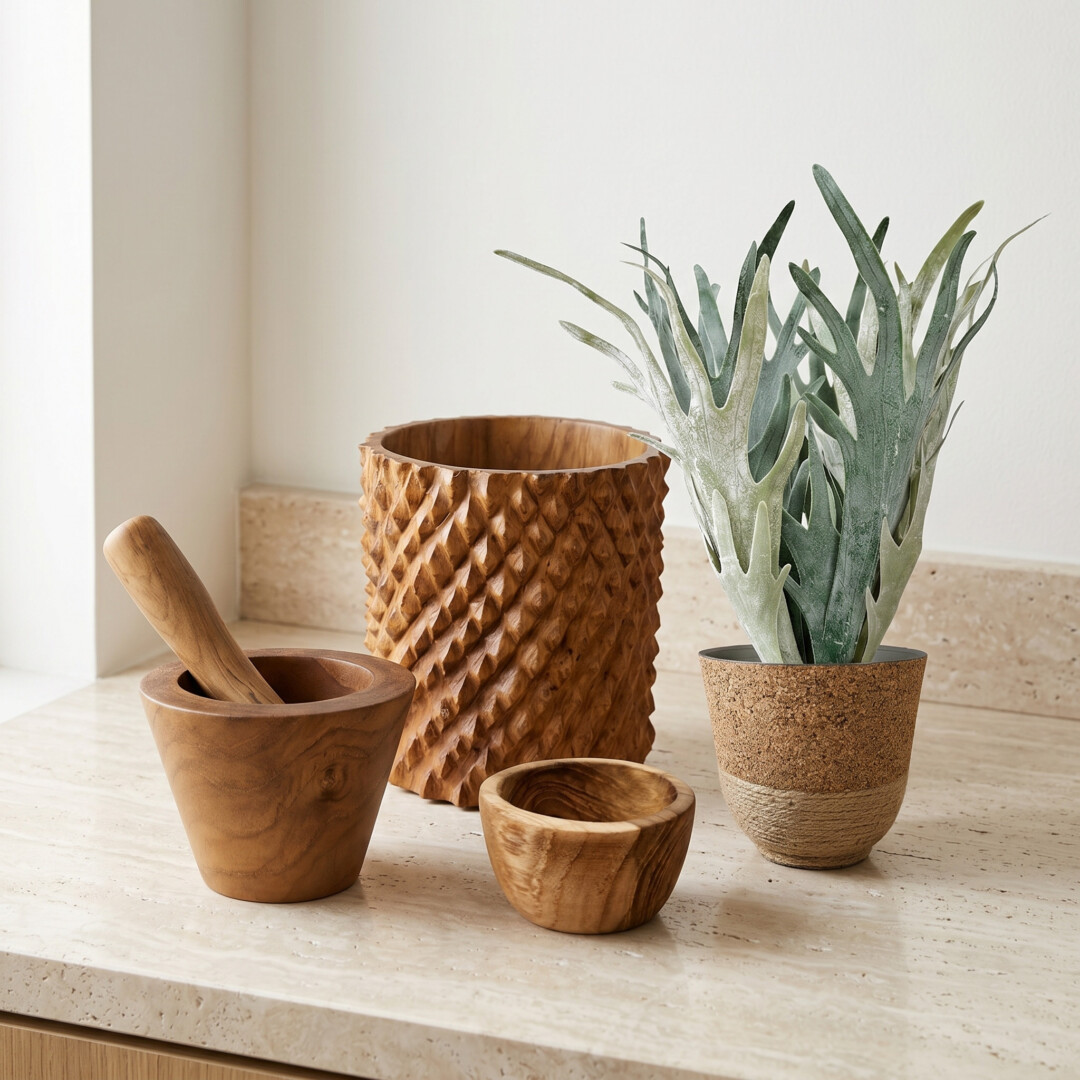
The mango wood and teak root pieces in the range sit slightly differently. These are sculptural objects that happen to be functional, rather than functional pieces that look beautiful. The Chi Carved Bowl is a 46cm hand-carved mango wood piece with an elongated trough form and flared winged ends. It works as a fruit bowl, as a centrepiece, or simply as a piece of sculptural decor on a sideboard. The grain pattern and weathered finish vary from one bowl to the next, since each is hand-carved from individual mango wood.
The Kayak Teak Root Bowl takes the same idea further. A 75cm sculptural piece carved from sustainably sourced teak root, the elongated kayak silhouette reads as art as much as serving piece. It works as a centrepiece for a long dining table, as a styled element on a console or coffee table, or as a generous fruit and decor vessel. No two are identical, since teak root sources determine the specific shape of each piece.
The Parat Vintage Bowl is another piece worth knowing about. Hand-finished in a deep dark natural stain, with a distinctive handle-like feature, it brings rustic and timeless character into a room. It works as a fruit bowl, a decorative accent piece, or a standalone styled object. The natural wood grain variations mean each one is unique, which is part of what makes the piece worth choosing as a long-term object rather than a disposable one.
The serving pieces that move with you.
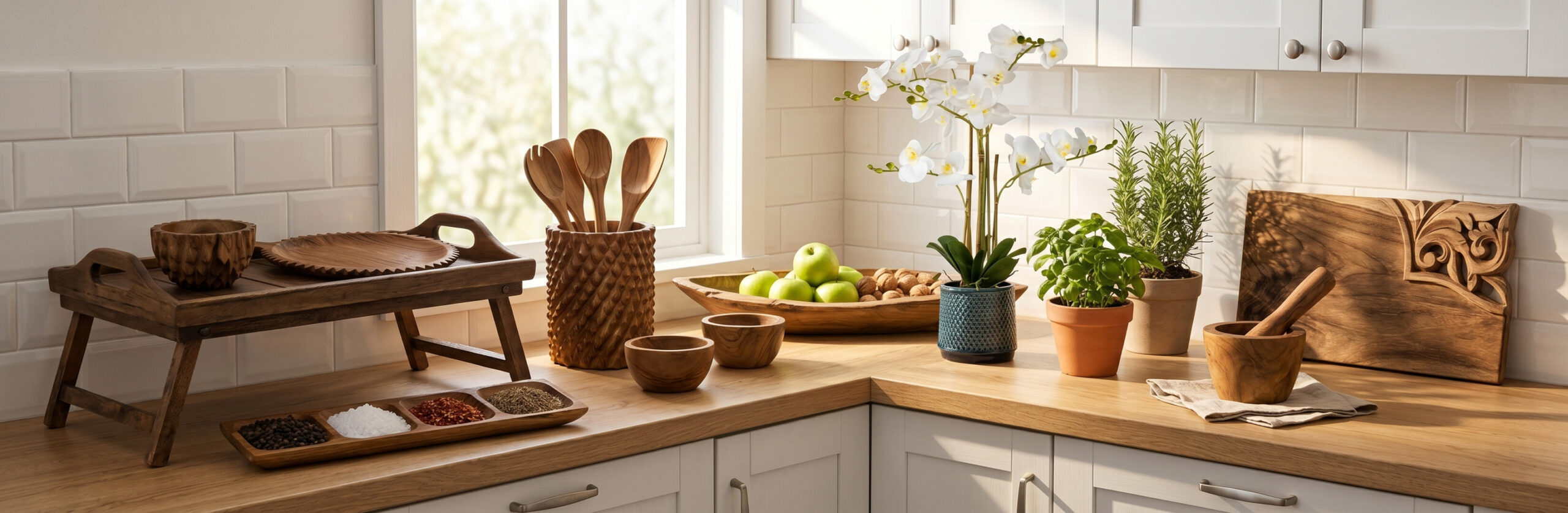
If there is one category in the kitchenalia range that earns its place in almost every home, it is the serving trays and boards. The Burmese teak serving trays come in multiple sizes and finishes, with handles for easy carrying between kitchen and patio. They work as breakfast trays, drinks trays, charcuterie boards, cheese platters, and as styled trays on coffee tables and sideboards between uses. The Lux Teak Cutting Board is a particularly lovely piece, with rich swirling grain and an intricate floral corner carving that gives the board a Baroque-inspired elegance. It works equally well as a serious cutting surface and as a charcuterie or cheese board for hosting.
The Breakfast Tray with Fold-out Legs deserves a mention of its own. A 60 by 40cm solid wood tray with fold-out feet that give it 35cm of leg height, it is the piece that turns Sunday breakfast in bed into a small considered ritual rather than a balancing act. It also doubles as a lap surface for working from the couch, or as a low service tray when laid flat on a sideboard for drinks at a gathering. A piece like this earns its place by being useful in three different ways at three different times.
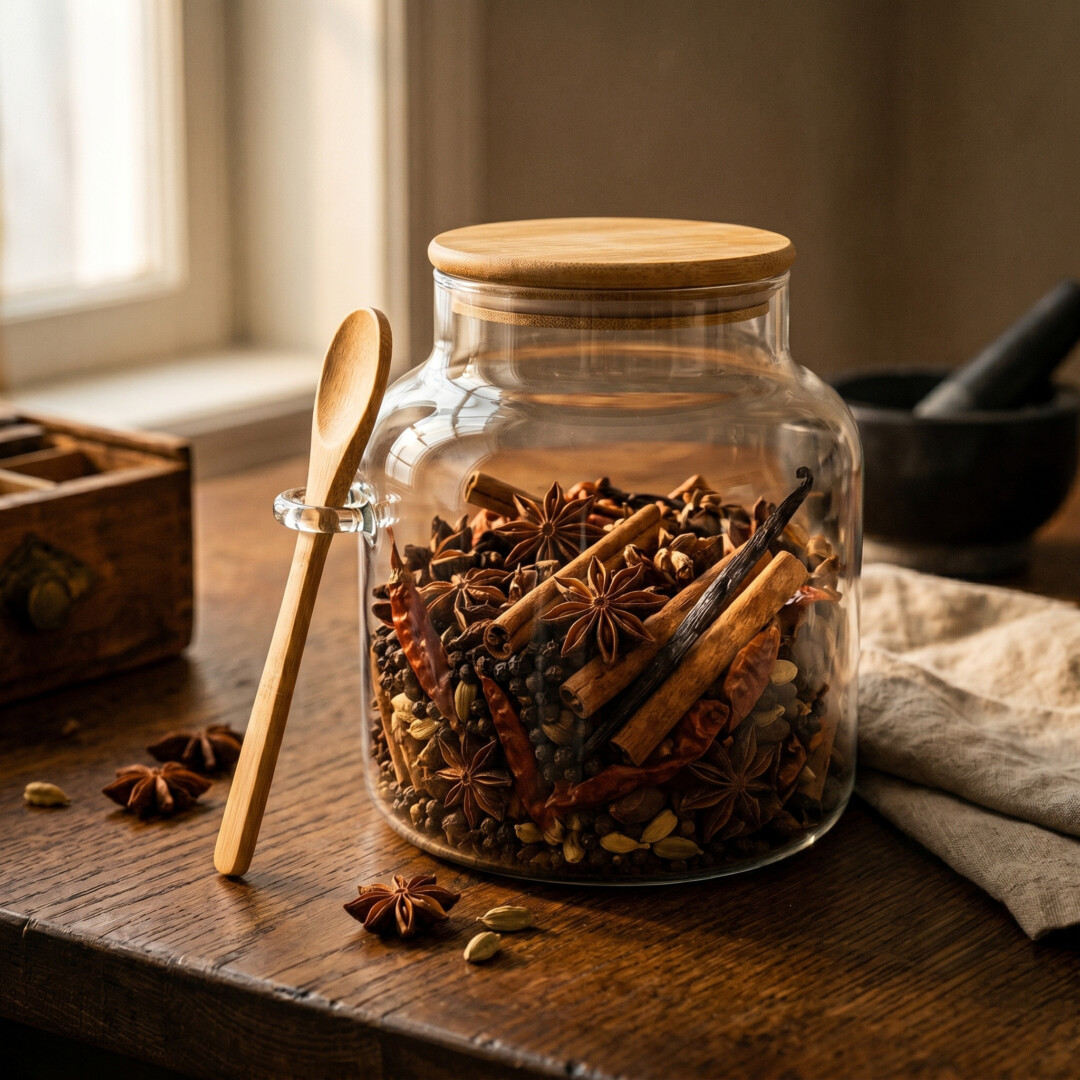
The smallest pieces in the range are some of the most charming. The Burmese teak sauce bowl, at 5 by 3cm, holds dips, sauces and condiments on a beautifully laid table. The wooden bread mould is a heritage piece that doubles as a low-profile styling tray for decanters or botanicals when not being used for actual bread. The Glass Jar with Lid and Spoon combines high-clarity glass with a bamboo wood lid and matching wooden serving spoon, ready for the kitchen counter as a sugar, coffee or pantry essential while reading as a small piece of considered styling.
How these pieces sit in a home.
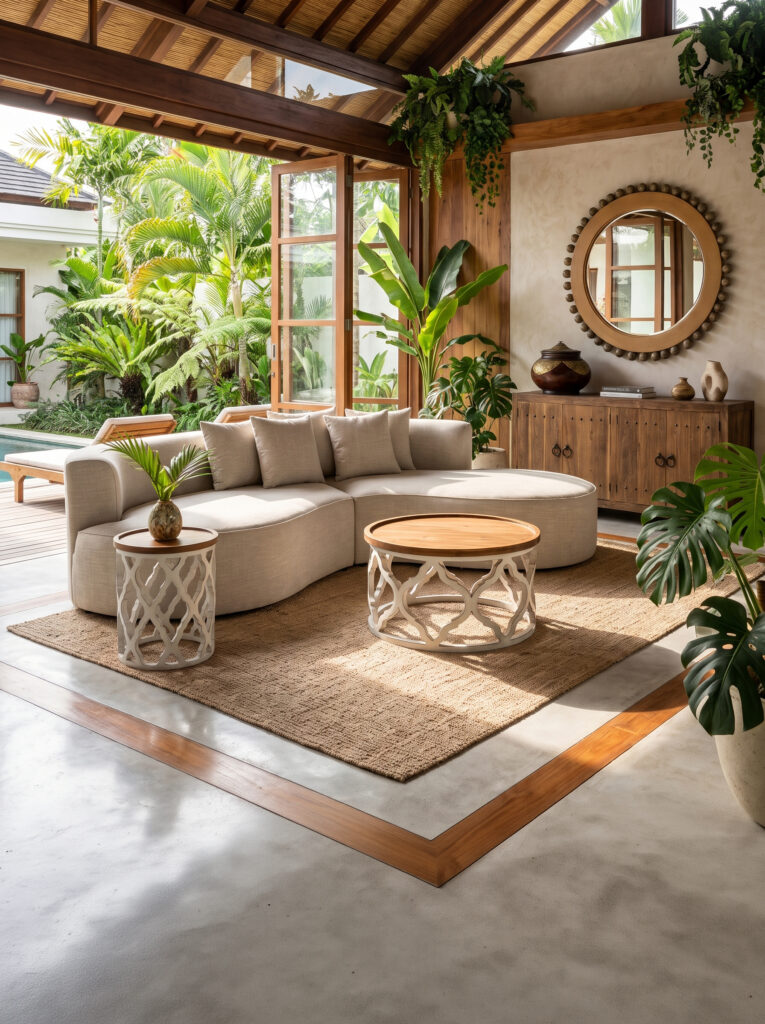
The interesting thing about wooden kitchenalia is how naturally it crosses between rooms. A teak serving tray lives on the kitchen counter when it is being used and on a coffee table when it is not. A bamboo bowl moves from the dining table to the console to the kitchen island depending on the week. A breakfast tray lives in the bedroom for a few weeks, then in the lounge, then back to the kitchen. None of these pieces really belong in a single drawer or cupboard. They belong in the rooms where the home actually lives.
That is why the right kitchenalia pieces are worth choosing as carefully as a piece of decor would be chosen. They are out in the open most of the time, and a piece you would happily display is a piece you will happily use. The reverse is also true — a piece that has been hidden away because it is not nice enough to leave out is a piece that quietly stops being used at all.
Wooden kitchenalia also pairs particularly well with the rest of the Sotran range. A teak cutting board sits comfortably on a solid timber sideboard. A bamboo serving bowl reads beautifully alongside a hand-blown glass-on-wood piece on a coffee table. A teak serving tray and a Mockana diffuser earn their place together on a console. The pieces are part of a wider material language, and they look right where the rest of the home already is.
Online or in-store.
The kitchenalia range is one of the categories where seeing pieces in person makes the difference, since the weight, grain and finish of each piece reads more honestly in real materials and real light. The Sotran showrooms in Boksburg, Fourways and Somerset West all carry the kitchenalia range, and the team can talk through the pieces, the materials and the care for the specific items you are interested in.
The range also orders well online, with detailed photography, full dimensions and material information on every product page, and nationwide delivery across South Africa. Many of the pieces are hand-carved or hand-finished, so each one carries small individual variations in grain and finish. If a specific piece feels right, it is worth acting on it rather than holding.
A few quick questions.
What is Sotran's wooden kitchenalia made from?
The serving and eatware range is largely crafted from authentic Burmese teak (Tectona grandis), a dense hardwood celebrated for its rich golden-brown grain, exceptional durability and high natural oil content. The bowls and decorative pieces include bamboo, mango wood, teak root and other natural timbers. Each material has been chosen for the specific work the piece is designed to do.
Is the Burmese teak eatware dishwasher-safe?
Yes. The Burmese teak collection is specifically designed to be completely dishwasher-safe, which is unusual for natural timber. The dense natural oils and exceptional moisture resistance of teak allow the pieces to withstand standard dishwasher cycles seamlessly. Standard dishwasher tablets or liquid detergents work fine, though it is worth avoiding ultra-harsh chemical bleaches or intensely abrasive cycles to extend the life of the natural finish between oiling cycles.
How do I maintain the wood's natural glow?
Apply a thin coat of food-safe oil once a month or so. Olive oil or sunflower oil both work beautifully, and most kitchens have one or both in the pantry. The oil restores the deep golden-brown grain, hydrates the wood, and keeps the piece looking right between uses. Frequent washing can temporarily give the wood a slightly lighter or matte appearance, which the monthly oil treatment instantly corrects.
Can I use the teak pieces with hot food?
Yes. Teak is renowned for its thermal stability and will not crack when exposed to hot soups, stews or freshly cooked meals. It also does not absorb food odours or stains easily, which makes it ideal for everyday practical use. The only heat-related exception is the microwave, which is best avoided for natural timber pieces.
Why is teak not microwave-safe?
Microwaves heat moisture molecules inside food and materials. Since natural timber retains small amounts of moisture deep in the grain, microwave heating can cause that moisture to expand unevenly, which over time can weaken the structure or cause minor splitting. The practical solution is straightforward — heat food in ceramic or glass, and serve it on the teak.
Will steak knives or stains damage the pieces?
Sharp knives can leave faint surface marks over time, as they will with any real timber. The good news is that teak is unusually forgiving. Marks blend into the organic grain rather than standing out, and the monthly oil treatment makes superficial scratches significantly less visible. For stains, teak’s tight grain and natural oils give it strong resistance to deep staining and odours. Acidic or deeply pigmented foods like beetroot, turmeric or rich curries are best washed off after the meal rather than left sitting overnight.
Is the timber sustainably sourced?
Yes. The Burmese teak is sourced exclusively from strictly managed plantations that prioritise sustainable forestry. The bamboo is naturally one of the most renewable materials available, growing on a three to five year harvest cycle. Together these sourcing choices mean the kitchenalia range supports long-term forest conservation while delivering genuine heirloom-quality pieces.
Can I shop the Sotran kitchenalia range online?
Yes. The full kitchenalia range is available to browse and shop online, with nationwide delivery across South Africa. Many pieces are hand-carved or hand-finished, with small individual variations in grain and finish, so stock can move quickly. The team is available by WhatsApp, phone or email to talk through specific pieces before ordering. The range is also on display in our Boksburg, Fourways and Somerset West showrooms.