Indian furniture in South African
Indian furniture in South African homes: the pieces that were something else first. The most distinctive Indian pieces aren’t built to look old — they’re built around things that already are. A guide to repurposed-door sideboards, hand-carved cabinets, and how to live with a piece that has a backstory. There is a particular kind of…
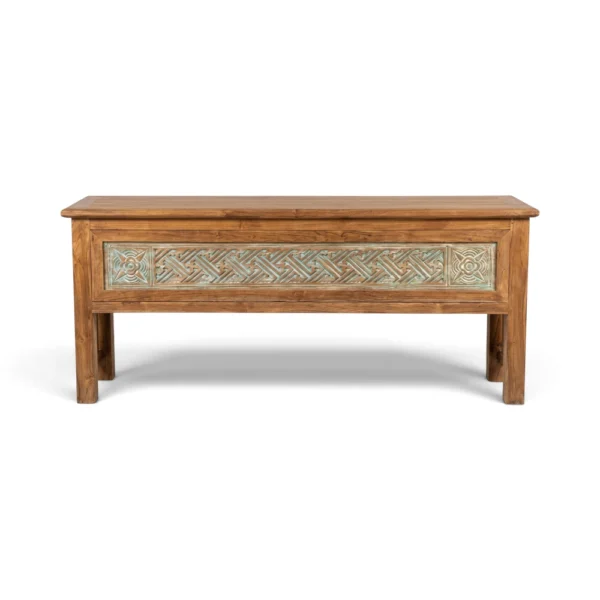
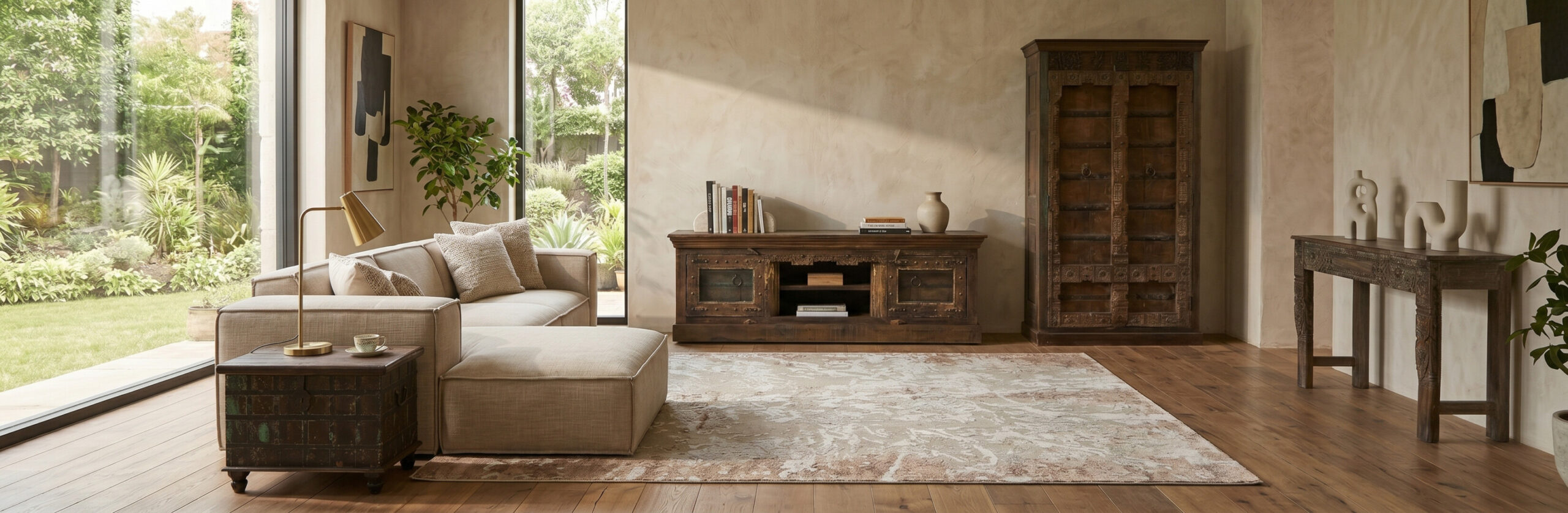
There is a particular kind of Indian sideboard that turns up in South African homes more often than people realise. From a distance it looks like an unusually beautiful piece of hand-carved furniture. Look closer and you notice the cabinet doors don’t quite match. The carving on the left panel is older than the carving on the right. The metal fittings are hand-forged. The latch has been used.
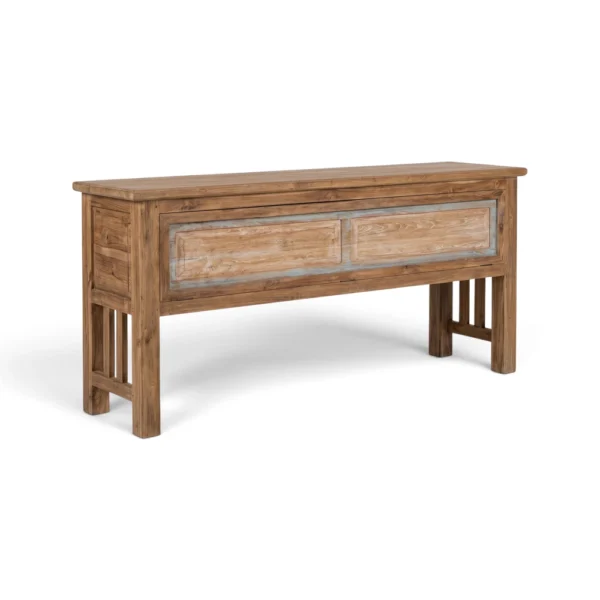
What you’re looking at is not a sideboard. It’s a piece of furniture built around an actual old door, salvaged from a building somewhere in Rajasthan or Gujarat that no longer exists, given a new life as the front of a piece you can buy and put in your dining room. That’s the quietly extraordinary truth about a meaningful slice of the Indian furniture category. The most distinctive pieces aren’t built to look old. They’re built around things that already are. A working door from a courtyard house. A pair of carved window shutters from a haveli that came down years ago. A latched compartment from a household chest passed down across generations until it found its way into a workshop and from there into your home. You’re not buying a finish — you’re buying a small piece of architectural history that has been given a second job.
At Sotran, this is one of the conversations clients are most surprised by. Someone walks into the showroom drawn to a beautiful carved sideboard, and the conversation moves quickly from how good it looks to where the doors came from. The piece becomes more interesting once you understand what you’re actually looking at. It also explains why no two pieces in this part of the range are alike, and why something that catches your eye today may not be there next month. The architectural source material is finite. The next sideboard from the same workshop will be similar in spirit but built around different doors, so it will read differently.
What “real” actually means in this category.
Most furniture categories use the word handcrafted loosely. Indian furniture, in its best examples, gives the word something to do. Authentic pieces carry one or more of three specific qualities:
That mix is what makes the category genuinely different to buy from. A new sideboard might be lovely. A sideboard built around two repurposed doors is something else. It has a backstory before you give it one, and that backstory keeps quietly working long after the piece has been delivered. Visitors notice it. Children grow up around it. It becomes the piece in the home that people remember.
“You’re not buying a finish — you’re buying a small piece of architectural history that has been given a second job.”
Why South African homes have been quietly using these pieces for decades.
The South African appetite for Indian furniture isn’t a recent design trend. There’s been a long, working relationship between South African homes and Indian craftsmanship — partly through trade, partly through the deeper cultural ties between the two countries. The result is that South African buyers tend to be more fluent in this category than many other Western markets. People here can usually tell the difference between a real hand-carved Mandala-style cupboard and a mass-produced lookalike, and they know how to live with the real thing without turning the room into pastiche.
The pieces also happen to suit our homes physically. South African rooms are typically larger than European ones, with stronger natural light and more open architecture. That’s exactly the environment carved, gilded and jewel-toned pieces respond to. Heavy hand-carving reads with proper depth in our light rather than disappearing into shadow. Distressed paint finishes hold their richness instead of flattening out. The pieces look the way they’re meant to look — which is part of why they have always sat naturally alongside our own design directions, particularly Safari Lodge, Classical Antique and the more ornate edge of Modern Tropical.
The pieces where the story is strongest.
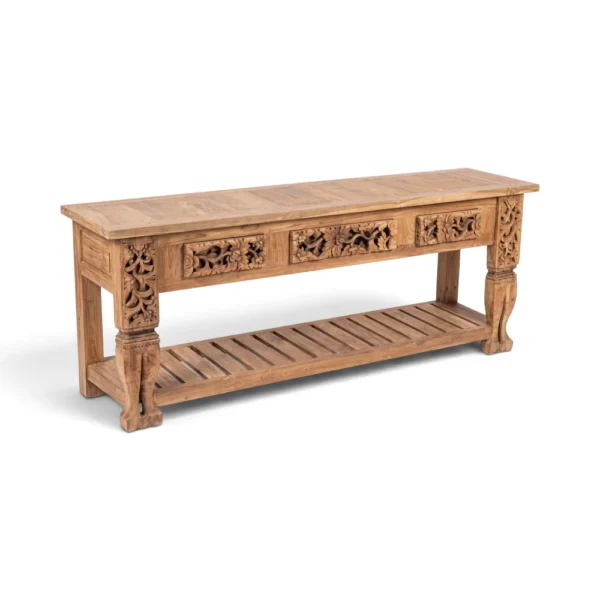
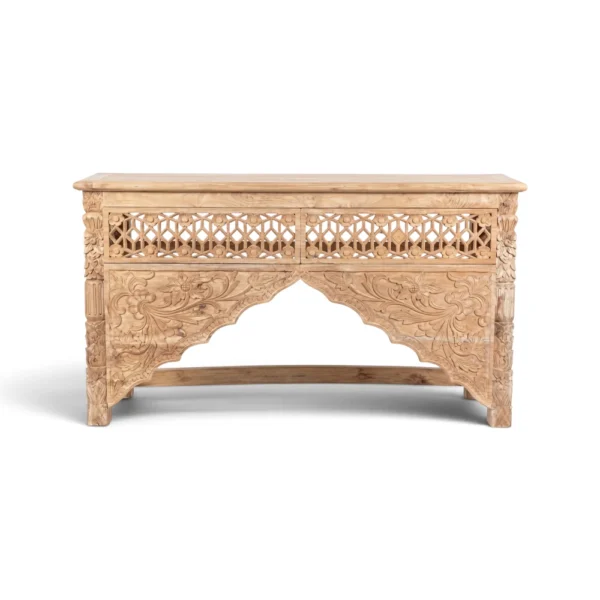
If the architectural-salvage idea sits at the heart of the category, certain pieces wear it best. Long carved sideboards and consoles built around old door panels are the headline. The doors give the front of the piece a kind of three-dimensional history — you can read it from across the room and you can run your hand over it up close. These are the pieces that turn a dining room or hallway from a furnished space into a room with a piece in it.
Cupboards and cabinets work the same way at vertical scale. Tall hand-painted or hand-carved cupboards in mango wood — particularly those in the Mandala-style tradition with gold-painted doors on natural light wood — are pieces you build a corner around rather than slotting between other furniture. They’re too distinctive to play a supporting role.
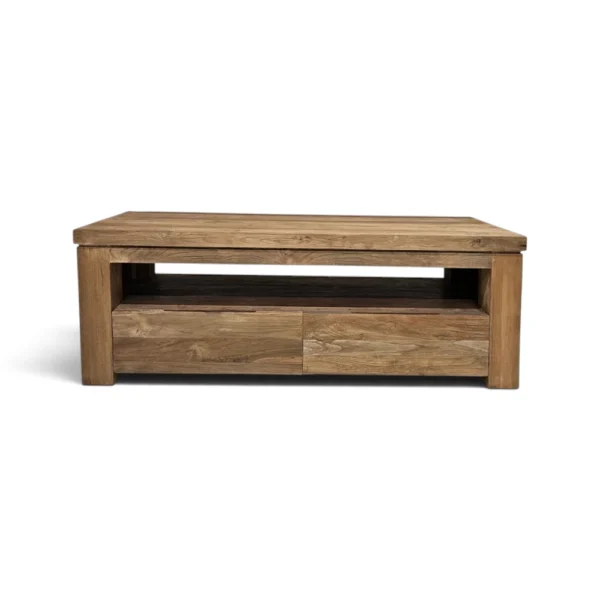
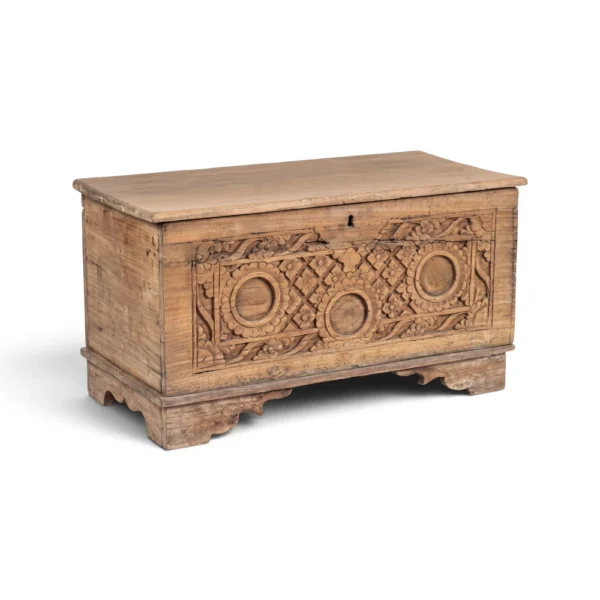
Then there are the storage pieces that do the quiet work. Traditional iron-bound Pitara trunks and chests are some of the most versatile pieces in the range. They function as coffee tables, blanket boxes, hallway storage and bedroom pieces all at once, and they carry the hand-forged metal language that ties the category together. Hand-carved bedside pedestals in green washes or distressed paint finishes bring the language into a bedroom without committing the whole room.
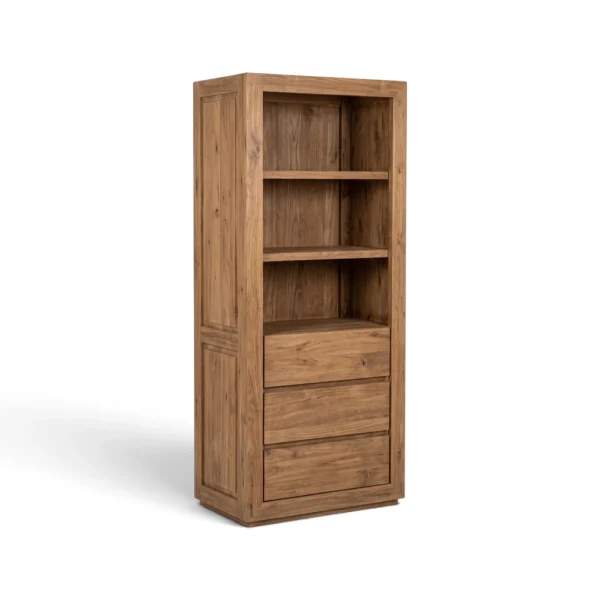
Larger statement pieces complete the picture. Carved canopy benches, hand-painted bar units, gilded display cabinets and architectural bookshelves with relief work are the pieces that make Indian furniture genuinely exciting to live with. None of them are quiet. All of them, in the right home, are unforgettable.
What this means for how you buy.
Here’s the practical point most buyers don’t think about until they’ve already missed a piece. Because so much of the Indian range uses reclaimed components, no two pieces are identical, and the supply of any specific piece is finite. A sideboard built around a particular set of doors cannot be reproduced. The workshop will make another sideboard in the same family, but the next one will use different salvaged components, and it’ll read slightly differently. That changes the rhythm of buying in this category quite specifically. A piece you’ve been thinking about for three weeks may not be there in four.
That can sound like sales pressure. It isn’t. It’s simply how the category is made. The Sotran Indian furniture range moves at the pace of any genuinely hand-crafted, reclaimed-component category — which is to say more quickly than mass-produced furniture does. The same workshop will keep producing similar pieces, but the specific piece you’re looking at is, in a real sense, the only one of itself.
How to use one of these pieces well.
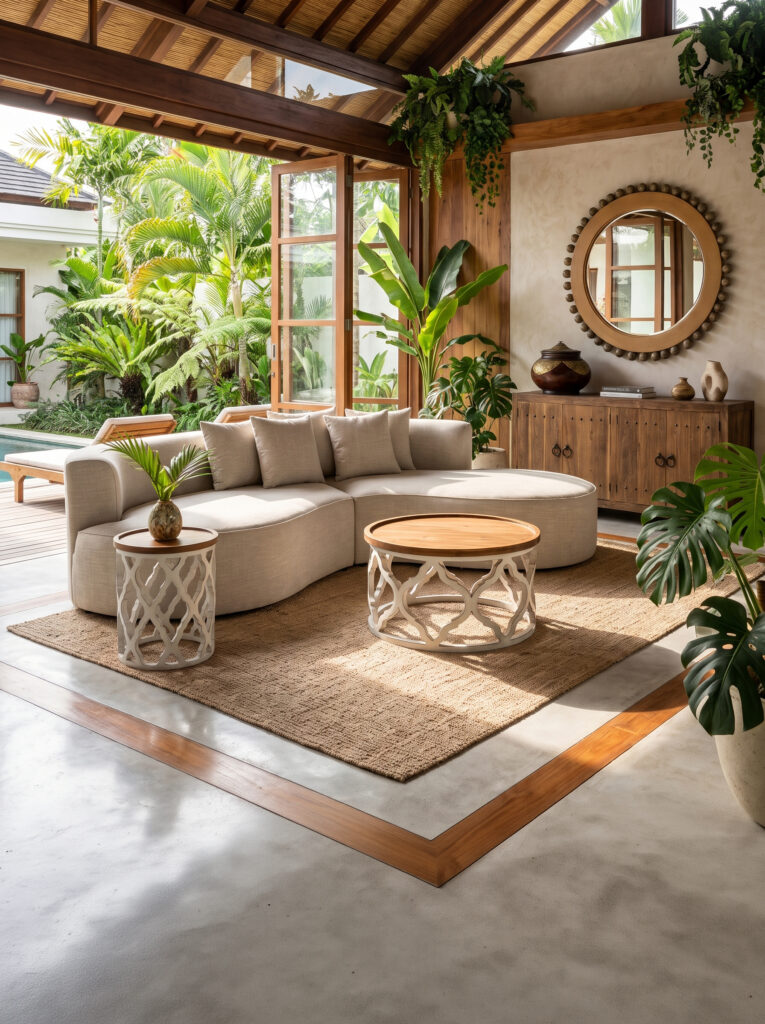
A piece with this much history in it needs the room around it to step back slightly. The mistake people make is to surround an ornate Indian anchor with more ornate pieces in the same idiom. The result is that nothing breathes. The opposite approach almost always works better. Pair the piece with quieter contemporary furniture. Linen, neutral cushions and softer textiles dial down the visual temperature without dulling the room. Lighting in metal or natural finishes plays nicely with carved timber and gilt without doubling the ornament. A well-placed mirror with a similarly weighted frame can complete the wall a sideboard sits against — provided it doesn’t try to compete with the carving.
Scent is worth a mention here, because rooms anchored around real Indian pieces respond particularly well to deeper, warmer scent profiles. The oud, sandalwood and patchouli notes in some of the Mockana evening range sit comfortably alongside hand-carved timber and aged metals. The atmosphere reinforces itself.
Online or in-store.
This is a category where seeing pieces in person genuinely changes the decision. The depth of the carving, the saturation of a gold leaf or green wash finish, the weight and feel of an old door built into a new piece — all of that reads more honestly in real materials and real light than it does on a screen. The Sotran showrooms in Boksburg, Fourways and Somerset West all carry the Indian furniture range in full room settings, and the team can talk you through which pieces use reclaimed components, where those components came from (where that information is available), and how a specific piece will work in your space.
That said, the range also orders well online. Product pages include full dimensions, detailed photography and material information, and the team is available by WhatsApp, phone or email if you’d like to confirm scale, finish or sourcing before ordering. Combined with nationwide delivery, this makes it straightforward to order from anywhere in South Africa. The team will also flag similar pieces if something has just sold out — which matters more in this category than in almost any other.
The piece with a backstory.
Most furniture is a finish. A small but important part of the Indian furniture category is something else. It is a working second life for a piece of architecture that would otherwise have been lost. That’s a different thing to buy, and it’s a different thing to live with. The piece doesn’t need to announce its history. The history shows up in the small irregularities, the hand-forged hinges, the door panel that’s slightly older than the cabinet behind it. Over years, those details become the most quietly enjoyable thing about the room. That’s the reason these pieces have held their place in South African homes for decades — and it’s why the Sotran Indian furniture range is built around real craftsmanship and real reclaimed components rather than around imitation of the look.
Shop the Indian furniture collection.
Are the doors in the sideboards really old?
In the most distinctive pieces, yes. Authentic repurposed-door sideboards and cabinets are built around real architectural components salvaged from older buildings, usually in northern and western India. The doors are then incorporated into new furniture by the workshops that build the pieces. Not every piece in the range uses reclaimed components, but the ones that do are built around real history. The Sotran team can confirm which pieces fall into which category.
How can I tell authentic Indian furniture from mass-produced lookalikes?
Authentic pieces show small irregularities that machines don’t produce. Hand-carving has tiny variations from one panel to the next. Hand-applied finishes settle differently in different places. Hand-forged metal fittings are not perfectly symmetrical. Reclaimed components show age that no new timber can fake. In person, the difference is almost always immediate.
Will an Indian piece feel out of place in a modern home?
Not when used with intent. One characterful Indian piece in an otherwise restrained modern interior reads as a deliberate, confident choice rather than a clash. The contrast between hand-carved timber and clean modern surfaces is part of what makes the pairing work. The mistake is to surround the piece with other equally ornate furniture — which is where rooms start to feel themed.
What woods and finishes are typical?
Mango wood is the most common timber, valued for how it takes hand-carving and hand-applied finishes. Teak appears in heavier pieces and in older repurposed components. Finishes range from natural and distressed wood through to deep aged colours, gold leaf, hand-painted detail and characteristic green washes. Each finish reads differently in real light, which is part of why seeing pieces in person matters.
How does the one-of-a-kind nature affect buying?
Pieces that use reclaimed components or significant hand-carving can’t be exactly reproduced. The workshop will continue making pieces in the same family, but each one will be slightly different. If a specific piece speaks to you, it’s worth acting on it rather than holding — because the next piece will be similar in spirit but built around different source material.
Can I shop the Sotran Indian furniture range online?
Yes. The Indian furniture range is available to browse and shop online, with nationwide delivery across South Africa. The team is available by WhatsApp, phone or email to talk through scale, finish or sourcing before ordering — or to suggest similar pieces if something has just sold out. The range is also on display in our Boksburg, Fourways and Somerset West showrooms.