
Outdoor furniture
Outdoor furniture: chosen for the way South Africans really live outside. Covered or open, teak or rope, Highveld storms or coastal salt air. A calm guide to choosing patio furniture that looks as good in its fifth summer as in its first.
Outdoor furniture in South Africa does more work than almost any other furniture in the home. It hosts the long Sunday lunch, the evening braai and the first coffee before the heat arrives, and in many homes it is used for more months of the year than the formal lounge inside.
That is exactly why it deserves more thought than it usually gets. A patio set is often chosen from a photograph, on looks alone, and then asked to cope with Highveld hail, Cape winter rain or salt air on the coast. The pieces that last are the ones chosen for the space, the climate and the way a household actually lives outside.
This guide works through those decisions in the order they matter, from where the furniture will stand to what it is made of, so that what goes outside looks as good in its fifth summer as it did in its first.
Start with how the space is really used.
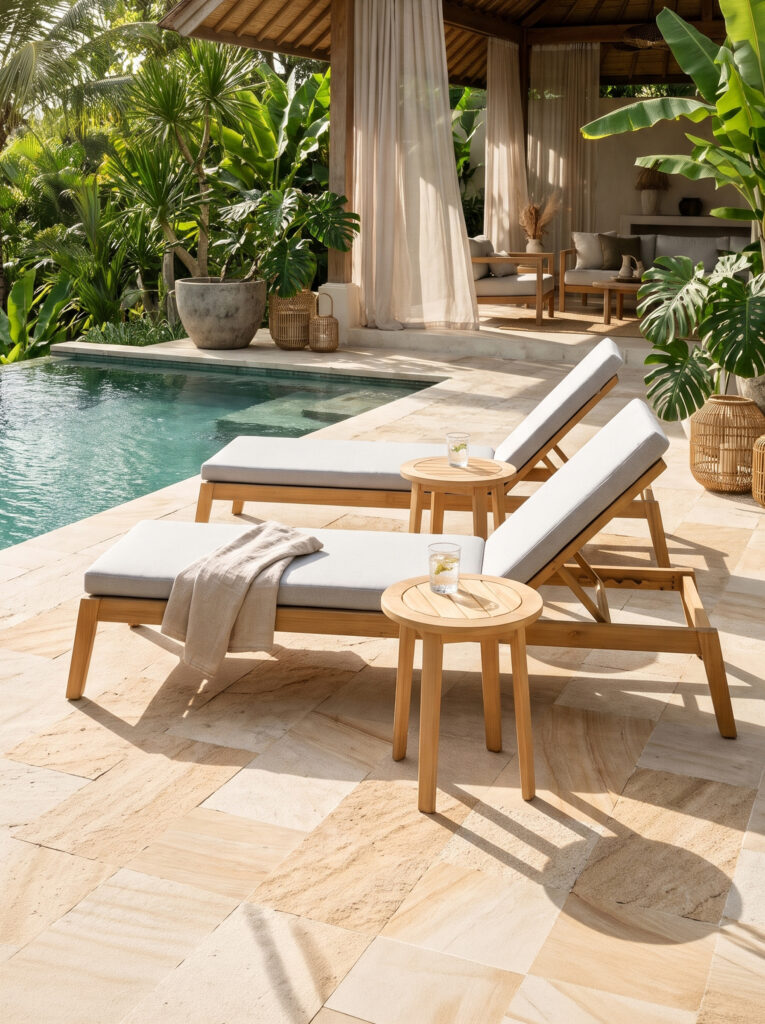
Before materials or style, it helps to be honest about the space. A covered stoep where the family eats most evenings needs a table at a comfortable height and chairs that are easy to pull out. A pool terrace used for long afternoons needs deep seating and somewhere to set a drink down. A quiet garden corner visited once a week needs little more than a well placed bench.
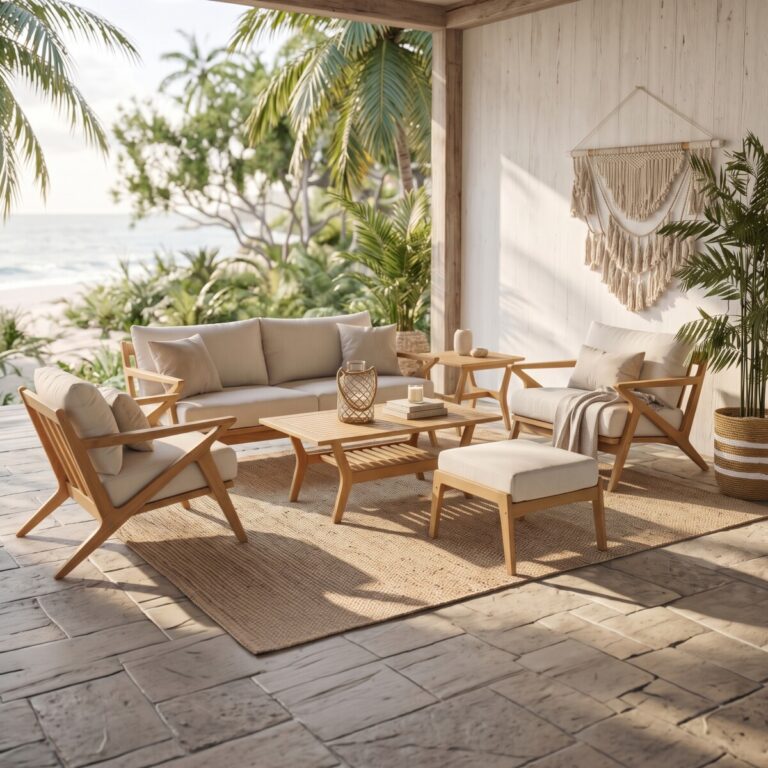
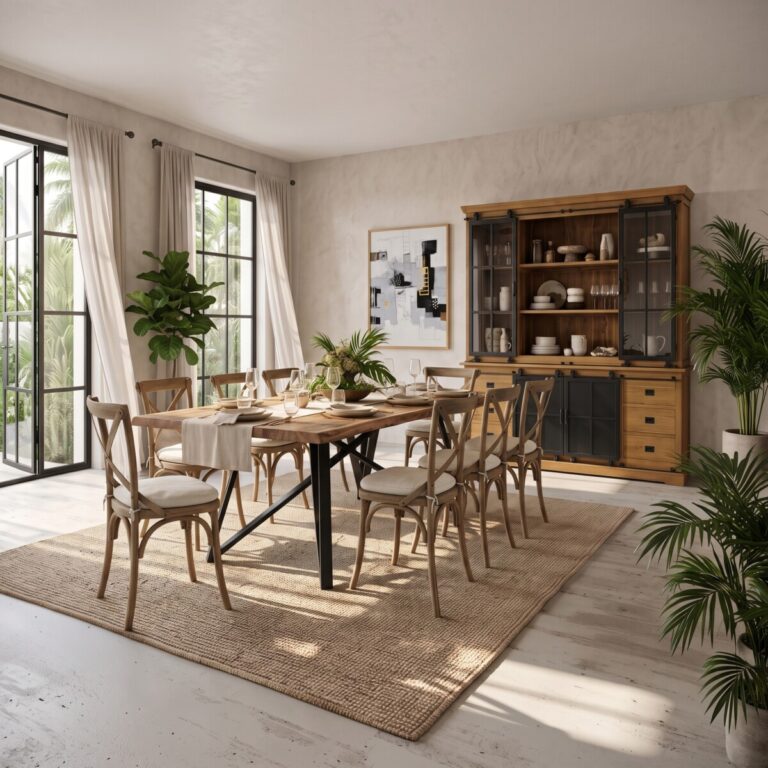
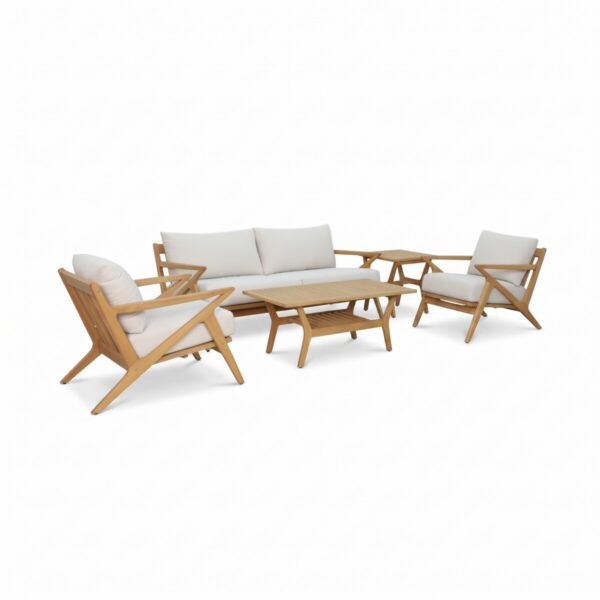
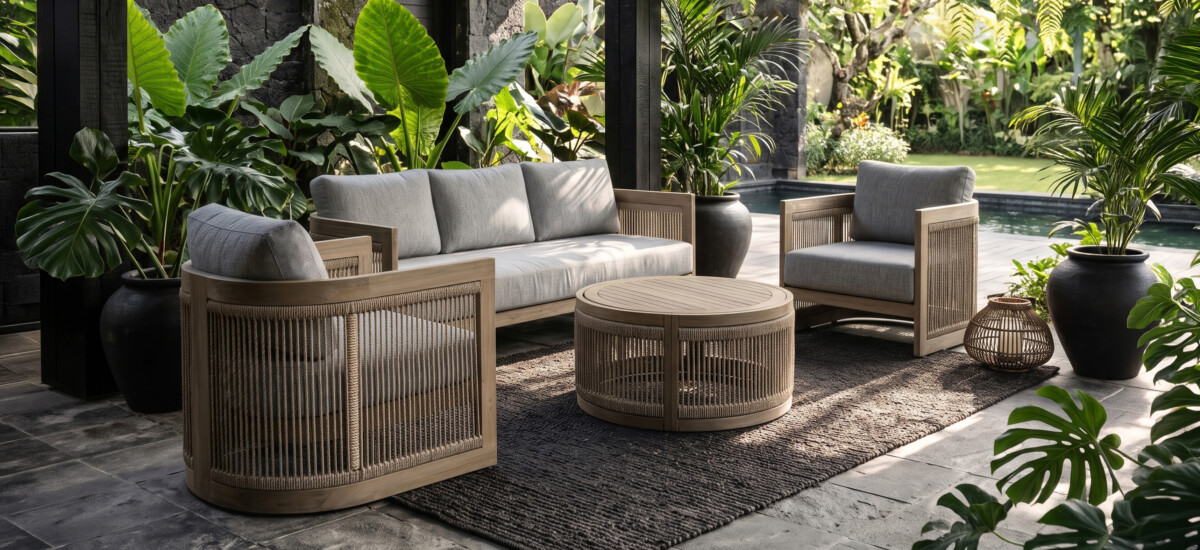
Many homes try to do all three in one space and end up doing none of them well. A clear decision about the main purpose, with one secondary use at most, produces a calmer and more useful outdoor room. Dining spaces start with patio sets sized to the table, while lounging spaces are built around outdoor couches and low tables.
The best outdoor rooms are planned around a habit, not a catalogue.
Covered or open: the question that decides everything.
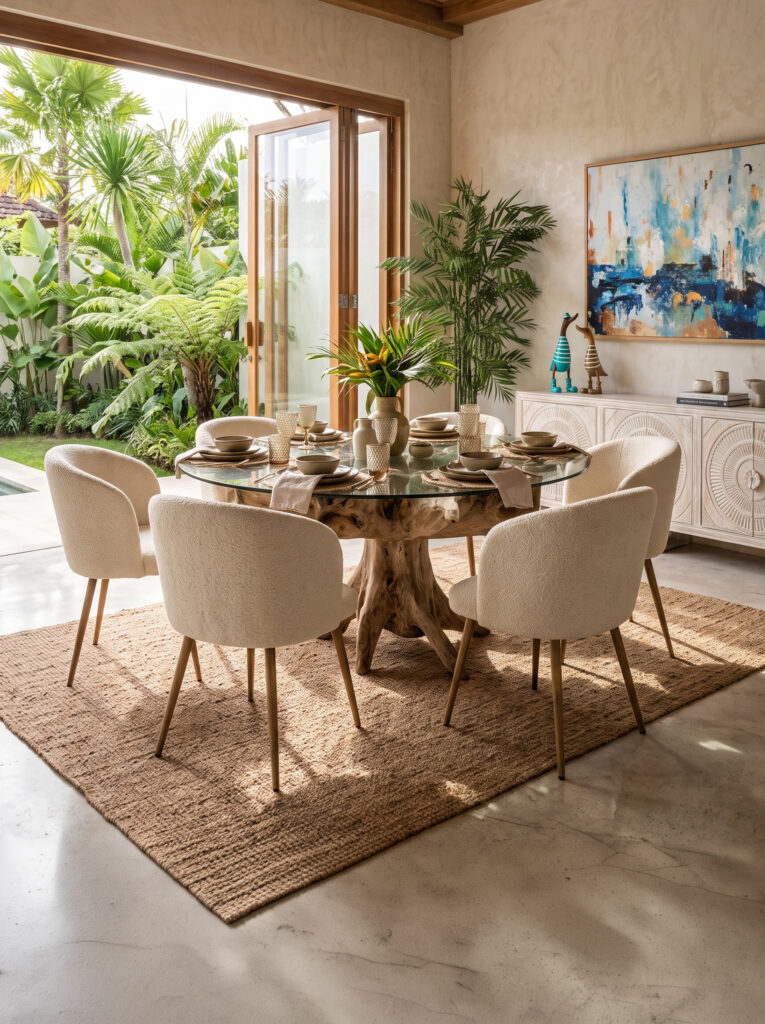
The most useful fact to establish is whether the furniture will stand under a roof. Much of the Sotran outdoor range is made for covered outdoor living: verandas, stoeps, pergolas with a solid cover and patios that sit under the eaves. Under cover, solid wood, woven seats and upholstered cushions stay in good condition for many years with simple care.
Fully exposed positions are a different brief. Direct sun, standing water and summer storms are hard on any material, and even the most durable timbers will weather, move slightly and ask for more attention. Where a piece will live in the open, it is worth confirming that it is made for full outdoor use and planning for covers or winter storage.
A roof overhead does more for outdoor furniture than any finish.
Teak, and why it remains the benchmark.
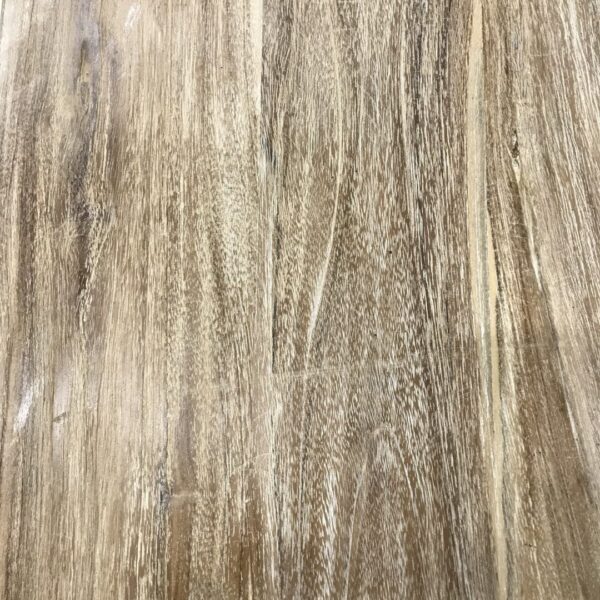
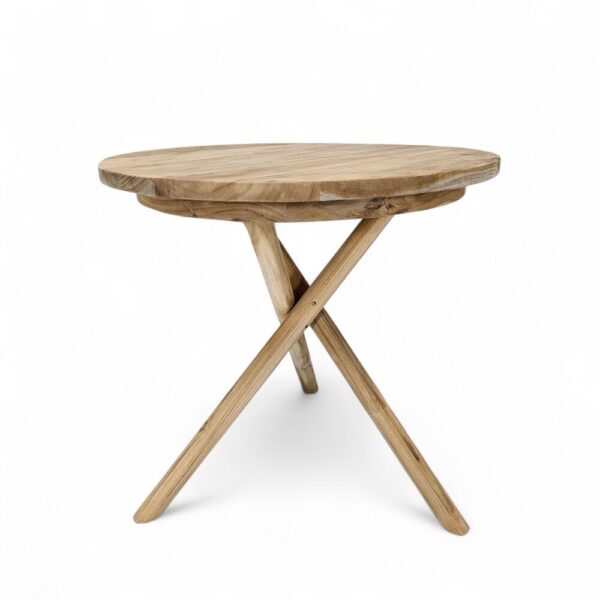
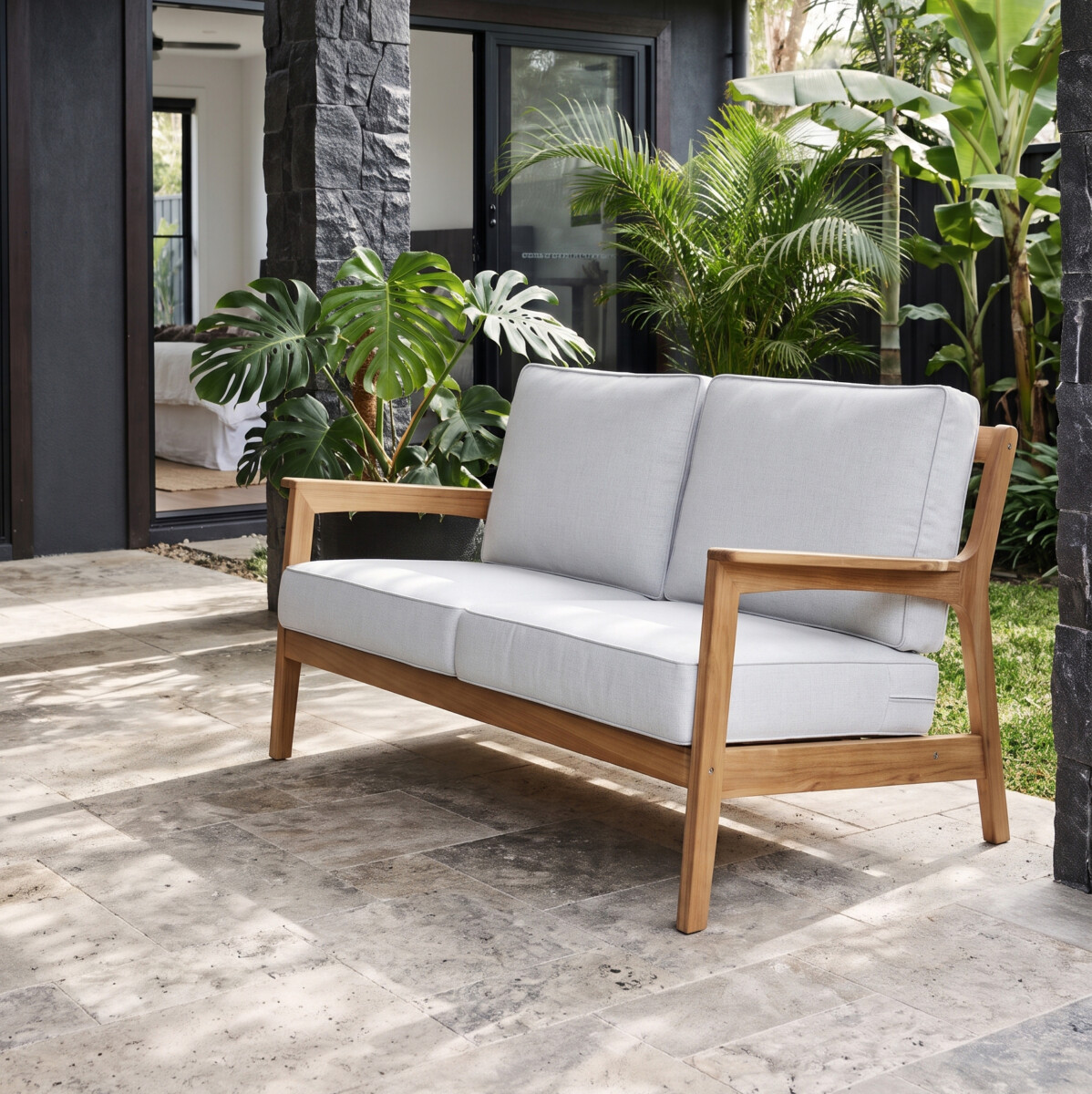
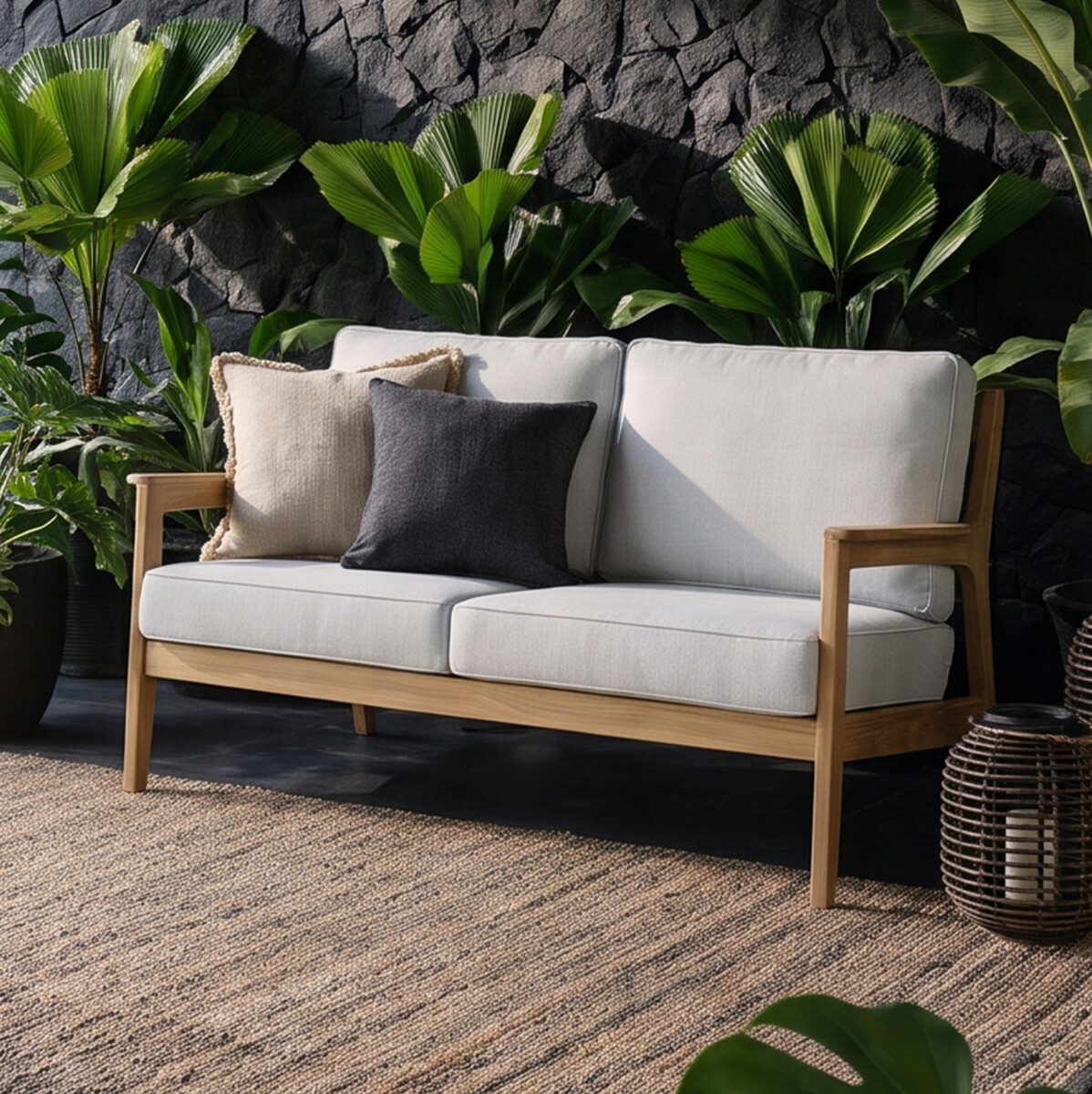
Teak has been the reference timber for outdoor furniture for generations, and for practical reasons. Its natural oils help it resist moisture, rot and insects, and it stays stable through swings in temperature and humidity that would crack or warp lesser woods.
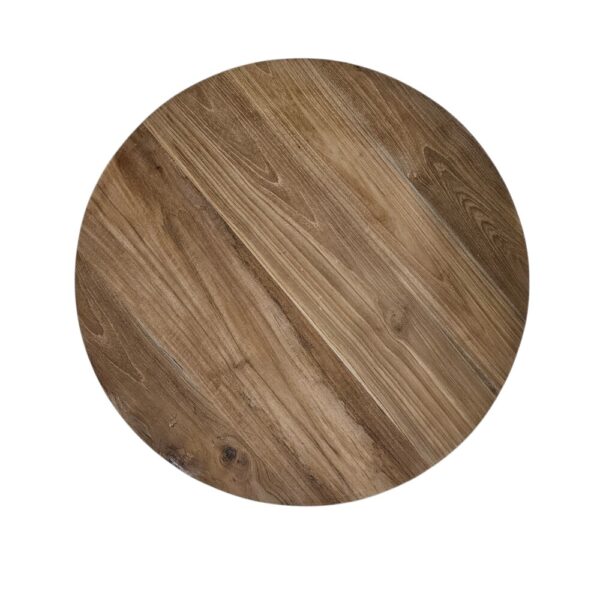
Left untreated outdoors, teak gradually turns a soft silver grey. Some owners love that patina; others prefer the warm honey tone and keep it with a teak oil or sealer once or twice a year. Neither choice is wrong, but it is worth making early, because restoring colour to weathered timber takes far more work than maintaining it. Acacia, eucalyptus and mango wood also appear in outdoor ranges. They are attractive and well priced, and they ask for a little more care, particularly when it comes to standing water. The guide to reclaimed wood furniture looks more closely at how age changes the way timber behaves.
Teak does not stay new. It ages well, which is a better promise.
“The right outdoor set is the one still in use ten summers from now.”
Rope, rattan and the softer layer.
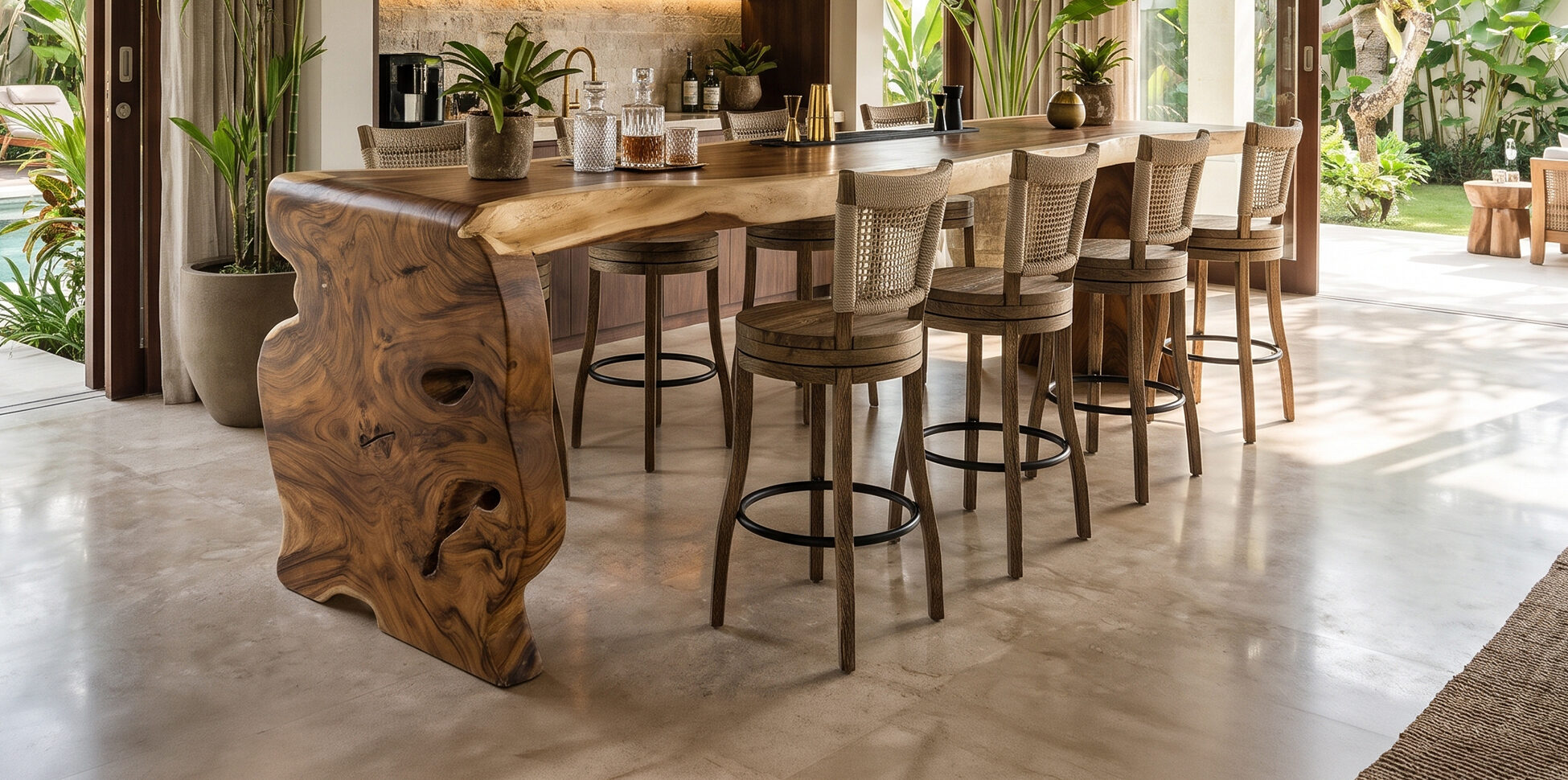
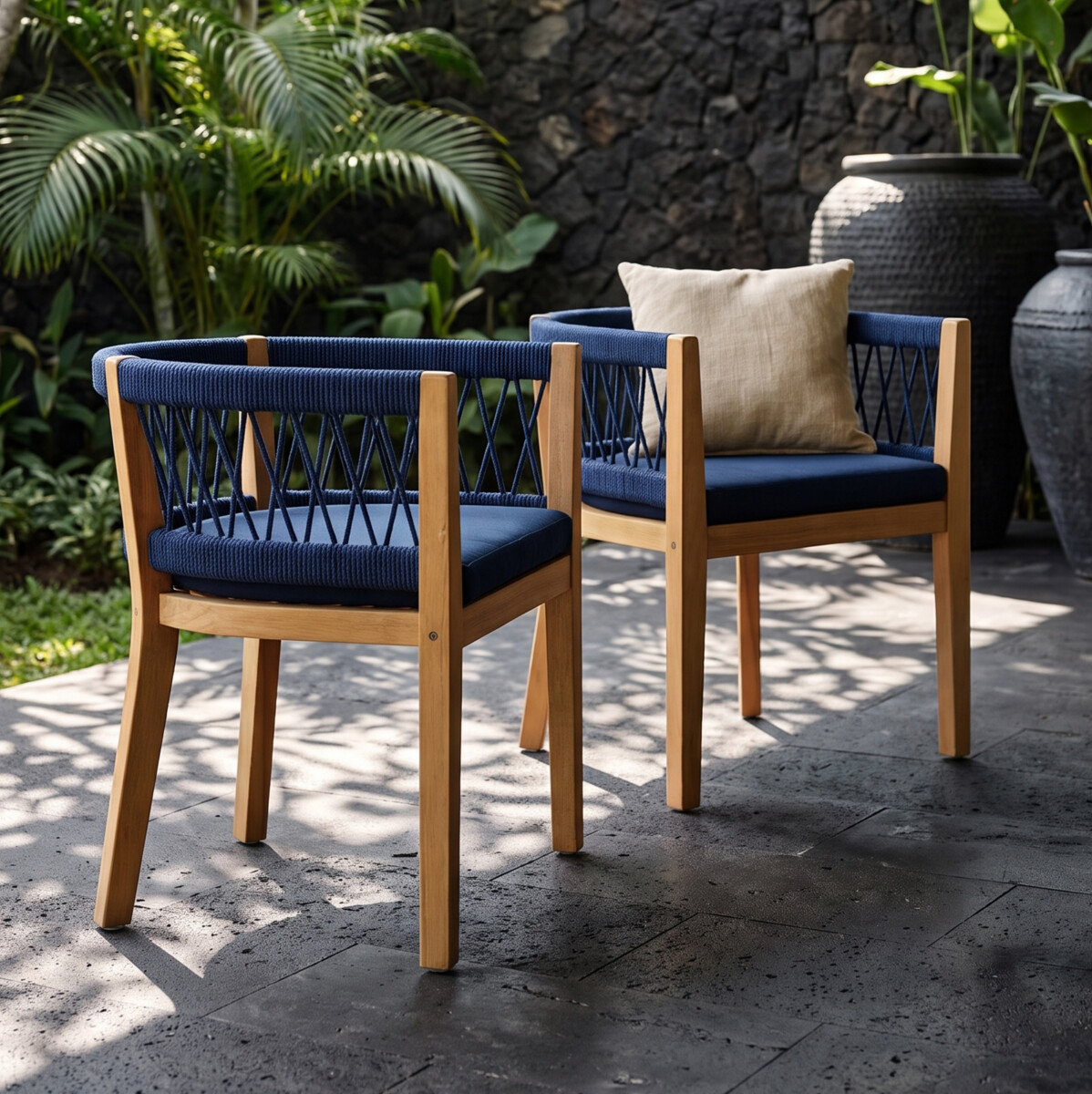
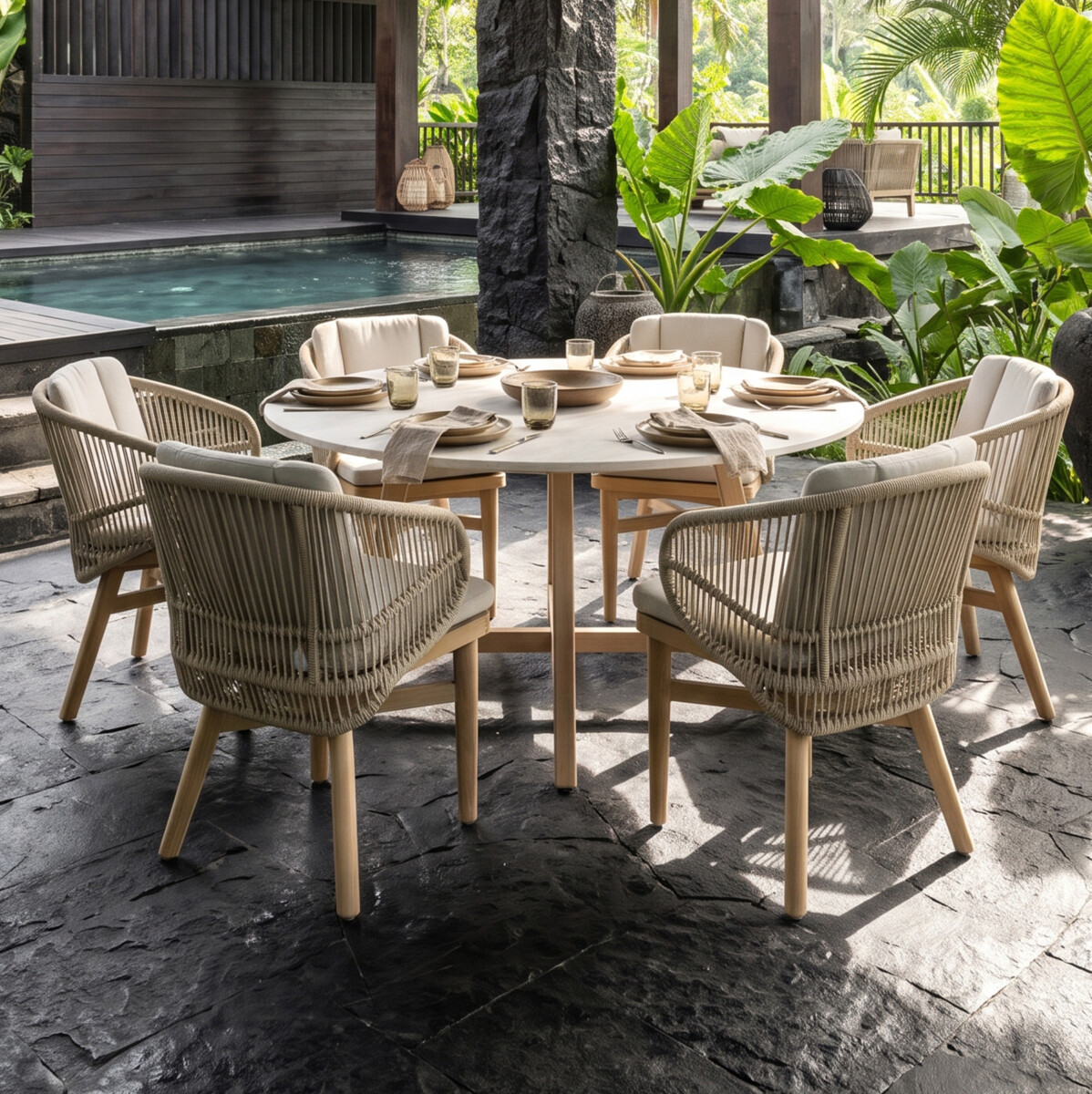
Woven materials have changed outdoor furniture more than anything else in recent years. Rope wrapped around a timber frame brings colour and texture without heavy upholstery, and a criss-crossed rope back is cooler against the shoulders on a hot afternoon than a padded one. Synthetic rattan gives the look of a natural weave with better tolerance for weather, while natural rattan is best kept firmly under cover.
When comparing woven pieces, look at how neatly the weave is finished at the joints and edges, and ask whether the fibre is made for outdoor use. A good weave holds its tension for years; a poor one begins to sag within a season.
The weave is where quality shows first, and where it fails first.
Reading the climate where you live.
South Africa is not one outdoor climate. On the Highveld, the challenge is strong summer sun and afternoon thunderstorms that can bring hail, so covered positions and quick drying cushions matter most. In the Western Cape, most rain falls in winter and wind is often the bigger issue, which makes heavier pieces and secure cushions the sensible choice on exposed terraces. Along the KwaZulu-Natal and Garden Route coasts, humidity and salt air are hardest on metal fittings and fabrics, so timber, rope and well finished hardware tend to age more gracefully.
Homes by the sea carry their own design language too, and the coastal decor guide shows how that look travels inland just as well.
Good outdoor furniture is chosen for a postcode as much as for a style.
Cushions, fabrics and the details that age first.
Cushions are usually the first part of an outdoor set to show wear. Removable covers that can be washed, foam that drains and fabric made for outdoor use all extend their life considerably. Even so, bringing cushions inside during long wet spells, or keeping a dry storage box on the patio, is the simplest habit an owner can adopt.
Neutral cushions in stone, sand and oatmeal keep an outdoor room calm and let the timber lead. One deeper accent, an indigo or charcoal scatter cushion, adds depth without competing with the garden.
Look after the cushions and the whole set looks cared for.
Scale, layout and room to move.
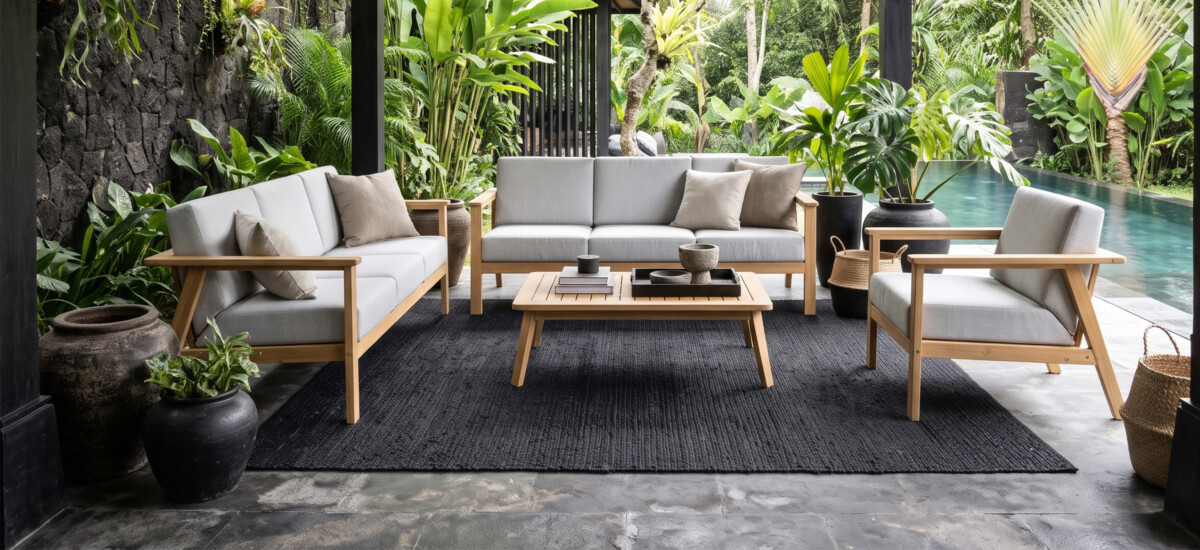
Outdoor furniture tends to look smaller in a showroom than it does at home, and larger in a photograph than in a garden. Measure the space first, then leave roughly 90cm behind each dining chair so it can be pulled out comfortably, and a clear path between the house and the garden so the furniture never blocks the way.
An outdoor rug defines a lounge area the way a rug does indoors, and large pots or planters from the garden decor range soften the edges where paving meets planting. A single garden bench placed at the end of a path gives the garden somewhere to pause.
The space around the furniture is part of the furniture.
Online or in-store.
Outdoor furniture is one of the categories where a visit pays off. Seat depth, the height of an arm, the feel of a rope back and the true colour of the timber are hard to judge on a screen, and they decide whether a set is used every evening or admired from inside. The Sotran showrooms in Boksburg, Fourways and Somerset West show outdoor pieces on the floor, and the team can help match a set to the size and exposure of a specific space.
The full outdoor range can also be browsed online, with nationwide delivery across South Africa.
The patio is where a South African home spends its best hours. Furniture chosen for that life, rather than for the photograph, is furniture that keeps being used.
A few quick questions.
What is the best material for outdoor furniture in South Africa?
Teak is the most reliable choice for most South African homes. Its natural oils help it resist moisture, rot and insects, and it copes well with heat and humidity, especially under cover.
Can outdoor furniture stay outside in the rain?
Under a roof, yes. Pieces in fully exposed positions should be made for full outdoor use, kept out of standing water and covered during the wettest months, with cushions brought inside.
How do I stop teak outdoor furniture from turning grey?
Apply a teak oil or sealer once or twice a year after cleaning. The silver grey colour is natural weathering and does not harm the wood, so some owners choose to let it develop.
Is synthetic rattan good for outdoor use?
Synthetic rattan made for outdoor use handles weather better than natural rattan, which should stay under cover. Check the weave is neatly finished at the joints and edges.
What outdoor furniture works best in coastal homes?
Timber and rope pieces with well finished hardware age most gracefully in salt air and humidity. Washable cushion covers and regular cleaning make a noticeable difference by the sea.
Does Sotran deliver outdoor furniture across South Africa?
Yes. Sotran offers nationwide delivery, and outdoor pieces can be seen in the Boksburg, Fourways and Somerset West showrooms.
Explore the Sotran outdoor range online, or see it in person at a showroom in Boksburg, Fourways or Somerset West.