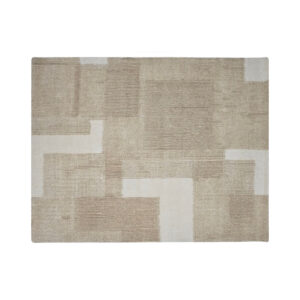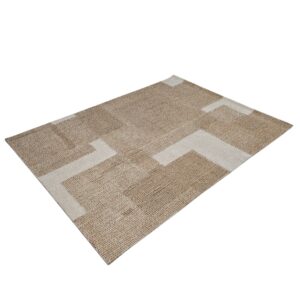
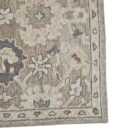
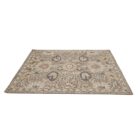
Rivera 100% Wool Carpet
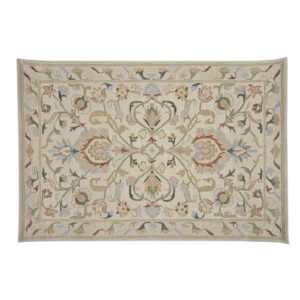
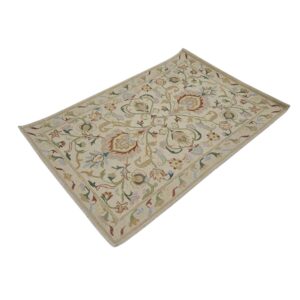
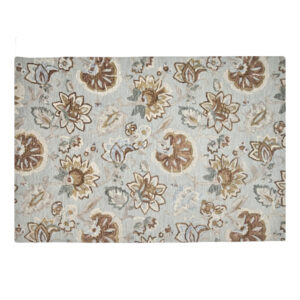
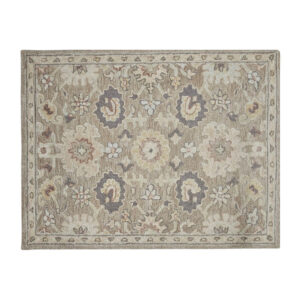
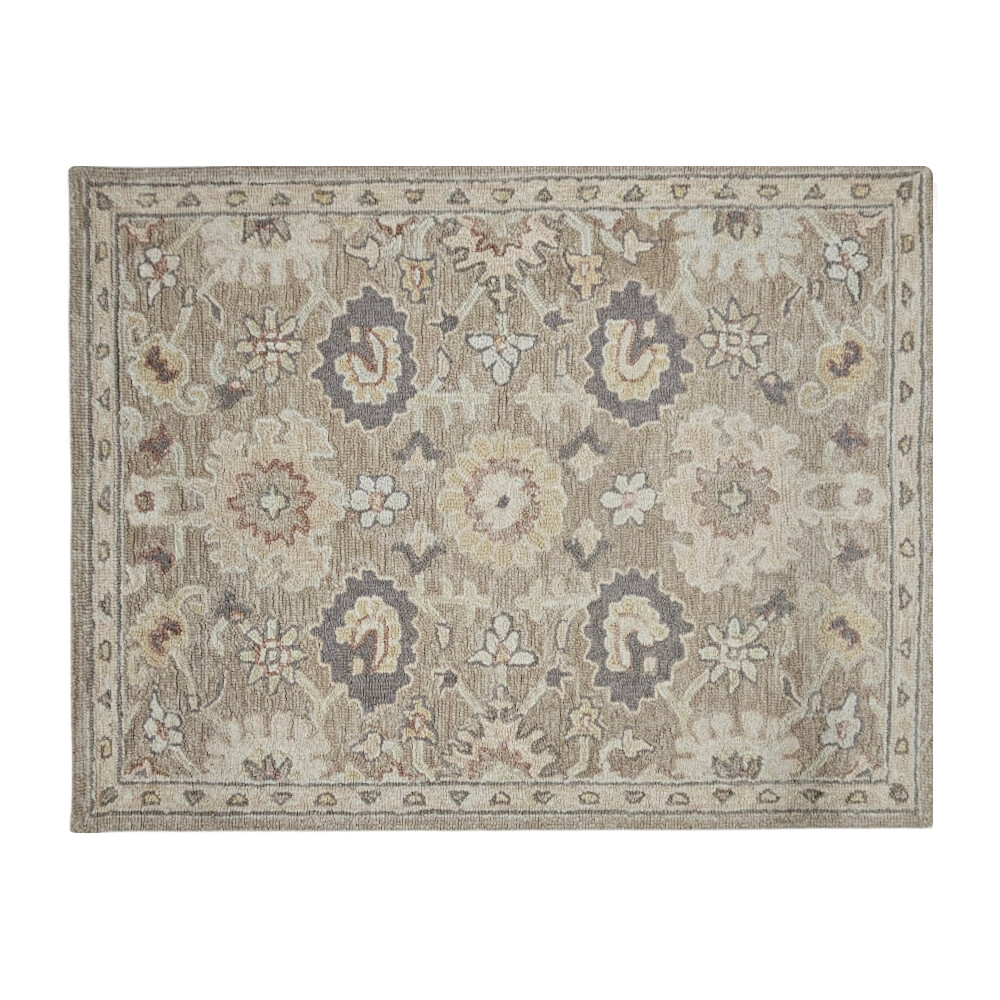
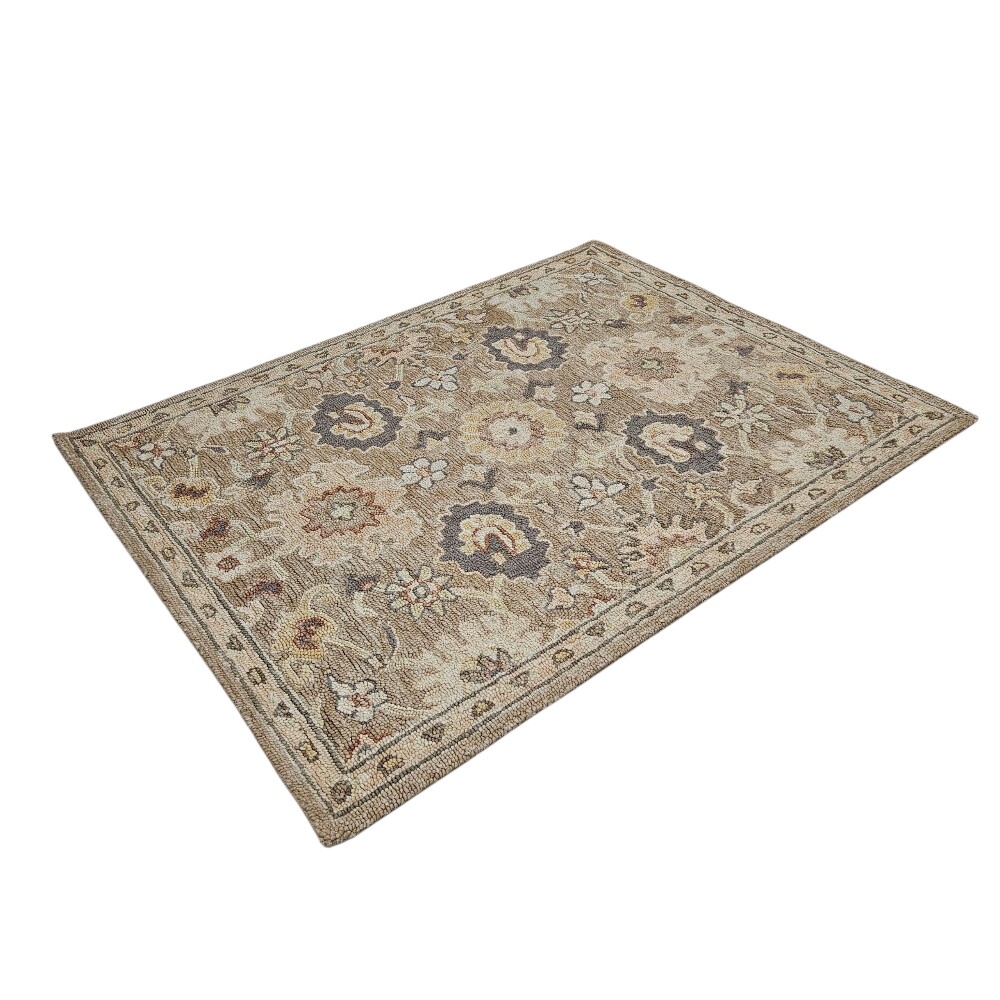
A 100% wool area rug in a soft, muted medallion pattern — traditional Persian-inspired form rendered in a contemporary faded antique palette of beige, taupe, grey-blue and terracotta. The dense wool construction and high-low texture give the piece tactile depth and the natural durability for years of use in living areas.
– Dimensions: 153 × 214 cm (W × L)
– 100% wool construction
– Traditional medallion pattern in soft muted palette
– High-low textured weave for depth and tactile interest
– Naturally durable for high-traffic living areas
– Suited to traditional, transitional, modern farmhouse and beach cottage interiors
- Estimated Delivery : 4 to 10 business days
A 100% wool medallion area rug in a muted faded-antique palette
A wool rug is a different category of object from any other piece of decor in a home. It is the largest single piece of soft material in a room — usually larger than the couch — which means it sets the colour temperature, the pattern energy, and the tactile character of the entire space around it. It is also the piece you will literally walk on every day for years, which means material choice matters in a way it doesn’t for shelf decor. The decision between a synthetic rug and a 100% wool rug is one of the most consequential decor decisions in a home: synthetic rugs flatten, wear thin and need replacement every few years; a properly made wool rug develops character with age, holds its construction for decades, and quietly improves the room every season it stays in place.
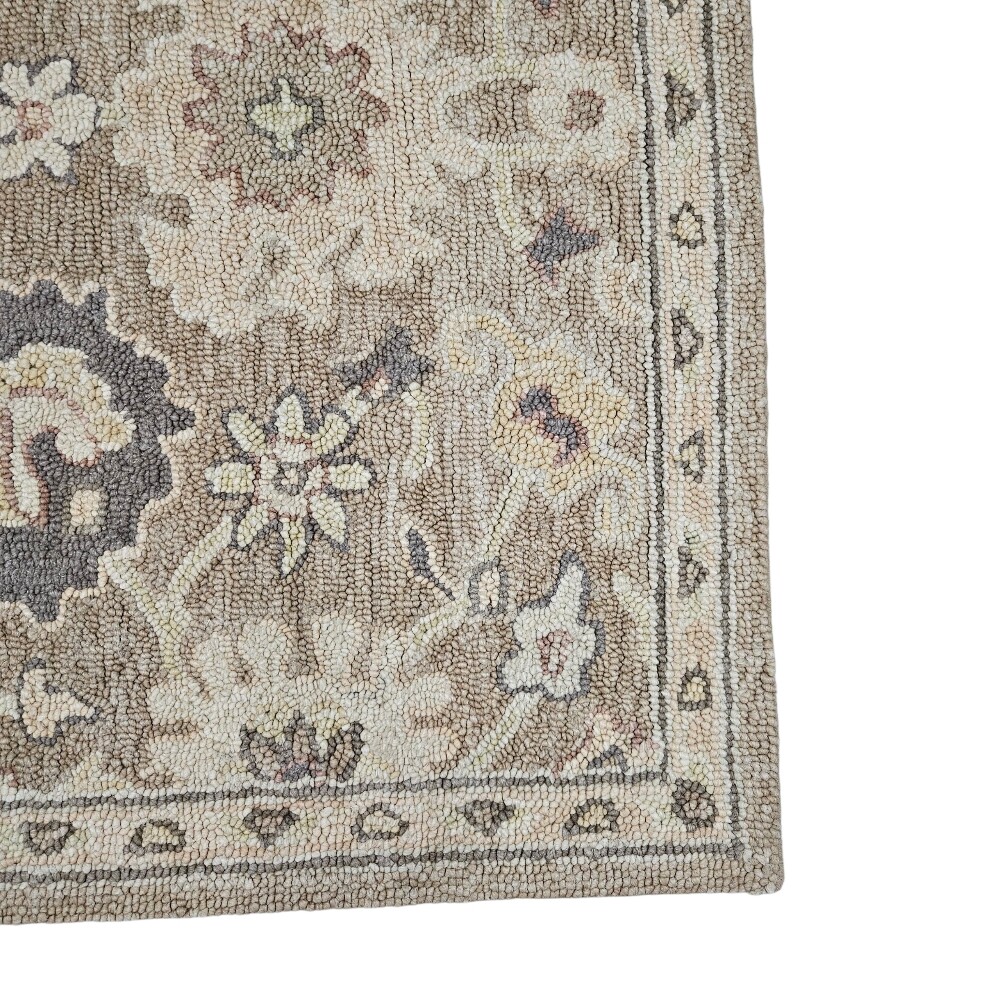
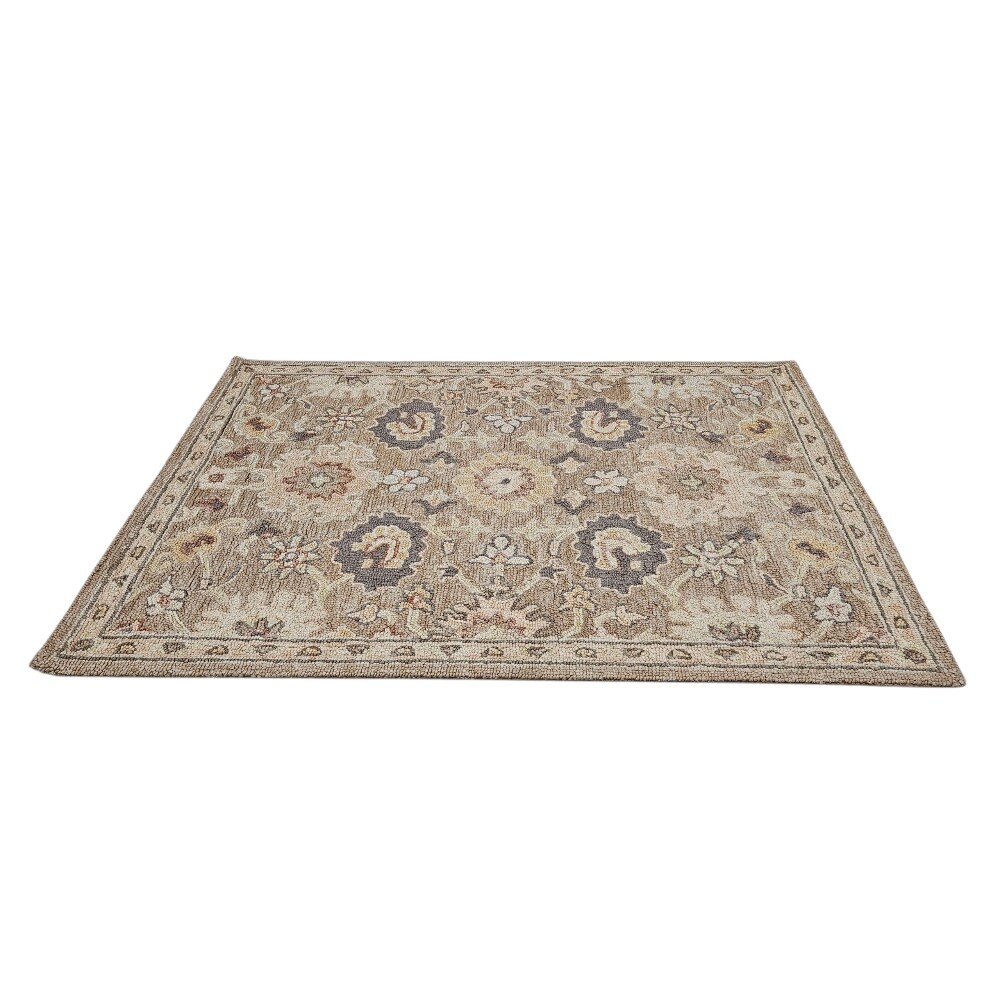
The Rivera 100% Wool Carpet is one of those genuine wool pieces. Measuring 153 × 214 cm — the standard “small lounge” size in South African living rooms — the piece is constructed from pure wool with a high-low textural weave that adds depth and tactile interest to the surface. The pattern is a traditional medallion design: large stylised floral medallions and blossoms reminiscent of classical Persian or Oriental rugs, arranged in balanced symmetry across the field. The palette is the genuine differentiator — instead of the deep reds and dark blues of traditional Persian work, this piece uses a soft, faded-antique scheme of beige and taupe ground colours accented with delicate grey-blue, muted yellow and subtle rust-terracotta. The result reads as a vintage rug that has aged gracefully over decades rather than as a freshly woven traditional piece.
Why 100% wool matters for a rug
The material distinction is more meaningful for rugs than for almost any other category of decor. Three things about wool versus synthetic rug construction are worth understanding before deciding.
Wool is genuinely durable in a way synthetic alternatives are not. Wool fibres have a natural crimp that allows them to compress under foot traffic and then spring back to their original shape — meaning the pile recovers after being walked on, and the rug looks much the same after five years of use as it did on day one. Synthetic fibres flatten permanently with traffic; a polyester or polypropylene rug in a high-traffic lounge typically looks visibly worn within two to three years and needs replacing within five.
Wool resists stains naturally. The natural lanolin in wool fibres makes them inherently resistant to liquid stains — most everyday spills (water, tea, wine) bead on the surface and can be blotted up before they soak into the pile. Synthetic fibres absorb liquids quickly and stain permanently. For families, homes with pets, or anywhere food and drink are regularly consumed, the practical difference is meaningful.
Wool ages with character rather than degrading. A well-made wool rug develops a soft patina with use — slightly softer underfoot, slightly deeper in colour tone, slightly richer in character. The pattern remains intact, the construction holds, and the piece becomes a more attractive object as it ages. Synthetic rugs do the opposite: they look their best on day one and degrade from there. Properly cared for, the Rivera will look better in ten years than it does on the day it arrives.
Why the muted medallion palette works in contemporary South African homes
The traditional medallion pattern is one of the oldest in textile design, dating back over two thousand years across Persian, Anatolian, Caucasian and Central Asian weaving traditions. Three things about why this particular interpretation of the form works in modern homes are worth understanding.
It carries genuine craft heritage without committing to a specific period. A bright traditional Persian rug — deep reds, dark blues, rich golds — declares its style emphatically. The room it sits in becomes definitively traditional or Oriental-themed. The Rivera’s muted palette retains the medallion pattern’s craft heritage but softens the colour signal enough that the piece works in contemporary, transitional, modern farmhouse, beach cottage, and Mediterranean-leaning interiors as well as in classical schemes. The pattern says “considered, crafted, traditional” without committing to any single styling direction.
The faded-antique character ties to current interior trends. South African interior design over recent years has trended toward soft, muted, layered palettes — beige, sand, soft grey, weathered terracotta, dusty blue, faded green. The Rivera’s palette sits squarely in this contemporary vocabulary while bringing the genuine pattern depth that flat-coloured contemporary rugs often lack. Buyers furnishing a home in the prevailing soft-natural aesthetic find the rug ties their scheme together rather than fighting against it.
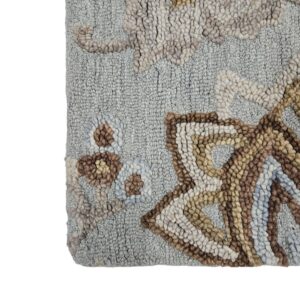
The high-low textural weave adds depth that flat rugs can’t replicate. Most contemporary rugs in this price range are single-pile flat constructions. The Rivera uses a layered weave where certain elements of the medallion pattern are subtly raised or carved, creating a high-low effect that gives the surface genuine three-dimensional character. Light catches the raised areas differently from the recessed sections, and the pattern reads with depth and tactile interest from any angle.
Where a 153 × 214 cm rug sits best — and the placement physics that matter
Rug placement is where most South African homes get rugs wrong — almost always by buying a rug that’s too small for the room. The 153 × 214 cm Rivera is sized for specific applications. A few practical placements work particularly well.
Under a coffee table in a small to medium lounge. The most natural placement. A 153 × 214 cm rug works as the central anchor under a coffee table, with the front legs of the surrounding sofa and armchairs sitting at the rug’s edge or on the rug’s border. This is the standard Western lounge styling convention — the rug defines the seating zone, and the furniture either sits fully on it (in larger rooms) or borders it (in smaller rooms).
In a bedroom partially under the bed. Position so that roughly the lower two-thirds of the bed sits on the rug, leaving the rug extending to either side and at the foot of the bed. The 153 × 214 cm size works under a queen bed (152 × 188 cm) without crowding, providing a soft underfoot surface for getting in and out of bed.
In a dining room under the table — but only if the table is small. A 153 × 214 cm rug works under a four-seater dining table (typically 90–120 cm × 150–200 cm), with chairs remaining on the rug when pulled out for use. For larger six-seater or eight-seater tables, a larger rug is necessary so that chairs don’t slide off the rug edge when pulled out — a common cause of trip hazards and chair damage.
In an entrance hall as a substantial sight-line piece. Position centred in a generous entrance hall where the proportions allow — the rug becomes the visual anchor that greets visitors. Particularly effective in homes with substantial entrance areas that often feel cold and tile-only.
In a study, library or reading corner. Position under a desk and reading chair, or as the central anchor of a dedicated reading nook. The wool warmth and pattern depth create a soft, considered character that reading and working spaces often need.
Worth knowing what this rug is NOT sized for. A 153 × 214 cm rug is too small for a large open-plan lounge with a 3-seater couch and full surrounding seating — the rug will read as a small island floating in too much empty floor. For larger rooms, a larger rug (typically 200 × 290 cm or 240 × 340 cm) is the right answer. Measure your space carefully before deciding — the rule of thumb is that the rug should extend at least 30 to 60 cm beyond the front edge of the seating in all directions for a proper anchored look.
What to pair the Rivera with
The muted medallion palette and traditional craft character set up specific pairings across the Sotran range.
With other pieces from the Rugs and Textiles range. Building a layered textile scheme — rug on the floor, throws and cushions on seating — creates a cohesive soft-textile vocabulary across the room. Browse the broader Textiles range, particularly Cushions and Throws in complementary muted tones to extend the palette upward through the room.
With substantial seating from the Couches and Arm Chairs range. The 153 × 214 cm size pairs particularly well with smaller-scale seating — two-seater couches, single armchairs and reading chairs from the Couches and Arm Chairs ranges. The rug anchors the seating zone and the muted palette ties to most upholstery colours.
With Coffee Tables and Side Tables that complement the scale. Position a coffee table from the Coffee Tables range centred on the rug, with side tables from the Side Tables range positioned at the rug’s edges or just off the rug. The combination creates a complete styled lounge zone.
With other Brown and Warm-Toned decor. The muted brown ground colours tie naturally to other items in the Brown Furniture and Decor range. Cross-styling with brown leather, warm timber and other earthy decor reinforces the palette across the broader space.
In a Beach Cottage scheme. The soft, faded character of the rug suits Beach Cottage interiors particularly well — the muted palette reads as gently weathered rather than freshly bold. Browse the Beach Cottage tag for pieces that share the soft-aged-natural aesthetic.
With other 100% Wool Carpets to compare options. The Rivera is part of a broader range of 100% wool medallion-style carpets in the Sotran catalogue. Browse the New Wool Carpets tag and the broader Rugs category for alternative palettes, sizes and pattern variations to compare against the Rivera before deciding.
Caring for a 100% wool rug
Wool rugs reward proper care with decades of use. The maintenance routine is genuinely simple, but it differs from the care of synthetic rugs in important ways. A few specific notes.
New rugs naturally shed loose fibres in the first few weeks. This is a normal characteristic of wool construction — short fibres that weren’t fully integrated into the pile work loose with initial use and vacuuming. Regular gentle vacuuming clears these fibres, and shedding diminishes significantly within the first month. This is not a sign of damage or poor quality — it is exactly what new wool rugs do, and it stops.
Vacuum regularly with suction only — never with a beater bar. Use a suction-only attachment two to four times per month for routine care. The beater bar (the rotating brush on most upright vacuums) damages wool fibres and causes excessive shedding over time. If your vacuum has a setting to disable the rotating brush, use it. If not, use the bare-floor or upholstery attachment that uses suction only.
Address spills immediately by blotting, not rubbing. Speed matters with wool — most spills can be fully removed if addressed within minutes. Press a clean white absorbent cloth firmly onto the spill to draw the liquid up; do not rub, as rubbing pushes the liquid deeper into the pile and damages the fibre structure. For tougher marks, mix a small amount of wool-safe detergent with cold water and continue blotting from the edge of the stain inward. Avoid harsh chemicals, bleach, and “oxi” cleaners — these damage wool fibres and can permanently affect the colour.
Skip wet shampooing and steam cleaning at home. Both can over-saturate wool, causing shrinkage, colour bleeding and damage to the construction. For occasional deep cleaning, periodic professional dry cleaning by a reputable rug specialist is the right approach — they have the equipment and chemistry to clean wool properly without damaging it. Most major South African cities have specialist rug cleaners; ask your local interior designer or the supplier for a recommendation if needed.
Rotate the rug every few months. Foot traffic patterns and sunlight exposure both wear the rug unevenly. Rotating the piece 180 degrees every three to six months distributes the wear across the full surface, ensuring even ageing and preventing one area from looking visibly more used than the rest. With this minimal care, a 100% wool rug becomes one of those genuine long-term pieces — settling into its place in a home for decades and developing the soft patina and richer character that makes natural materials such a pleasure to live with.
| Dimensions | 153 × 214 cm |
|---|
You may also like…
-
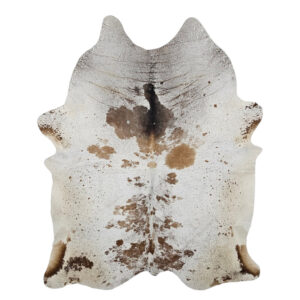
Brown And White Genuine Cow Hide Rug
Original price was: R7895.R6710,75Current price is: R6710,75.2 in stock
-
Black And White Genuine Cow Hide Rug
Original price was: R7895.R6710,75Current price is: R6710,75.1 in stock